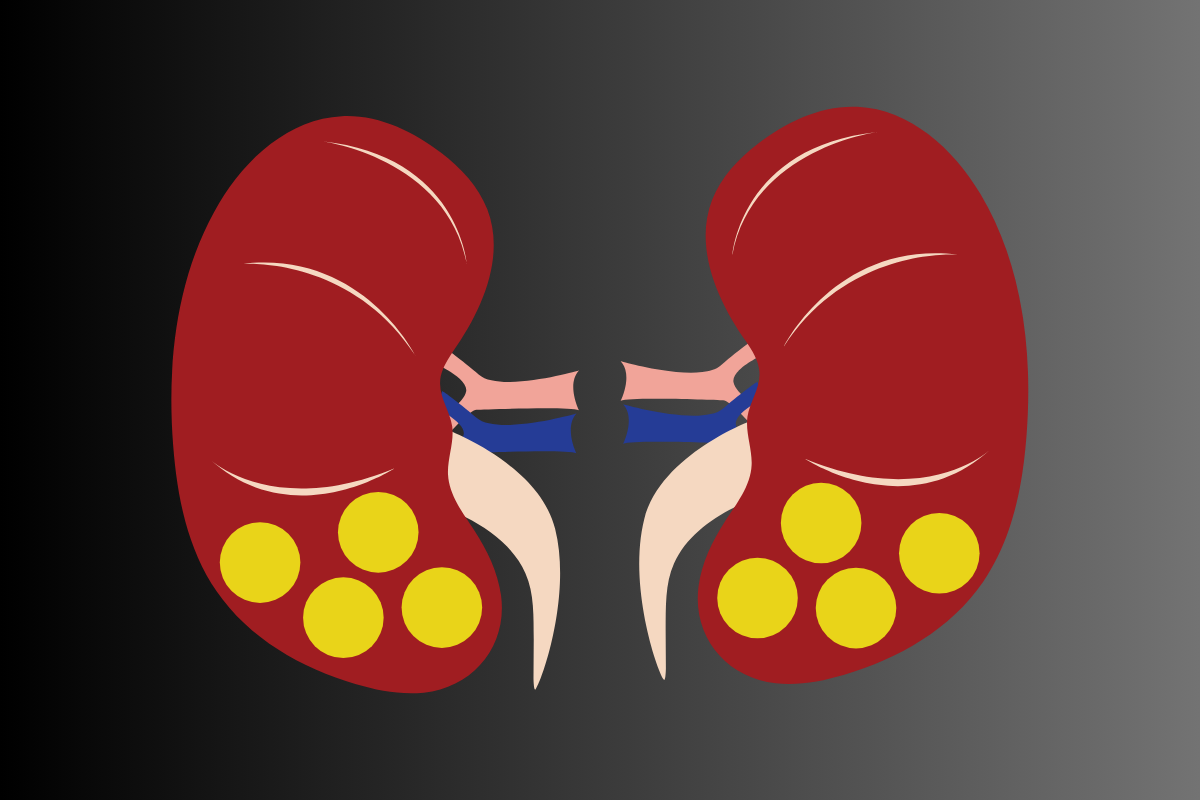
What is a Kidney Stone (Ashmari)?
Kidney stones are hard mineral/concretional deposits that form in the kidneys or urinary tract. Typical symptoms include severe flank pain (renal colic), blood in urine (hematuria), nausea/vomiting, urinary urgency or difficulty, low-grade fever (if infection coexists) and sometimes referred groin pain.
Key clinical points
- Diagnosis: imaging (ultrasound, non-contrast CT KUB) and urinalysis; size and location determine management (conservative vs urology intervention).
- Red flags: uncontrolled severe pain, fever with urinary symptoms, anuria or rising creatinine — seek urgent medical/urology care.
Ayurvedic view (brief)
In Ayurveda kidney/urinary stones are largely described as Ashmari or Mutrashmari. Causes include deranged Vata (pain, movement of stone), impaired Agni and accumulation of hardened deposits. Therapeutic aims: relieve pain, disintegrate/expel stones, correct Dosha imbalance (esp. Vata/Kapha), support renal tissue and prevent recurrence.
Safety & When to Seek Urgent Care
Kidney stones can be painful and occasionally dangerous. Ayurvedic care may support stone passage, reduce pain and help prevent recurrence, but it does not replace urology assessment. Immediate medical/urology evaluation is required for high fever, persistent vomiting, anuria, uncontrolled severe pain, suspected obstruction, or rapidly worsening kidney function.
Ayurvedic Strategy for Managing Kidney Stones
- Medical coordination: confirm stone size/location with imaging, rule out obstruction/infection and decide conservative vs surgical pathway.
- Symptom control: pain management, hydration and measures to ease stone passage (medical and Ayurvedic adjuncts).
- Shamana & herbal therapy: Ashmari-bhedana herbs (Pashanbheda, Gokshura, Varuna, Punarnava) and decoctions to reduce stone formation and assist dissolution/expulsion when suitable.
- Panchakarma & clinic therapies: selected procedures (Basti, Uttara Basti where indicated, local steam and poultices, Kati Vasti or Prishtha Vasti for flank pain) to relieve pain, correct Vata and assist stone clearance.
- Rehabilitation & prevention: dietary changes, increased fluids, metabolic evaluation when recurrent, and follow-up imaging and labs.
Therapies Commonly Used in Ashmari (with reference images)
Only therapies commonly used specifically for stone-related symptoms (pain relief, supporting stone passage, and rehabilitation) are shown below. All are individualized and require medical clearance and clinician judgement.
Basti (Medicated Enema) Important
What it is: Medicated decoction or oil administered rectally to pacify Vata, relieve pain and correct gut-renal axis disturbances.
- Used to relieve severe colic and address Vata imbalances that cause movement and pain of stones.
- Niruha (decoction) and Anuvasana (oil) bastis are chosen based on patient condition; given only under supervision.
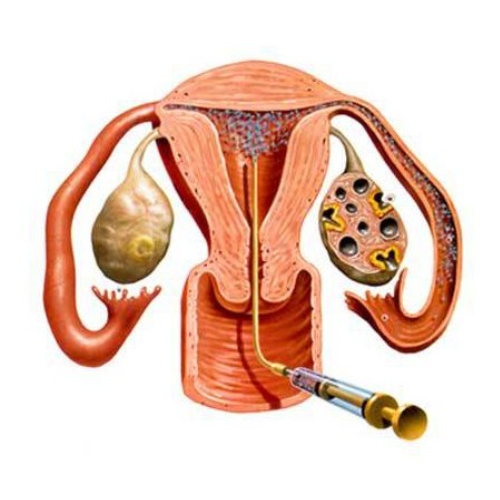
Uttara Basti (Urogenital Instillation)
What it is: Medicated oil or decoction instilled via the urethra to target lower urinary tract or bladder stones and related symptoms.
- Used selectively for bladder/urethral stones or recurrent calculi (under strict clinical indications and sterile technique).
- Requires specialist training and is performed only when appropriate and safe.
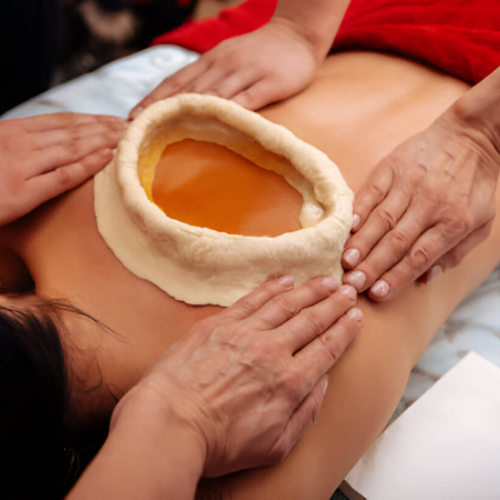
Kati Vasti / Prishtha Vasti (Local Oil Retention)
What it is: Warm medicated oil retained over the lumbar/flank region (Prishtha for back) to soothe muscular spasm and local pain.
- Useful for powerful flank/back pain (renal colic) to relax muscles, reduce spasm and ease discomfort while other therapies proceed.
- Non-invasive, supportive and often combined with analgesic measures.
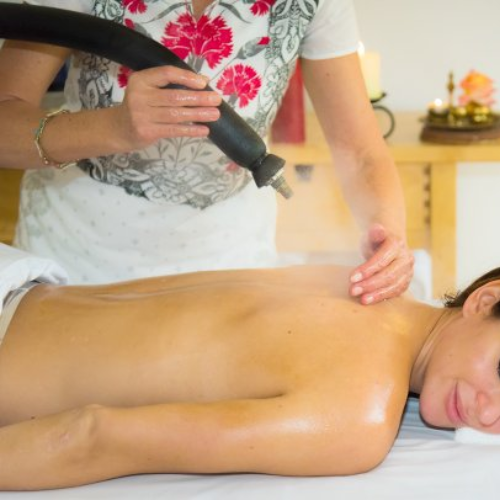
Nadi Swedan / Local Swedana (Herbal Steam)
What it is: Localized steam over the flank/loin using herbal decoctions to relieve pain and promote local circulation.
- Helps reduce muscle spasm, improves blood flow and can ease pain associated with stone passage.
- Applied carefully when no infection/acute obstruction is present and temperature/fluids are stable.
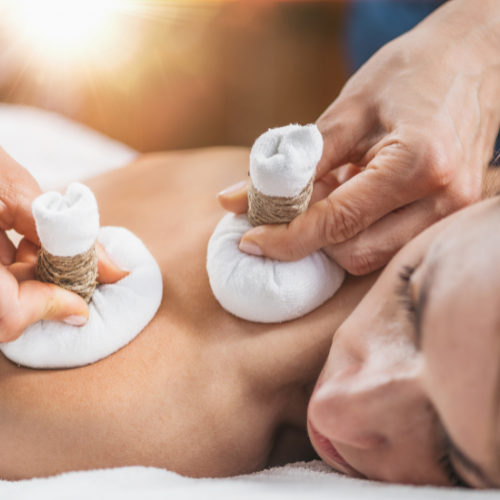
Patra Potli / Churn Potli / Lepam (Herbal Poultices & Pastes)
What it is: Hot herbal poultices or medicated pastes applied to the flank to reduce pain and inflammation.
- Potli (bolus) and lepam (paste) applications with anti-spasmodic and analgesic herbs provide symptomatic relief and support circulation.
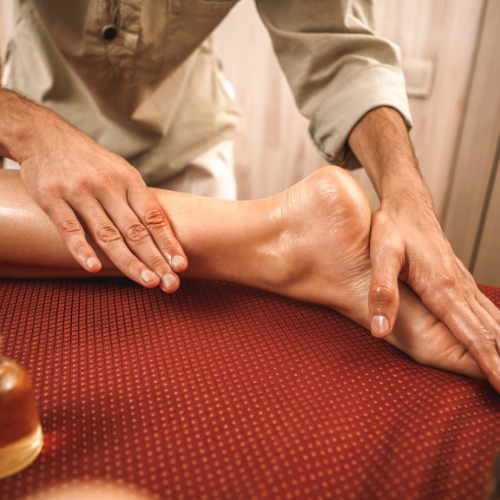
Abhyanga (Supportive Massage)
What it is: Gentle full-body or local oil massage to relieve tension and improve circulation.
- Used as supportive therapy to reduce anxiety, improve circulation and reduce muscular tightness during recovery.
- Intensity and timing adapted to patient condition; not used during uncontrolled acute obstruction or infection.
Herbs, Decoctions & Dietary Support
Ayurvedic herb choices focus on anti-urolithic (ashmari-bhedana), diuretic and anti-inflammatory actions. Herbs and formulations should be prescribed by a qualified Ayurvedic physician and coordinated with medical care.
- Pashanbheda (Bergenia ligulata): Classical "stone-breaking" herb used for disintegration and prevention of stones (used in decoctions or rasayanas).
- Gokshura (Tribulus terrestris): Diuretic, lithotriptic support and urinary system tonic in many formulations.
- Varuna (Crateva nurvala): Used traditionally for urinary tract disorders and to support stone passage.
- Punarnava (Boerhavia diffusa): Diuretic and anti-inflammatory support for renal tissues.
- Diet: Adequate hydration (unless medical contraindication), reduce high-oxalate / high-purine items if indicated by stone type, avoid excessive salt and very concentrated juices; follow clinician's metabolic advice when recurrent stones occur.
- Avoid: Dehydration, heavy salt intake and known dietary triggers for specific stone types (e.g., excess animal protein for uric acid stones) — individualized per metabolic evaluation.
If infection, obstruction, sepsis, or large stones are present, urological intervention (lithotripsy, ureteroscopy, percutaneous removal) may be necessary — Ayurveda complements post-procedure rehabilitation and recurrence prevention, but invasive stones need specialist care first.
Sample Clinic Pathways (examples)
Acute Symptom Care- Immediate triage: imaging and labs; analgesia and fluids per medical team.
- Local supportive measures: Kati/Prishtha Vasti, Nadi Swedan, potli applications for pain relief (when medically appropriate).
- Close coordination with urology if obstruction or infection suspected.
Conservative Ayurvedic Management (suitable stones)- Oral Ashmari-bhedana decoctions (Pashanbheda/Varuna/Gokshura) and diuretics under supervision.
- Courses of Basti (Niruha/Anuvasana) to correct Vata and assist clearance.
- Hydration plans and dietary counseling to assist passage/prevent recurrence.
Post-procedure Rehabilitation- Support after lithotripsy/ureteroscopy: Abhyanga, gentle Basti protocols, dietary rehab and herbs to prevent recurrence.
- Periodic metabolic follow-up and imaging when indicated.
Every plan is individualized. Invasive or obstructive stones must be managed primarily by urology; Ayurveda can support safely when coordinated with the medical team.
Quick Reference — Therapies & Roles
| Therapy | Primary role | Notes |
|---|
| Basti | Reduce Vata pain, assist passage | Key Panchakarma for Vata-related colic; supervised only |
| Uttara Basti | Target lower urinary tract / bladder stones | Used selectively and with sterile technique |
| Kati/Prishtha Vasti | Relieve flank/back pain | Local oil retention for spasm/analgesia |
| Nadi Swedan / Potli | Local analgesia & circulation | Supportive during stone passage |
| Pashanbheda, Gokshura, Varuna | Antiurolithic & diuretic support | Used in evidence-informed formulations |
Need an evidence-informed Ayurvedic plan for kidney stones?
Book a consultation — we will review your imaging and labs, coordinate with urology if needed, and design a safe, stepwise Ayurvedic plan for symptom relief and recurrence prevention.
Book ConsultationTherapies are performed by qualified Ayurvedic physicians. Urology clearance is mandatory when obstruction, infection or large stones are suspected.