What is Tinnitus?
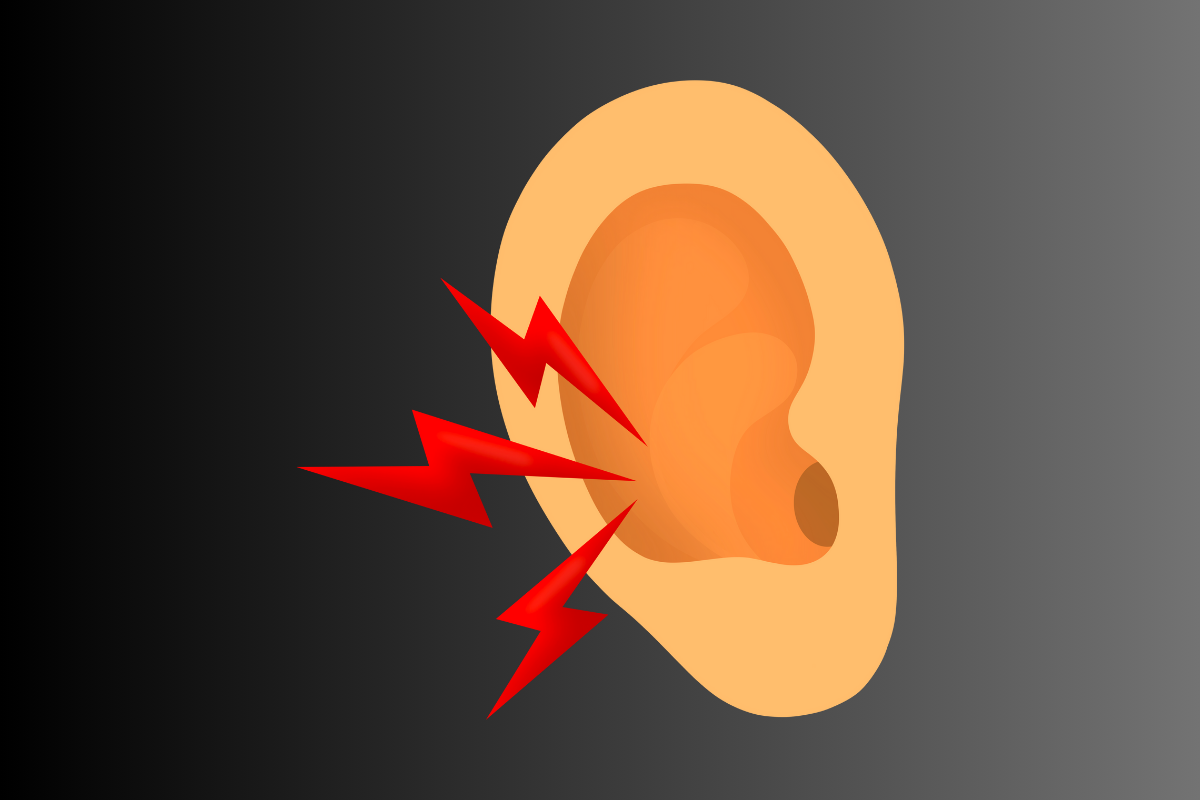
Tinnitus is the perception of sound (ringing, buzzing, hissing, clicking) in the ears when no external sound is present. It can be intermittent or constant, and ranges from mild annoyance to severe interference with sleep and concentration.
Common causes (modern view)
- Noise exposure, age-related hearing loss (presbycusis), earwax impaction.
- Middle/inner ear pathology, ototoxic medications, temporomandibular or cervical issues.
- Vascular or neurological causes, stress and sleep disturbance can worsen perception.
Ayurvedic perspective
In Ayurveda tinnitus-like symptoms are often linked to Vata imbalance in the head and neck region; Ears are connected to Shira, Shirah-sthana, and Uttara-marma. Nasya (nasal therapies) and therapies that calm Vata and nourish Shiro/Rakta are central.
Ayurvedic Strategy for Tinnitus
Treatment is individualized and directed to the probable cause. Our clinic approach includes:
- Local therapies: Nasya (medicated nasal drops/insufflation) to clear head channels and balance Vata in the ear region.
- Neuromodulation & calming: Shirodhara and Abhyanga to calm the nervous system and reduce hyperexcitability.
- Neck & cervical support: Greeva Vasti and targeted therapies for cervical muscle tension contributing to tinnitus.
- Systemic Vata pacification: Basti courses when Vata predominance or chronicity are present.
- Herbal & lifestyle: Herbs (Brahmi, Ashwagandha), sleep & stress management, dietary corrections and ENT coordination (hearing tests) as needed.
Clinic Therapies Useful in Tinnitus (with reference photos)
Below are therapies we commonly use for tinnitus relief — each entry has a reference image and practical details. ENT evaluation and hearing tests are recommended prior to therapy to identify treatable causes.
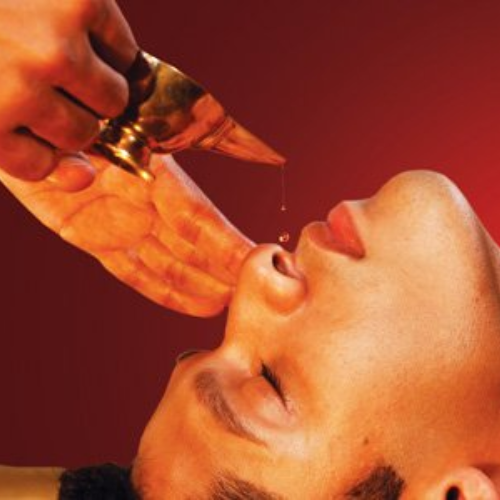
Nasyam (Medicated Nasal Therapy) Core
What it is: Administration of medicated oils/ghritas or herbal drops via the nostrils to clear head channels and balance Vata.
- Primary therapy for ear-related Vata disorders — helps clear Eustachian tube and cranial channels.
- Reduces abnormal neural signaling perceived as ringing and improves drainage of middle ear when indicated.
- Typical protocol: preparatory local oiling and then specified drops or nasya medicaments for a short course; must be done by trained therapist.
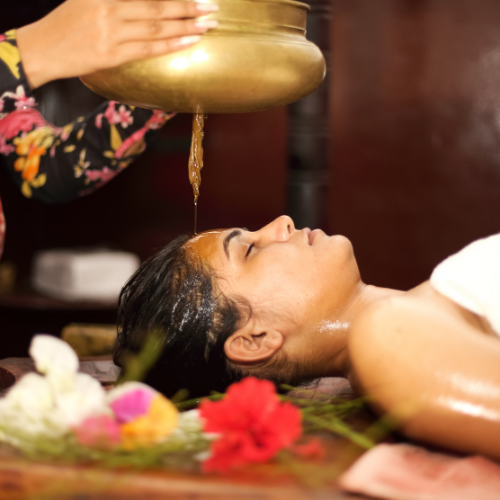
Shirodhara (Forehead Oil Pouring)
What it is: Continuous, gentle pouring of warm herbal oil over the forehead to calm the nervous system.
- Reduces stress, anxiety and sleep disturbances which often amplify tinnitus perception.
- Helps normalize autonomic tone and reduces central sensitization that maintains chronic tinnitus.
- Useful adjunct before or after Nasya to deepen relaxation and response.
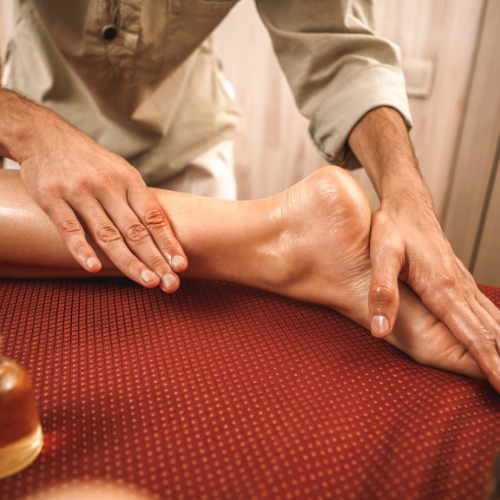
Abhyanga (Warm Oil Massage)
What it is: Full-body or head-and-neck medicated oil massage to pacify Vata and improve circulation.
- Reduces muscular tension in neck/shoulders, improves blood flow and calms nervous system.
- Prepares the body for Nasya and supports overall Vata balance.
- Regular sessions reduce anxiety, improve sleep, and can lower tinnitus intrusiveness over time.
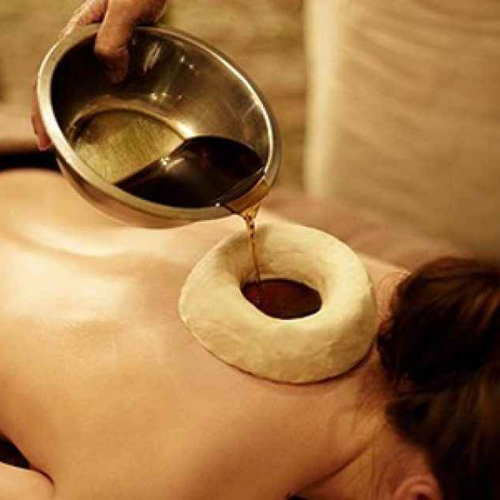
Greeva Vasti (Cervical Oil Retention)
What it is: Retention of warm medicated oil over the cervical region in a dough ring for a prescribed time.
- Targets cervical muscle spasm and joint dysfunction that can refer symptoms to the ear (cervicogenic tinnitus).
- Improves neck mobility, reduces nerve compression, and supports local circulation to upper cervical structures.
- Often combined with physiotherapy for neck-related tinnitus.
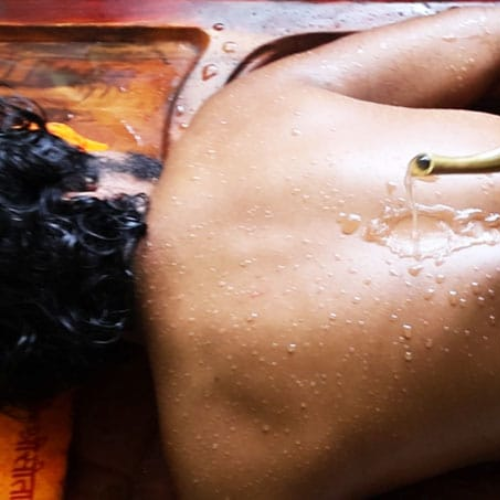
Kashaya Dhara (Herbal Decoction Pouring)
What it is: Continuous pouring of warm herbal decoction on head/neck or specific regions to reduce inflammation and soothe tissues.
- Used when inflammation or congestion of head/neck structures contributes to tinnitus symptoms.
- Can be tailored with herbs that calm Vata and support circulation in the area.
Basti (Medicated Enema) — Supportive
What it is: A course of medicated enemas used to pacify systemic Vata in chronic or refractory cases.
- When tinnitus is driven by chronic systemic Vata imbalance, Basti may be prescribed to provide deep Vata pacification and stabilization.
- Delivered as a monitored course and combined with Nasya/Shirodhara for best results.
Herbal & Lifestyle Support
Herbs commonly used (examples)
- Brahmi (Bacopa monnieri): Calms nervous system, supports cognitive processing and stress resilience.
- Ashwagandha (Withania somnifera): Adaptogen that reduces stress and improves sleep.
- Shankhapushpi / Jatamansi: Nervine tonics helpful for sleep and calming tinnitus perception.
- Triphala / Triphala Ghrita (topical/internal as advised): For mild detox and digestive support to reduce Ama.
Lifestyle & self-care
- ENT assessment & hearing test (audiometry) to rule out treatable ear pathology.
- Sleep hygiene, stress reduction (meditation/pranayama), avoidance of stimulants (caffeine, nicotine) that amplify tinnitus.
- Gentle neck mobility and posture correction to reduce cervicogenic contributions.
- Avoid loud noise exposure; use hearing protection where needed.
Herbal prescriptions are individualized. Some herbs may interact with medications — always inform us of current medicines (especially blood thinners, sedatives, or psychiatric drugs).
Sample Clinic Plans & Protocols
Examples — each plan is individualized after ENT and Ayurvedic assessment.
Acute / New-Onset Tinnitus (1–2 weeks)- ENT evaluation + wax removal if needed
- Short course of Nasya (specific drops) + gentle Abhyanga
- Stress management & sleep support (Shirodhara if insomnia present)
Subacute / Chronic Tinnitus (3–6 weeks)- Nasya series + Shirodhara + Greeva Vasti for cervical contribution
- Herbal nervine tonics (Brahmi, Jatamansi) and Vata-pacifying diet
- If systemic Vata predominant, a supervised Basti course may be recommended
Maintenance & Rehabilitation- Periodic Nasya (maintenance), monthly calming therapies as needed
- Long-term stress resilience program, hearing protection and physiotherapy
Progress is monitored with symptom scales, sleep quality and ENT follow-ups. Some cases may require concurrent ENT or neurology referral.
Quick Reference — Therapies & Roles
| Therapy | Primary purpose | When useful |
|---|
| Nasya | Clear head channels, balance Vata | Primary for ear-related tinnitus |
| Shirodhara | Calm nervous system, improve sleep | Stress-related or hyperarousal tinnitus |
| Greeva Vasti | Relieve cervical muscle/joint tension | Cervicogenic tinnitus |
| Abhyanga | Vata pacification, circulation | Supportive & preparatory |
| Basti | Deep Vata pacification | Chronic systemic Vata-driven tinnitus |
| Kashaya Dhara | Anti-inflammatory local effect | Inflammatory head/neck states |
Safety, Evidence & Coordination
- Always begin with ENT evaluation (audiometry, otoscopy) to identify treatable causes (wax, infection, otosclerosis, vascular issues).
- Ayurvedic therapies are supportive and may reduce symptom burden; some cases of tinnitus result from irreversible inner ear damage and require sound therapy or ENT interventions.
- Herbal medicines and procedures are individualized — inform us of all medications (anticoagulants, sedatives, SSRIs) to avoid interactions.
- Nasya and oil-based therapies should be performed by trained practitioners; avoid in acute sinus infection or uncontrolled hypertension without medical clearance.
Interested in an individualized Ayurvedic plan for tinnitus?
Book a consultation — we will coordinate ENT screening, perform Ayurvedic assessment and design a safe, stepwise plan combining Nasya, calming therapies, herbal support and rehabilitation.
Book ConsultationAll procedures are performed by qualified Ayurvedic physicians. ENT/neurology referrals provided when indicated.