What is Multiple Sclerosis?
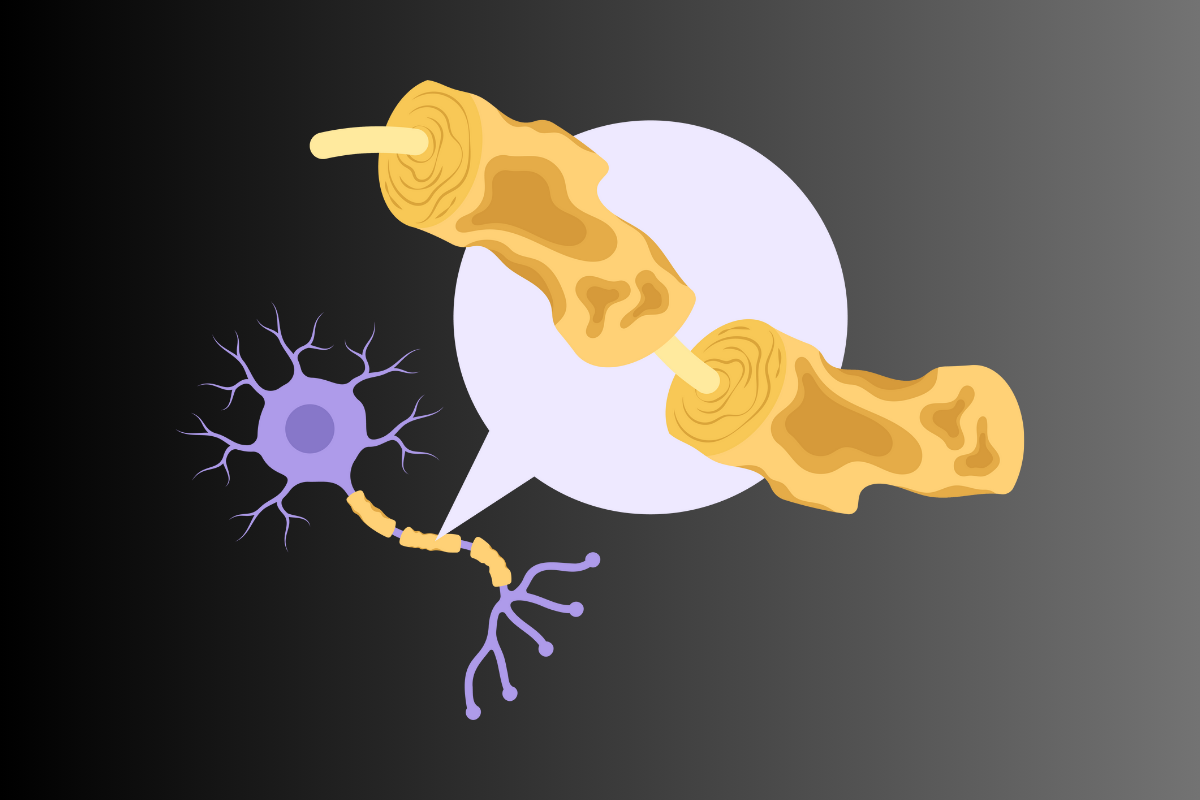
Multiple Sclerosis (MS) is a chronic immune-mediated neurological disorder in which the body’s immune system damages myelin (the protective covering) of nerve fibres in the brain and spinal cord. This causes a range of neurological symptoms — visual disturbances, limb weakness, sensory loss, coordination problems, bladder dysfunction and fatigue. MS has relapsing–remitting and progressive forms.
Typical clinical features
- Visual changes (optic neuritis), numbness, tingling, limb weakness.
- Gait imbalance, spasticity, coordination and fine-motor problems.
- Chronic fatigue, cognitive fog, bladder/bowel disturbances.
- Symptoms may come in attacks (relapses) with partial recovery (remission) or slowly progress.
Ayurvedic perspective
Ayurveda conceptualizes MS-like conditions under chronic neurological disorders where Vata plays a dominant role (degenerative and neuro-muscular symptoms). Disease is treated by pacifying Vata, strengthening nervous tissue (Majja dhatu), detoxifying Ama, and using Rasayana therapies to support neuro-regeneration and immunity.
Important clinical note
Crucial: Multiple Sclerosis is a medical condition that must be managed by a neurologist. Ayurvedic therapies can provide supportive relief for symptoms (pain, spasticity, fatigue, sensory disturbances), improve rehabilitation outcomes and enhance quality of life — but they do **not** replace disease-modifying therapies or neurologic care. We always coordinate treatments with your neurologist and respect ongoing medications (immunotherapies, steroids, symptomatic drugs).
Ayurvedic strategy for MS (supportive care)
Our clinic uses a multi-pronged supportive program to address MS symptoms:
- Vata pacification & Majja nourishment: Therapies and Rasayanas aimed at calming Vata and nourishing nerve tissue (Majja dhatu).
- Detox & balance: Gentle panchakarma (selected Basti, Nasyam) to remove Ama and reduce neuro-inflammation where appropriate.
- Local symptomatic therapies: Kati/Prishtha Vasti, Njavara Kizhi, Abhyanga and Shirodhara to relieve spasm, pain, sensory symptoms and sleep disturbance.
- Rehabilitation & lifestyle: Neuro-rehab physiotherapy, gait training, energy conservation, pranayama and sleep hygiene.
Therapies we provide — Useful in Multiple Sclerosis
Below are clinic therapies commonly used as part of a supportive MS program. Each therapy includes a photo for reference and practical details. Therapies are chosen and scheduled after neurologic clearance.
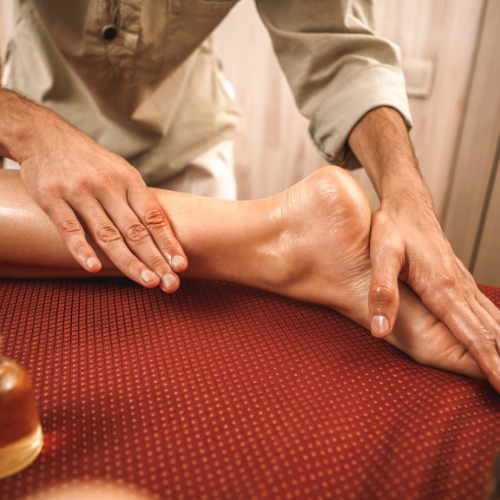
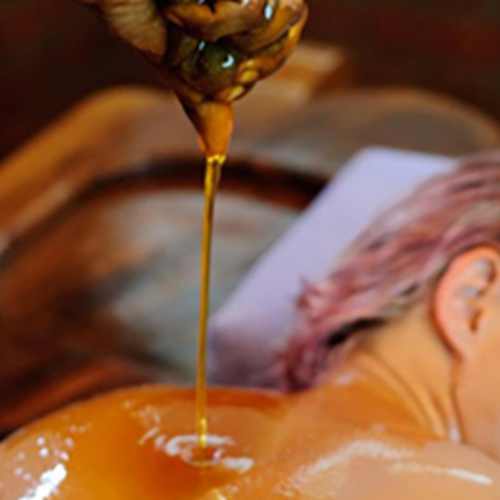
Abhyanga (Warm Oil Massage)
What it is: Full-body warm herbal oil massage tailored to pacify Vata and improve circulation.
- Relieves muscle spasm, reduces stiffness and promotes relaxation.
- Improves peripheral circulation and lymphatic drainage — useful for numbness and heaviness.
- Enhances sleep and reduces stress-related symptom exacerbation.
- Typical use: daily or alternate-day during intensive rehabilitation phases, then maintenance as advised.
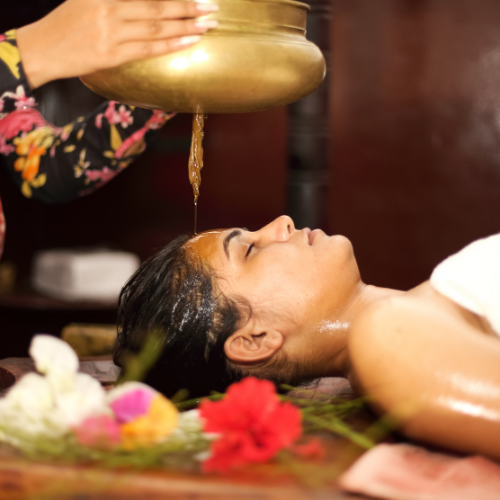
Shirodhara (Forehead Oil Pour)
What it is: Continuous, calming pouring of warm herbal oil on the forehead.
- Calms the nervous system, reduces anxiety and improves sleep.
- Helps with cognitive fatigue, headaches and stress-related symptom flares.
- Used as adjunct during recovery and to enhance response to neurorehabilitation.
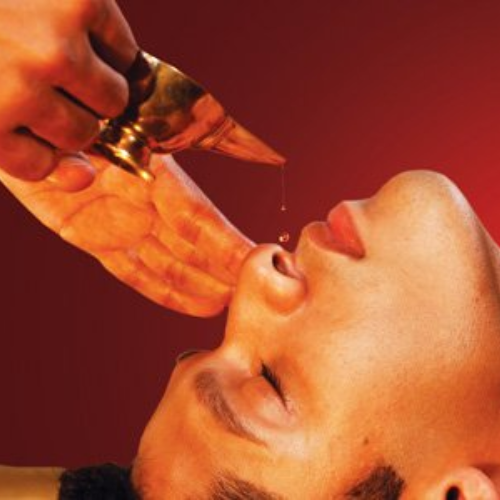
Nasyam (Nasal Administration)
What it is: Medicated oils or herbal preparations administered via the nostrils under supervision.
- Clears cranial channels, supports nerve function, and may help with sensory symptoms and headaches.
- Useful for speech, swallowing difficulties and cranial nerve related symptoms in select patients.
- Requires neurologic clearance (avoid during active infection or severe autonomic dysfunction).
Basti (Medicated Enema)
What it is: Therapeutic enemas using medicated oils or decoctions designed to pacify Vata and nourish tissues.
- Considered powerful for chronic Vata disorders — helps reduce spasticity, neuropathic pain and bowel dysfunction.
- Often given as a course under physician supervision; individualized based on symptoms and comorbidities.
- Not suitable during active infections, severe autonomic instability or acute relapses without neurologic approval.
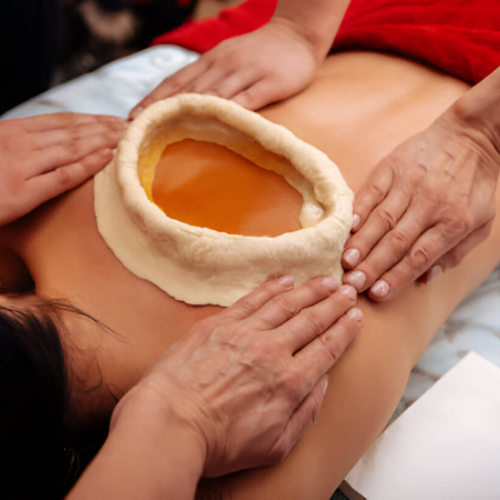
Kati Vasti (Lower Back Oil Retention)
What it is: Medicated oil is retained over the lumbar region in a dough ring to nourish spinal tissues.
- Relieves low-back spasm, radicular pain and sacral sensory complaints which are common in spinal MS involvement.
- Improves local circulation and reduces deep muscular tension.
- Used as part of a combined rehabilitation plan for gait and trunk control.
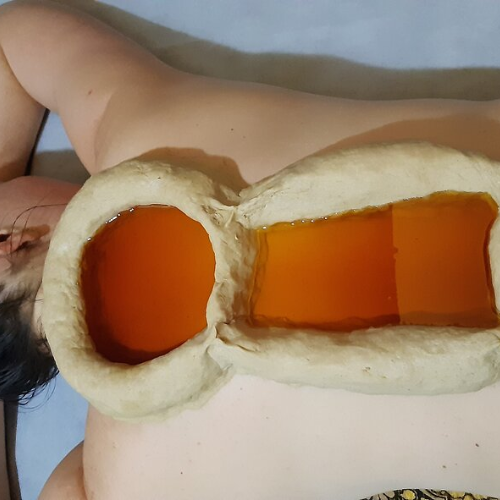
Prishtha Vasti (Back Oil Retention)
What it is: Oil retained on the back for spinal nourishment and pain relief.
- Helps when spine-related symptoms and posterior chain spasticity impede mobility.
- Supports vertebral and paraspinal tissue nourishment and reduces discomfort during physiotherapy.
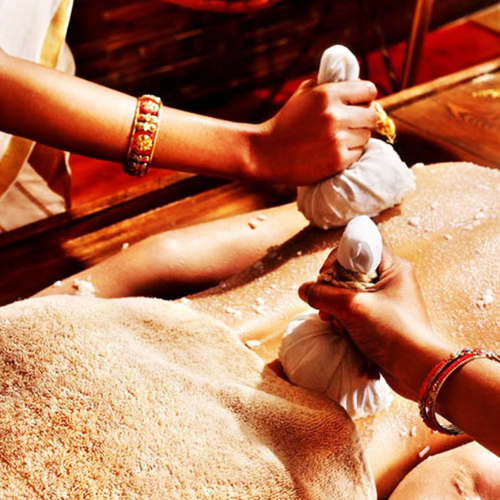
Njavara Kizhi
What it is: Warm rice boluses cooked in herbal decoctions applied over the body/joints.
- Provides gentle thermal nourishment to muscles and nerves — useful for chronic weakness and stiffness.
- Supports tissue repair, reduces spasm and enhances mobility when combined with physiotherapy.
Oil Bath (Rejuvenation)
What it is: Full-body immersion or application of warm medicated oil followed by rest.
- Deep tissue nourishment and relaxation — beneficial for generalised weakness and fatigue management.
- Often used during rejuvenation phases alongside Rasayana (rejuvenative) medicines.
Herbal Support, Neuro-rehab & Lifestyle
Herbal & Rasayana Support
Individualized, evidence-informed formulations focused on neuroprotection, Vata pacification and general rejuvenation:
- Ashwagandha: Adaptogen & neuroprotective actions; supports nerve strength and fatigue.
- Brahmi (Bacopa): Cognitive support and memory; used cautiously with neurologist approval.
- Dashmoola & Majja-nourishing tonics: Vata balancing and nervous tissue support.
- Topical medicated oils: For local spasm and symptomatic relief during therapy cycles.
Rehabilitation & Lifestyle
- Neuro-physiotherapy: gait training, spasticity management, balance & core strengthening.
- Energy conservation strategies and graded exercise to combat fatigue.
- Pranayama, meditation, and sleep hygiene to support autonomic balance and recovery.
- Coordination with neurology for medication timing and lab monitoring.
Herbal medicines should be prescribed after clinical evaluation. We coordinate with neurologists about possible interactions and timing of disease-modifying therapies and steroids.
Sample Clinic Programs (examples — individualized)
Symptom Relief & Rehab (1–2 weeks)- Abhyanga + Shirodhara (to improve sleep & reduce fatigue)
- Targeted Kati/Prishtha Vasti for back/spasticity
- Begin neuro-physio integration
Rebuild & Rejuvenate (3–6 weeks)- Course of Njavara Kizhi + Basti (if indicated) with Rasayana medicines
- Gradual physiotherapy progression & balance training
- Diet, sleep & stress management program
Maintenance & Support- Monthly Abhyanga/maintenance therapies
- Ongoing neuro-rehab, herbal support and follow-up with neurology
All programs are adapted to MS subtype (relapsing vs progressive), current medications and functional status. Acute relapses (new neurologic deficits) require immediate neurologic evaluation before any therapy.
Quick Reference — Therapies & Roles
| Therapy | Main purpose in MS support | Notes |
|---|
| Abhyanga | Relieves spasm, improves circulation | Useful for stiffness & fatigue |
| Shirodhara | Calms CNS, improves sleep | Adjunct for stress & cognitive fatigue |
| Nasyam | Supports cranial nerve symptoms | Use after neurologic clearance |
| Basti | Pacifies Vata, reduces spasticity | Given as supervised course |
| Kati / Prishtha Vasti | Spinal nourishment & pain relief | Used for back symptoms & radiculopathy |
| Njavara Kizhi | Tissue nourishment & reduction of chronic stiffness | Supports rehab |
Interested in an individualized supportive plan for MS?
Book a consultation — we will review your neurologic history, current medications, imaging/labs and design a safe, coordinated Ayurvedic+rehab program to help manage symptoms and support function.
Book ConsultationAll therapies are provided under qualified Ayurvedic physicians and in coordination with your neurologist when necessary.