What is Facial Paralysis?
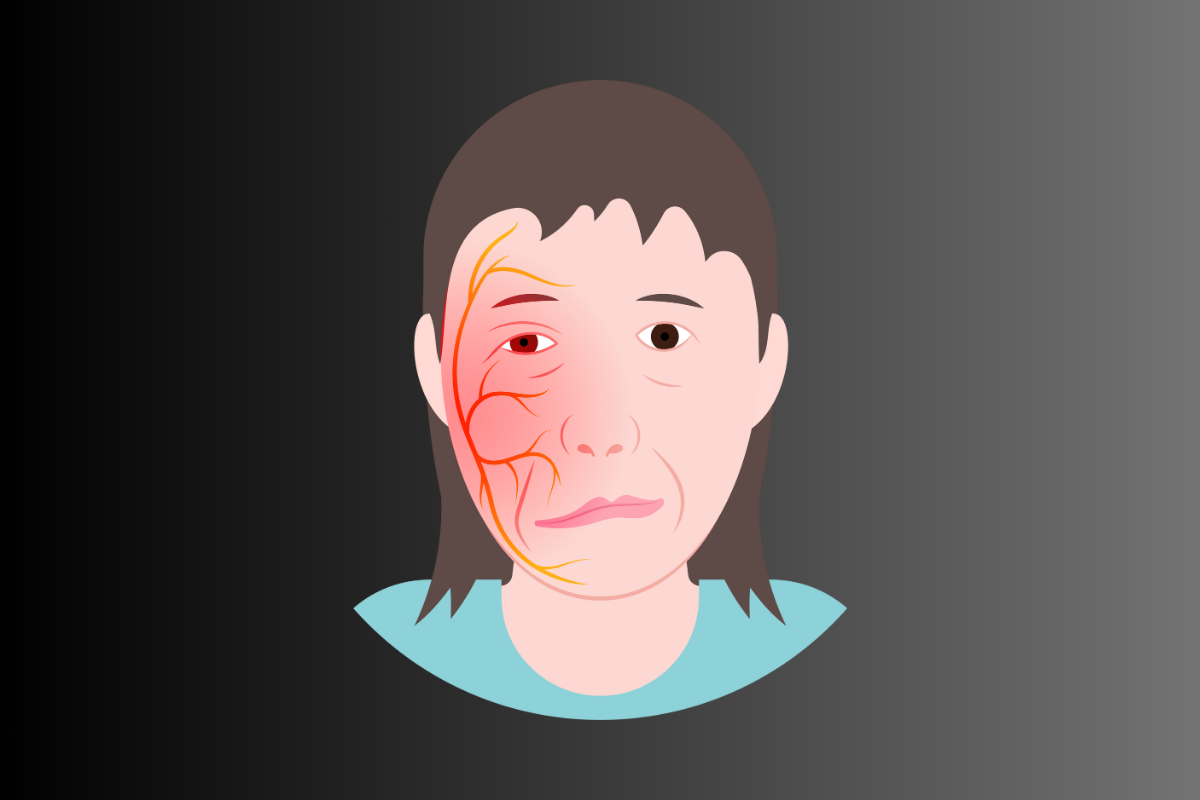
Facial paralysis is weakness or loss of voluntary movement in the facial muscles caused by facial nerve dysfunction. Bell’s palsy (idiopathic peripheral facial palsy) is most common and presents with sudden onset weakness on one side of the face, drooping, inability to close eye, drooling, altered taste and facial asymmetry. Early treatment improves outcomes.
Key clinical signs
- Sudden unilateral facial weakness or droop.
- Difficulty closing the eye and reduced blinking.
- Loss of nasolabial fold, difficulty smiling or whistling.
- Associated pain behind the ear, altered taste or hypersensitivity to sound in some cases.
Ayurvedic perspective
Ayurveda views facial paralysis as Ardita (a Vata-dominant disorder affecting the face and cranial channels). Treatment focuses on pacifying aggravated Vata, improving Sira (nervous channels) circulation, nourishing Snayu-Mamsa-Asthi (tendons-muscles-bone), and rehabilitating motor function.
Ayurvedic Approach & Goals
Our clinic combines local therapies, systemic detox/tonics, nasal therapies to reach cranial channels, nerve-nourishing rasayanas, and physiotherapy to restore facial function:
- Pacify Vata: Local oil nourishment and systemic Vata pacification to reduce nerve irritation.
- Direct cranial channel therapy: Nasyam (nasal medicated oils/powders) to reach head region and improve nerve function.
- Neuro-nourishment & rehabilitation: Rasayanas (Ashwagandha, Bala), facial exercise protocols and eye-protection strategies.
- Stress & sleep support: Shirodhara and relaxation modalities to support healing.
Clinic Therapies Useful for Facial Paralysis (with reference photos)
Below are the clinic therapies we use specifically for facial paralysis — each therapy includes practical notes on how it helps, frequency and precautions.
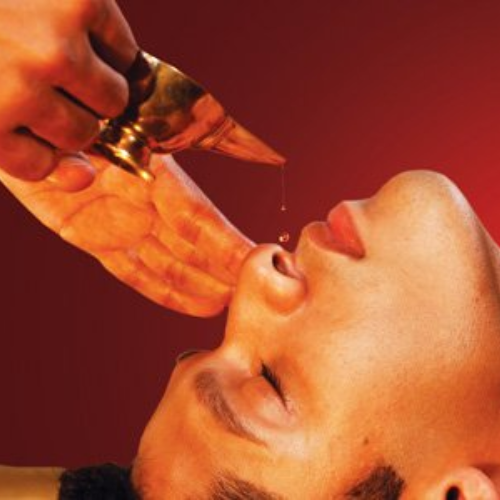
Nasyam (Nasal Therapy) Core
What it is: Administration of medicated oils or herbal drops into the nostrils to reach head channels (Shiras) and nourish cranial nerves.
- Directly targets cranial channels and facial nerve pathways — improves neural conduction and reduces Vata disturbance in the head region.
- Reduces congestion around the nerve root and supports recovery of blinking and facial movements.
- Typical regimen: daily sessions for initial 7–14 days, then taper based on response and physician guidance.
- Precautions: performed by trained therapists; not used if nasal infection or active epistaxis without clearance.
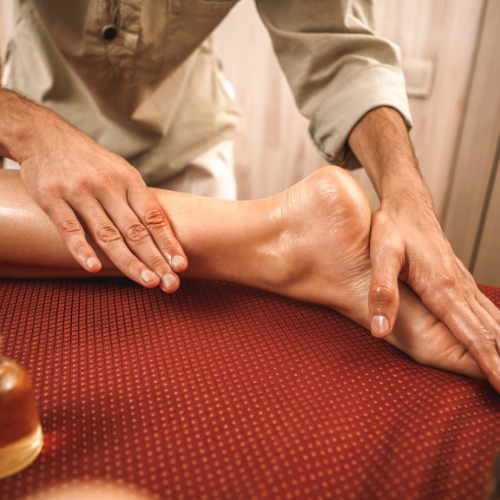
Abhyanga — Mukha Abhyanga (Facial Oil Massage)
What it is: Gentle, warm medicated oil massage focused on facial muscles (Mukha Abhyanga) and occipital-neck region to improve circulation and relieve neural tension.
- Nourishes facial muscles and peripheral nerves, reduces stiffness and improves blood flow.
- Helps maintain moisture of cornea/eyelids — combined with eye lubrication measures to protect the eye if eyelid closure is impaired.
- Often given daily or alternate days in acute phase; technique and pressure are gentle and tailored to avoid discomfort.
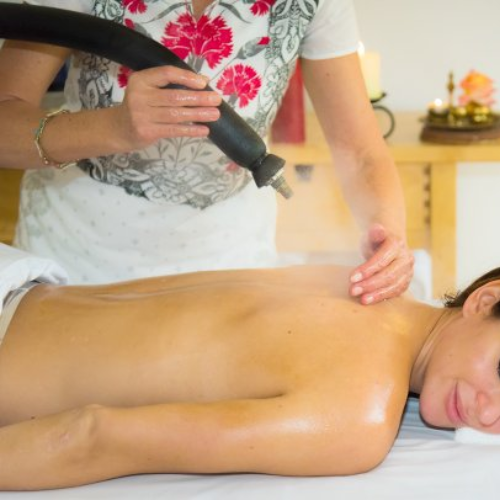
Nadi Swedan (Localized Steam)
What it is: Focused steam applied to the neck/face junction or parotid region through a narrow tube to provide controlled warmth.
- Relieves local muscle spasm, improves circulation to the facial nerve trunk and reduces stiffness.
- Prepares tissues for Mukha Abhyanga and enhances absorption of topical oils.
- Used cautiously on the face — temperature and duration are adjusted for safety and comfort.
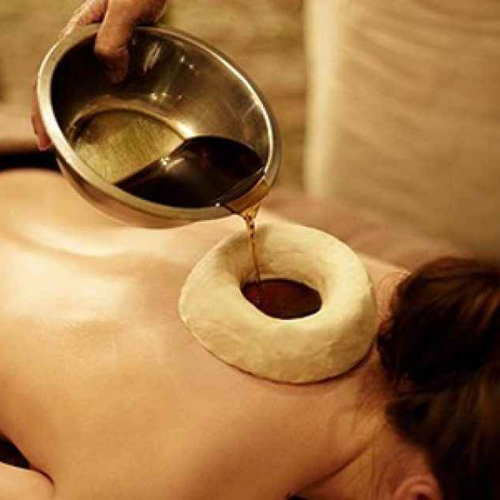
Greeva Vasti (Cervical Oil Retention)
What it is: Warm medicated oil retained over the cervical (neck) region in a dough boundary for a set period to nourish nerves and soft tissues.
- Targets nerve roots and muscular tension in the neck that can compress or irritate the facial nerve.
- Reduces stiffness in cervical muscles and improves cervical circulation, indirectly supporting facial nerve recovery.
- Often used alongside Nasyam and Mukha Abhyanga in a combined protocol.
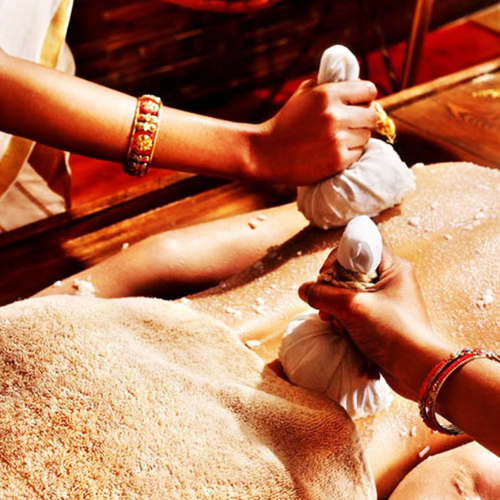
Njavara Kizhi (Supportive Nourishment)
What it is: Warm boluses of Njavara rice cooked in herbal decoctions, applied over the neck and shoulders or whole body to nourish muscles and nerves.
- Provides deep nutritive and thermic support for neuromuscular recovery.
- Reduces Vata and promotes tissue repair — helpful in subacute and recovery phases to rebuild strength.
- Generally given in a course of sessions (e.g., 8–14 applications depending on severity).
Lepam (Topical Herbal Paste)
What it is: Application of specially selected herbal paste on facial muscle lines and affected regions to soothe inflammation and stimulate circulation.
- Helps reduce local inflammation, eases pain and supports muscle repair.
- Applied after Mukha Abhyanga or Nadi Swedan to lock in herbal benefits.
- Formulation depends on skin sensitivity; not to be used on broken skin or open wounds.
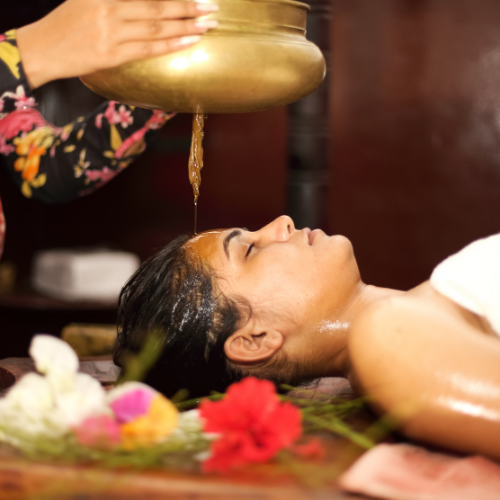
Shirodhara (Nervous System Support)
What it is: Continuous warm oil flow on the forehead to calm the nervous system and improve sleep and stress resilience.
- Reduces stress-related autonomic responses that can impair nerve healing.
- Improves sleep and overall recovery potential — supportive adjunct during acute and recovery phases.
Basti (Medicated Enema) — Systemic Support
What it is: Medicated oil or decoction enemas administered to pacify Vata and nourish tissues systemically.
- Considered a powerful systemic intervention for chronic or recurrent Vata-mediated neural disorders.
- Supports long-term nerve nourishment and reduces recurrence when indicated and supervised.
- Prescribed only after assessment; done as a course under clinical monitoring.
Herbal & Nutritional Support
We combine nerve-nourishing herbs and rasayanas with nutrition and physiotherapy for optimal recovery. All internal prescriptions are individualized.
- Ashwagandha: Neuroprotective, nervine tonic supporting nerve repair and reducing inflammation.
- Bala (Sida cordifolia): Nervine strengthening herb for neuromuscular support.
- Guduchi: Immune-modulating and supportive for recovery.
- Diet: Easily digestible, nourishing meals (warm soups, stewed vegetables, ghee, milk if tolerated) to support tissue repair.
- Micronutrients: Vitamin B-complex, vitamin D, and antioxidants (physician-guided testing & supplementation if needed).
- Eye care: Artificial tears, lid taping at night, and ophthalmology coordination if eyelid closure is incomplete.
Herb-drug interactions and supplement needs are assessed case-by-case. If steroids or antivirals are prescribed by your physician (common in early Bell’s palsy), we coordinate care safely.
Rehabilitation — Facial Exercises & Eye Protection
Active rehabilitation is essential to prevent long-term weakness and synkinesis (abnormal muscle co-contraction).
- Facial physiotherapy: Daily gentle muscle retraining exercises, mirror-feedback, and neuromuscular stimulation where appropriate.
- Eye care: Frequent lubrication, nighttime eye protection and prompt ophthalmology follow-up to prevent corneal damage.
- Speech & swallowing: Assessment and therapy if oral competence is affected.
Sample Clinic Plans (examples)
Acute (0–2 weeks)- Medical triage & urgent evaluation to rule out central causes (stroke).
- Mukha Abhyanga + Nasyam (gentle oil drops) daily.
- Eye protection measures, short course of supportive herbs and rest.
Subacute (2–6 weeks)- Continue Nasyam + Greeva Vasti; add Nadi Swedan before facial therapies.
- Begin Njavara Kizhi (supportive nourishment) and facial physiotherapy.
- Shirodhara for stress & sleep support when indicated.
Rehab & Maintenance (6+ weeks)- Course of Basti if Vata predominance persists (systemic support).
- Ongoing facial exercises, occasional Mukha Abhyanga and Lepam for symptomatic areas.
- Long-term rasayana & nutrition to rebuild nerve and muscle strength.
Plans are tailored to onset time, severity, and co-existing medical therapy. Early multidisciplinary care improves outcomes — we coordinate with neurology, ENT and ophthalmology as needed.
Quick Reference — Therapies & Roles
| Therapy | Primary role | When used |
|---|
| Nasyam | Direct cranial channel nourishment | Acute & subacute phases |
| Mukha Abhyanga | Local muscle nourishment & lubrication | Daily/alternate days in acute phase |
| Greeva Vasti | Cervical nerve root nourishment | Subacute phase |
| Njavara Kizhi | Deep tissue nourishment & Vata pacification | Subacute/recovery phases |
| Lepam | Topical anti-inflammatory & soothing | After oil therapies |
| Shirodhara | Stress reduction, sleep & CNS support | Adjunct during recovery |
| Basti | Systemic Vata pacification & nourishment | Chronic/recurrent cases |
Safety, Red Flags & Coordination
- Immediate medical evaluation: Any sudden facial weakness must be assessed urgently to exclude stroke or other central causes. Ayurvedic therapies are supportive but do not replace emergency care.
- Eye protection: If eyelid closure is incomplete, ophthalmology review and protective measures (lubricants, taping) are essential to prevent corneal injury.
- Drug interactions: If conventional medicines (steroids, antivirals) are prescribed, we coordinate therapy timing and safety.
- Therapy precautions: Nasyam and internal Panchakarma require trained clinicians; not all patients are candidates for all procedures.
Begin a focused recovery plan for facial paralysis
Book a consultation — we will triage your case, coordinate urgent medical assessment if needed, and design a safe Ayurvedic therapy + rehabilitation plan tailored to recovery.
Book ConsultationAll therapies are performed under qualified Ayurvedic physicians and in coordination with medical specialists when indicated.