What is Ataxia?
Ataxia describes impaired balance, coordination and gait resulting from dysfunction of the cerebellum, sensory pathways, or vestibular system. Symptoms may include unsteady walking, difficulty with fine motor tasks, slurred speech, tremor, and eye movement abnormalities. Causes range from hereditary disorders, stroke, multiple sclerosis, infections, toxins, to nutritional deficits.
Key features
- Gait instability and tendency to fall
- Poor hand coordination and intention tremor
- Speech changes (dysarthria) and eye movement abnormalities
- Often requires neurological assessment and imaging
Ayurvedic perspective
Ayurveda links ataxia-like symptoms to aggravated Vata dosha affecting the nervous system (Majja and Sira dhatus). Treatment focuses on pacifying Vata, nourishing Majja (nervous tissue), improving neuromuscular coordination and supporting systemic strength with diet, herbs and targeted therapies.
How Ayurveda Supports Ataxia (Cautious, Supportive Care)
Important: Ataxia requires neurological diagnosis. Ayurvedic care is supportive and rehabilitative — it may improve symptoms, reduce Vata-driven dysfunction and assist recovery when used alongside conventional therapy (physiotherapy, neurology follow-up).
- Vata pacification: Internal herbs and oil therapies to calm Vata and reduce tremor/instability.
- Majja nourishment (neuro-support): Rasayanas and selected nervine tonics to support nerve health and conduction.
- Local & systemic therapies: Abhyanga, Njavara Kizhi, Shirodhara, Nasyam and Basti tailored to patient needs.
- Rehabilitation integration: Physiotherapy, balance training and occupational therapy for functional improvement.
Therapies We Provide — Useful in Ataxia (with photos)
Therapies below are selected to pacify Vata, nourish nervous tissues, improve circulation and aid rehabilitation. These are supportive measures and must be coordinated with neurology and physiotherapy.
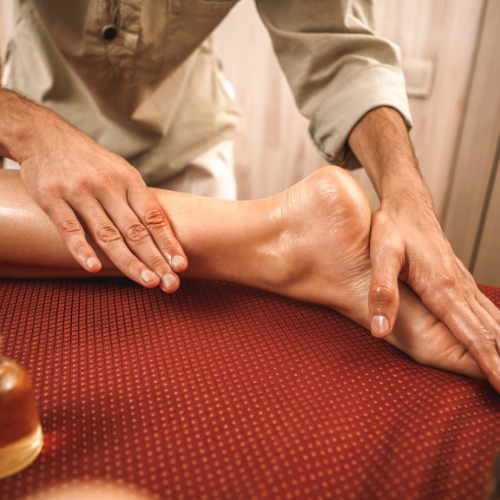
Abhyanga (Warm Medicated Oil Massage) Supportive
What it is: Full-body oil massage with warm, nervine-promoting oils.
- Calms and pacifies aggravated Vata — reduces tremor and restlessness.
- Improves peripheral circulation and proprioceptive feedback to muscles.
- Prepares the nervous system and body for rehabilitative exercises.
- Typical course: daily or alternate days during intensive phase, then maintenance.
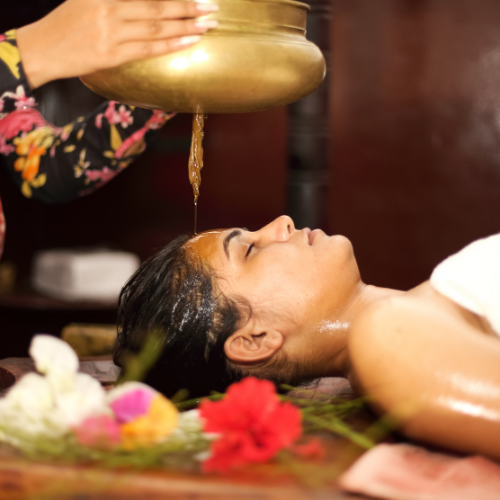
Shirodhara (Forehead Oil Pouring)
What it is: Slow continuous stream of warm herbal oil over the forehead.
- Deeply relaxes the nervous system, reduces anxiety and sleep disturbance that worsen coordination.
- Supports neuromodulation and may improve concentration and motor control over time.
- Used as an adjunct during rehabilitation cycles to enhance learning and recovery.
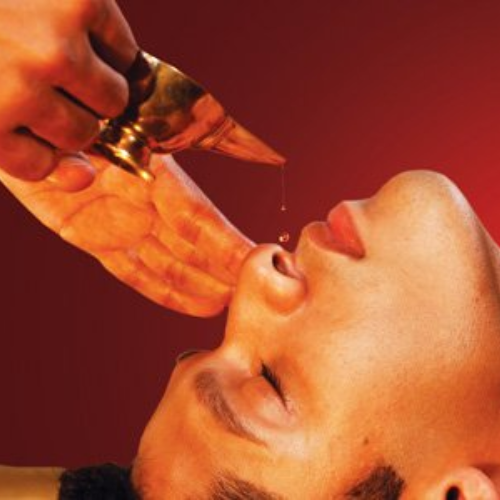
Nasyam (Nasal Administration)
What it is: Medicinal oils or herbal drops administered via the nose.
- Directly influences cranial nerves and central nervous pathways; used for Vata disorders of the head.
- May improve speech clarity, head balance and neural signaling when part of a tailored plan.
- Requires physician assessment and correct dosing; not for acute infections or nasal obstruction.
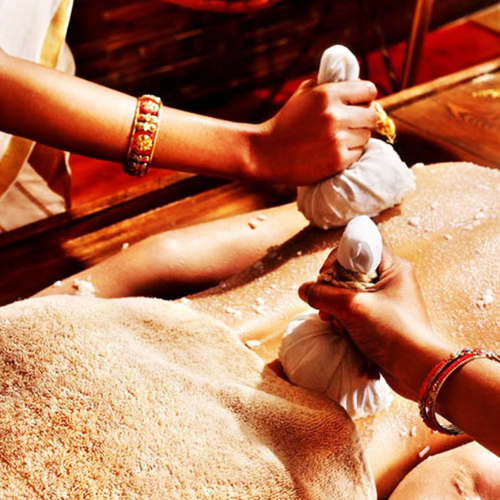
Njavara Kizhi
What it is: Warm boluses of Njavara rice cooked in herbal decoction applied over body/joints.
- Deeply nourishes muscles and nervous tissues, reduces chronic Vata stiffness.
- Helps restore proprioceptive support around joints — useful when ataxia is accompanied by muscle weakness.
- Often given in repeated sessions as part of a rebuilding cycle.
Basti (Medicated Enema)
What it is: Medicated oil or decoction enemas to pacify Vata and nourish tissues.
- Considered a potent Vata-pacifying therapy — may help systemic Vata conditions contributing to coordination deficits.
- Used selectively and under close clinical supervision as part of a course.
- May be combined with oral rasayanas for neuro-support.
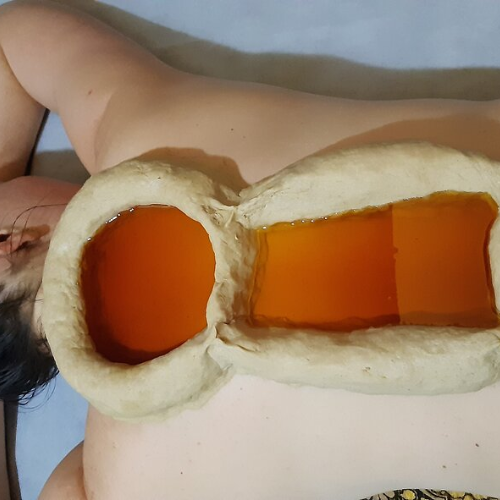
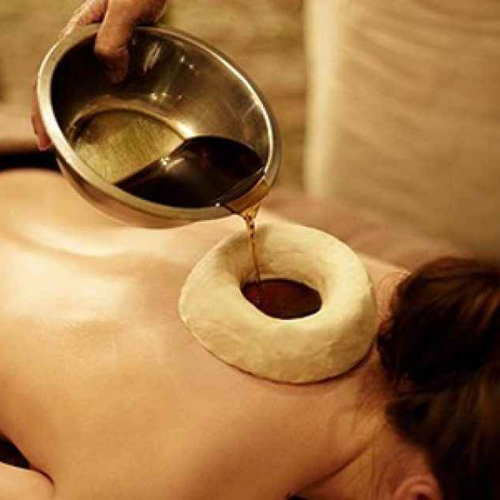
Kati / Prishtha Vasti (Spinal Oil Retention)
What it is: Medicated oil retained over the back or lumbar region in a dough boundary.
- Improves spinal nerve nourishment and reduces deep muscular spasm that can affect gait and posture.
- Useful when spinal or peripheral nerve involvement contributes to imbalance.
Greeva Vasti (Cervical Oil Retention)
What it is: Medicated oil retained over the neck region.
- Helps if neck muscle tone, nerve irritation or cervical dysfunction contributes to imbalance or dizziness.
- Used when clinically indicated as part of an integrated plan.
Shirodhara — Rehabilitative Adjunct
Used strategically to improve sleep, reduce anxiety, and enhance the effectiveness of physiotherapy learning and motor retraining.
- May be scheduled before or after physiotherapy sessions depending on patient response.
Selection and intensity of therapies depend on cause, severity, coexisting conditions and neurologist input. Not all therapies are suitable for every patient; a qualified Ayurvedic physician evaluates candidacy and sequencing.
Herbal & Nutritional Support
Oral herbs and rasayanas are chosen to support Majja (nervous tissue), pacify Vata and improve neuro-muscular function. Always individualized and coordinated with other medications.
- Ashwagandha (Withania somnifera): Adaptogen with potential neuroprotective and strengthening effects.
- Brahmi (Bacopa monnieri): Traditionally used to support cognitive and nervous system function (may aid coordination and learning motor tasks).
- Shilajit / mineral tonics: Used cautiously in some rasayana protocols for systemic strength (physician-supervised).
- Nutrition: Emphasize warm, easily digestible, Vata-pacifying foods (ghee, warm soups, well-cooked grains, moderate proteins). Ensure adequate B-vitamin and micronutrient status—coordinate blood tests with your physician.
- Hydration & electrolytes: Important for neuromuscular function — address any deficiencies.
Herb choices and dosages are individualized. Some herbs may interact with neurological medications — we coordinate care and review medications before starting herbs.
Rehabilitation — Balance & Function
Physiotherapy and occupational therapy are core to ataxia care. Ayurveda complements rehab by preparing the body and reducing Vata symptoms so patients can better engage with exercises.
- Balance training: Progressive standing and walking exercises, assisted gait training.
- Coordination drills: Finger-nose, heel-toe, timed tasks to retrain motor control.
- Vestibular rehabilitation: For vestibular causes of imbalance.
- Assistive devices: Braces, walkers or canes as advised by therapists to reduce fall risk.
Sample Clinic Plans (illustrative)
Supportive Phase — 1–2 weeks- Daily Abhyanga + gentle Shirodhara sessions
- Begin Nasyam (short course) if indicated
- Start tailored physiotherapy exercises
Rebuild Phase — 3–6 weeks- Njavara Kizhi cycles, targeted Kati/Prishtha Vasti if spinal involvement
- Basti course for systemic Vata pacification when appropriate
- Oral rasayanas (Ashwagandha, Brahmi) + nutritional plan
- Ongoing physiotherapy with progression
Maintenance & Rehabilitation- Periodic Abhyanga/Shirodhara, monthly Njavara as needed
- Long-term exercise program and balance practice
- Regular neurologist & physio follow-up
These are sample frameworks. The treating physician tailors dose, sequence and duration based on neurological diagnosis and response.
Quick Reference — Therapies & Roles
| Therapy | Primary role | When indicated |
|---|
| Abhyanga | Vata pacification, circulation | General supportive phase |
| Shirodhara | CNS calming, sleep & learning | Stress, poor sleep, rehab adjunct |
| Nasyam | Head/cranial nerve support | When cranial nerve/reflex issues present |
| Basti | Systemic Vata pacification | Chronic Vata-dominant cases |
| Njavara Kizhi | Tissue nourishment, muscle tone | Post-acute rebuilding |
| Kati/Prishtha/Greeva Vasti | Spinal/neck nerve nourishment | Spinal or cervical contributing factors |
Safety & Medical Coordination
- Ataxia requires neurological diagnosis (neurologist, imaging, labs). Ayurveda is supportive and not a substitute for indicated neurological interventions.
- Panchakarma procedures and certain herbs may be contraindicated in acute neurological instability, infections, uncontrolled blood pressure, or while on specific medications — we perform pre-therapy screening.
- We coordinate with your neurologist and physiotherapist and request baseline tests as appropriate.
Want integrated Ayurvedic support for ataxia?
Book a consultation — we’ll review your neurological assessment, design a safe, evidence-minded plan combining Ayurvedic therapies, herbs and rehabilitation to support balance and function.
Book ConsultationAll therapies are provided under qualified Ayurvedic physicians and coordinated with conventional care when required.