What is Polycystic Liver Disease (PLD)?
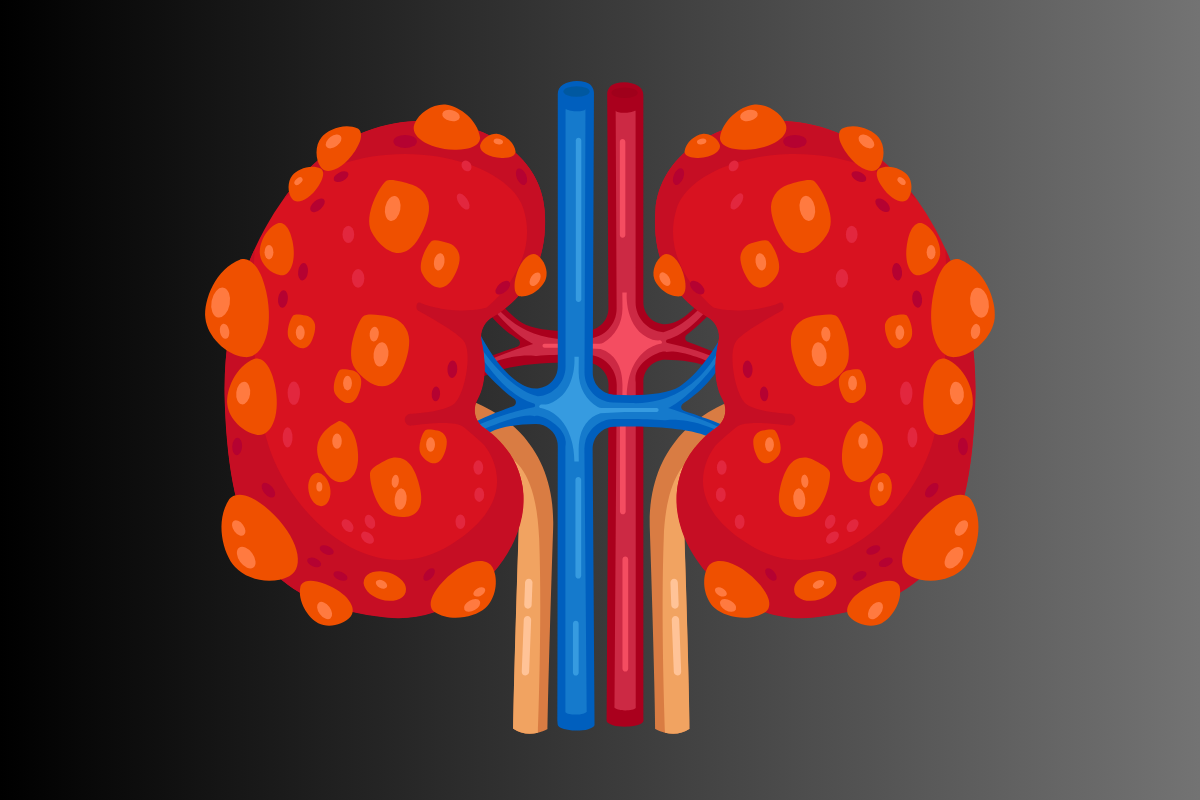
Polycystic liver disease (PLD) involves multiple cysts scattered throughout the liver tissue. :contentReference[oaicite:0]{index=0} While often asymptomatic, it can lead to discomfort, enlargement of the liver, pressure symptoms, and in some cases complications. Diagnosis is typically via imaging (ultrasound, CT/MRI) showing multiple hepatic cysts.
Common signs & investigations
- Feeling of fullness or heaviness in the upper right abdomen, sometimes pain or discomfort.
- Enlarged liver on imaging; possible elevated liver-related enzyme tests though often normal.
- Ultrasound/CT/MRI to visualise number & size of cysts; rule out complications such as infection, bleeding or compression of bile ducts. :contentReference[oaicite:1]{index=1}
Ayurvedic perspective
In Ayurveda this condition may be viewed under terms like Yakrit Granthi (liver nodules/cysts) or other “Yakrit”-related disorders of the liver. :contentReference[oaicite:2]{index=2} The principle is that stagnant metabolic “Ama”, vitiated Pitta/Kapha, impaired Agni (digestive/metabolic fire) and weakening of tissue structures (Dhatu) contribute to cyst formation. Treatment aims to improve circulation, remove stagnation, support liver tissue (Yakrit) and restore metabolic balance.
Critical Safety Note
If imaging confirms PLD, or if you have pain, jaundice, infection of cysts, bleeding, or compression of ducts — conventional medical/surgical consultation (hepatology/gastroenterology) is mandatory. Ayurvedic therapies may help support, but DO NOT replace indicated modern treatments.
Ayurvedic Care Pathway (Integrated)
- Medical evaluation & coordination: Ensure full imaging/labs, rule out complications such as cyst infection, hemorrhage, bile obstruction, other liver diseases.
- Shamana & supportive care: Use gentle herbal formulations to support liver, improve bile flow, reduce tissue stress and stagnation.
- Preparatory & supportive external therapies: External therapies aimed at improving circulation, lymphatic drainage and supporting liver region to help slow progression of cystic changes.
- Diet & lifestyle: Emphasise light, nourishing, easy-to-digest diet; avoid heavy fatty meals, alcohol, unnecessary drugs; maintain healthy weight, moderate exercise and good sleep.
Therapies We Use for Polycystic Liver Disease — with reference images
These are clinic therapies particularly helpful in supporting liver tissue health, improving circulation and lymphatic drainage around the liver-region. All procedures are individualised and require prior medical clearance.
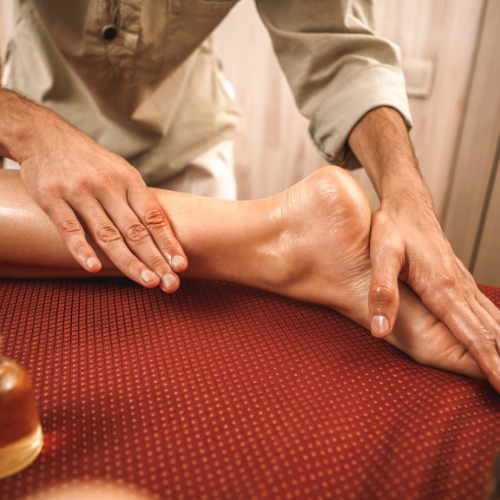
Abhyanga (Warm Oil Massage)
What it is: A full-body herbal oil massage designed to pacify Pitta/Kapha, improve circulation, and support lymphatic flow around abdominal organs.
- Helps relieve abdominal heaviness or dull discomfort often associated with liver enlargement.
- Improves circulation and prepares the body for further therapies that support tissue regeneration.
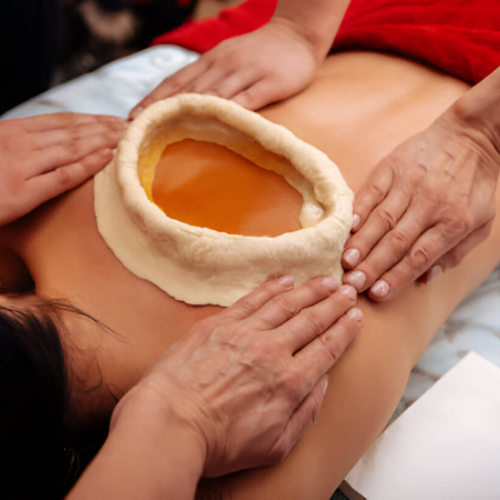
Kati Vasti (Warm Herbal Oil Poultice on Lumbar/Upper Abdominal Region)
What it is: Retaining warm medicated oil in a dam or boundary over the lumbar/upper abdominal flank region to assist circulation and relieve stagnation in the liver region.
- Targets the region adjoining the liver/gall-bladder area to improve warmth, flow and relieve discomfort.
- Useful when imaging shows enlarged liver or when there is back-flank discomfort.
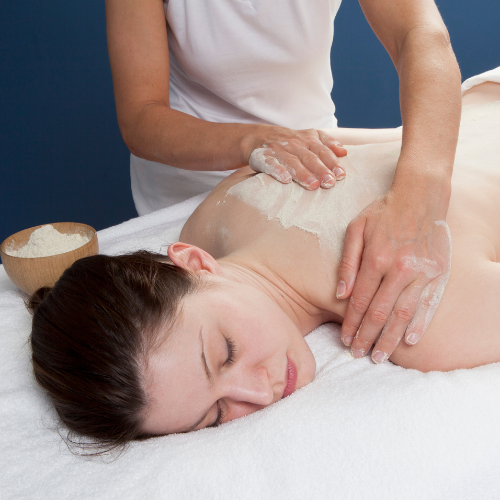
Udvartana (Herbal Powder / Dry Massage)
What it is: A deep herbal-powder based massage applied over abdomen/flanks to stimulate circulation, reduce meda (fat) stagnation and activate metabolic fire (Agni).
- Helps in improving metabolic efficiency of the liver, which is important when structural changes (cysts) exist.
- Supports reduction of excess Kapha/Medha type stagnation which can aggravate cystic formation or slow clearance.
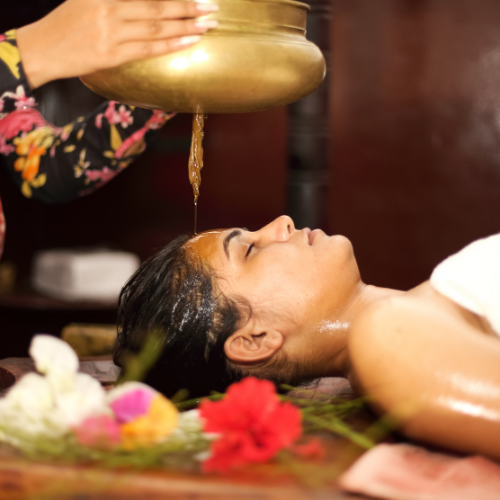
Shirodhara (Forehead Oil Pouring)
What it is: Continuous pour of warm herbal oil on the forehead to calm the nervous system, reduce stress and support overall digestion & metabolism.
- When structural liver disease exists, stress and poor sleep may worsen symptoms; Shirodhara acts as a supportive adjunct.
- Improves autonomic balance, which in turn supports liver-region circulation and healing.
Herbal Medicines & Nutritional Support
Herbal medicines are selected under physician supervision, focusing on hepatic support, bile flow, metabolic improvement and safety. Structural conditions like PLD require careful monitoring.
- Herbs with hepatoprotective action: Herbs such as Kutki (Picrorhiza kurroa) are used for liver/gall-bladder support. :contentReference[oaicite:4]{index=4}
- Anti-inflammatory & bile-flow supportive herbs: Turmeric (Curcuma longa), Kalmegh (Andrographis paniculata) etc.
- Formulations for liver tissue support: Classical Ayurvedic texts mention many preparations for Yakrit/PLEEHA disorders which may be relevant. :contentReference[oaicite:5]{index=5}
- Diet: Prefer light, warm, easily digestible foods; whole-grains, steamed vegetables, legumes; avoid heavy, oily, fried, processed foods.
- Avoid: Alcohol, excess fats, refined sugar, late-night large meals — these stress liver and may worsen cystic progression or symptoms.
- Lifestyle: Moderate, regular exercise; good sleep; stress-management; avoid rapid weight-loss diets (which may provoke hepatic changes).
Important: In PLD, while Ayurveda may support structural health, large or symptomatic cysts may require surgical or interventional radiology management. Always coordinate with hepatologist/gastroenterologist.
Sample Clinic Plans (examples)
Initial support & symptom relief- Medical imaging & baseline evaluation (ultrasound, LFTs).
- Gentle external therapies (Abhyanga, Kati Vasti), diet & herbs to relieve heaviness/discomfort.
- Avoid aggressive detox until safe and stable.
Circulation & tissue support phase- Udvartana, Shirodhara, targeted herbal formulations, enhanced diet/lifestyle focus.
- Periodic monitoring of cyst size/number, liver function; adjust plan accordingly.
Maintenance & prevention of progression- Long-term diet & lifestyle counselling, regular check-ups.
- Supportive sessions every few months, stress management, hepatoprotective herbs.
- Coordination with medical team for any increasing cysts or complications.
All therapies, especially any internal detoxification or Panchakarma, must be supervised by qualified Ayurvedic physician in a clinic environment with close medical monitoring.
Quick Reference — Therapies & Roles
| Therapy | Primary role | Notes |
|---|
| Abhyanga | Improve circulation & relieve heaviness in liver region | Supportive phase |
| Kati Vasti | Target liver flank/back area, improve warmth & flow | When discomfort radiates to back/flank |
| Udvartana | Stimulate metabolism, reduce stagnation/fat-mediated stress | Mid-phase, if Kapha/Medha dominance |
| Shirodhara | Support digestion, stress & autonomic balance | Adjunct therapy |
Need a safe Ayurvedic plan for polycystic liver support?
Book a consultation — we will review your imaging/labs, coordinate with your physician, and design a step-wise, monitored Ayurvedic plan to support liver tissue health and cyst-management.
Book ConsultationAll procedures are performed by qualified Ayurvedic physicians. Medical clearance (imaging, labs, clinician review) is required before specialised therapies.