What is Type 1 Diabetes?
Type 1 diabetes (T1D) is an autoimmune condition in which the body's immune system destroys insulin-producing beta cells in the pancreas. This leads to an absolute insulin deficiency and a lifelong need for exogenous insulin to regulate blood glucose. T1D can present in children and adults and requires specialist medical management. :contentReference[oaicite:1]{index=1}
Common Symptoms of Type 1 Diabetes
- Excessive thirst (polydipsia)
- Frequent urination (polyuria)
- Unintended weight loss
- Extreme hunger
- Fatigue, weakness
- Blurred vision
- Slow-healing infections or wounds (longer-term)
People with T1D can develop acute metabolic emergencies (ketoacidosis) if insulin is missed; chronic uncontrolled hyperglycemia can lead to neuropathy, kidney disease, eye disease and cardiovascular risk. Regular monitoring and specialist care are essential. :contentReference[oaicite:2]{index=2}
Critical Safety Note
Insulin is essential and lifesaving for everyone with Type 1 diabetes. Ayurvedic therapies are **supportive and rehabilitative only** — they do not replace insulin or specialist medical treatments. Any complementary plan must be coordinated with the patient's endocrinologist or diabetes team, with frequent glucose monitoring and agreed adjustments. :contentReference[oaicite:3]{index=3}
Ayurvedic Perspective & Evidence
Ayurveda approaches chronic metabolic conditions as imbalances of Doshas (often a Vata–Pitta–Kapha interplay) with impaired Agni and tissue (Dhatu) nutrition. In T1D, Ayurveda focuses on rasayana (rejuvenation), improving digestion, addressing neuropathy and rebuilding strength, always with strict medical coordination.
High-quality clinical evidence for Ayurvedic *curative* treatments in Type 1 diabetes is limited; most systematic reviews and trials focus on diabetes in general or Type 2. Case reports and small clinical series describe supportive benefits (symptom relief, neuropathy care, improved wellbeing) but insulin therapy remains the medical standard. Approach and claims must be conservative and evidence-informed. :contentReference[oaicite:4]{index=4}
Clinic Therapies We Use for Type 1 Diabetes — (reference images)
Below are clinic therapies commonly used in a supportive, rehabilitative, neuropathy-focused and rasayana (rejuvenation) context for patients with Type 1 diabetes. Each therapy is individualized, requires prior medical clearance, and is not a substitute for insulin or specialist care.
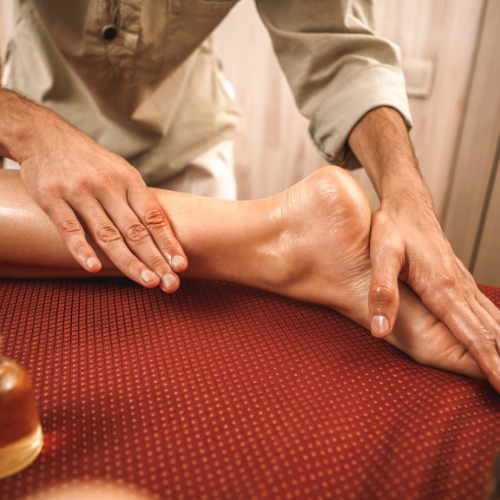
Abhyanga (Warm Medicinal Oil Massage)
What it is: Gentle, warm full-body herbal oil massage tailored to the patient.
- Promotes circulation, calms the nervous system and supports tissue nourishment (rasayana effect).
- Useful for reducing fatigue, improving sleep and preparing the body for other rehabilitative procedures.
- Preferred gentle strokes and lighter oils when neuropathy or fragile skin is present.
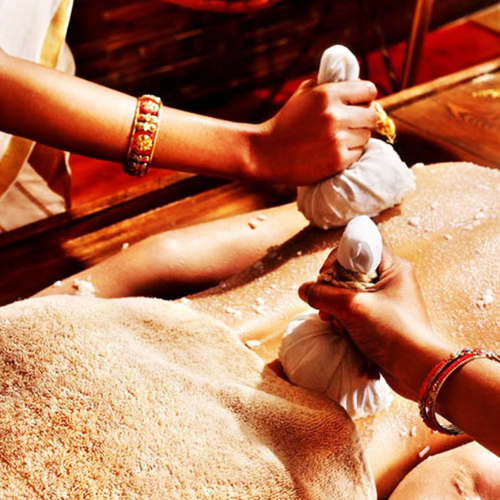
Njavara Kizhi (Rejuvenative Bolus Therapy)
What it is: Warm Njavara rice boluses cooked in medicated decoction and applied to the body.
- Provides deep nourishment, supports muscle mass and general strength — used in rehabilitation and rasayana phases.
- May help systemic weakness and improve appetite and digestion during recovery phases.
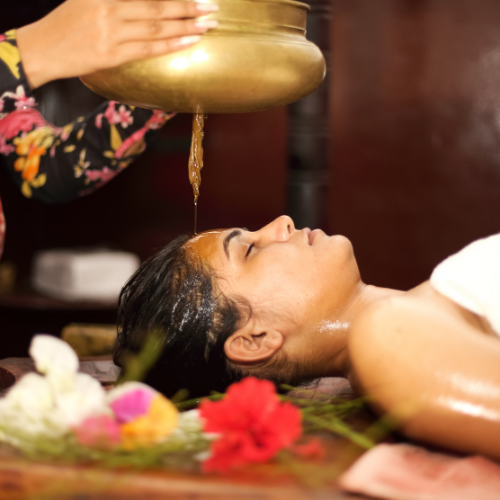
Shirodhara (Forehead Decoction/Oil Pouring)
What it is: Continuous, gentle pouring of warm medicated oil or decoction on the forehead.
- Used for stress reduction, sleep improvement and autonomic balance — helpful because stress and poor sleep worsen glycemic control and quality of life.
- Adjunctive therapy to improve mental wellbeing and support diabetes self-care capacity.
Basti (Medicated Enema) — Selected Use
What it is: Medicated oil or decoction administered rectally to correct Vata and support the gut–nervous axis.
- Used selectively in rehabilitation protocols to help systemic Vata imbalance and neuropathic symptoms (after careful assessment).
- Not used in acute unstable metabolic states — only when medically stable and with monitoring.
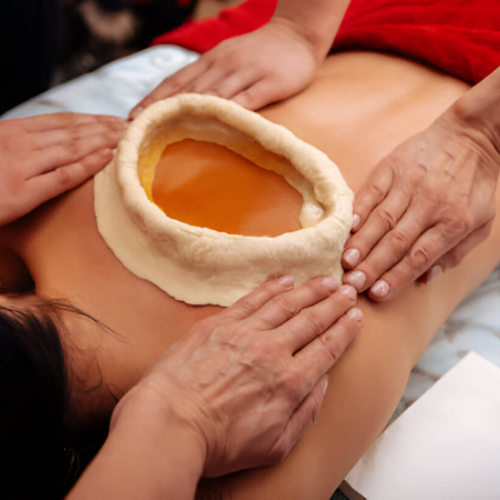
Kati Vasti (Localized Oil Retention for Back/Neuropathy)
What it is: Warm medicated oil retained over the lower back or specific area using a dough ring.
- Helps local pain, neuropathic discomfort or stiffness in the lower back and sacral region — useful when neuropathy or circulation issues contribute to symptoms.
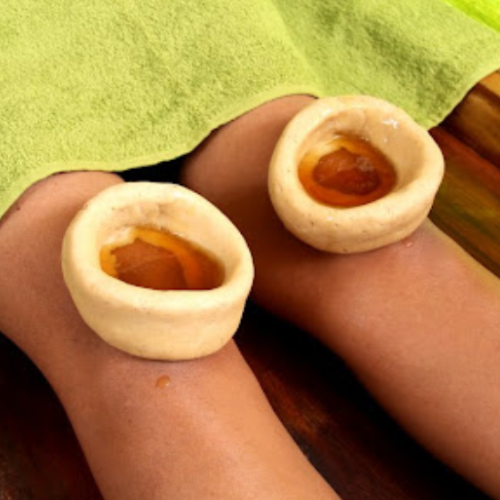
Janu Vasti (Localized Knee Nourishment)
What it is: Medicated oil retained around the knee for local nourishment and pain relief.
- Useful for diabetic patients with knee pain, stiffness or early joint degeneration; supports local circulation and comfort.
Lepam (Topical Therapeutic Pastes)
What it is: Herbal pastes applied topically to help local inflammation, sensation changes or slow-healing skin areas.
- Used with caution for peripheral skin issues; avoid on open infected wounds and always coordinate with wound-care and diabetes specialists.
Selected sources & evidence notes: Ayurvedic therapies may improve symptoms, neuropathic discomfort and wellbeing in some patients, but evidence for curative claims in Type 1 is limited. Any therapy requires medical clearance. :contentReference[oaicite:5]{index=5}
Herbal Medicines & Nutritional Support (evidence-informed)
In Type 1 diabetes we prioritise safety: only herbs and formulations with established safety profiles and no likely interaction with insulin or other meds are considered — always prescribed by a clinician aware of the patient's glucose targets and medications.
- Rasayana formulations: Aimed at general rejuvenation and tissue nourishment under supervision.
- Guduchi (Tinospora cordifolia): Traditionally used as an immune-modulator—use only when safe and monitored.
- Herbal topical applications: For neuropathic discomfort and skin care (applied externally and with specialist approval).
- Diet: Regular, structured carbohydrate intake to match insulin dosing (carb counting or meal plans per diabetes team).
- Avoid: Unsupervised herbs that may alter blood glucose unpredictably; avoid alcohol and unsupervised detox regimens when glycemic control is unstable.
- Hydration & glycemic safety: Maintain hydration and a clear plan for hypo/hyperglycaemia management during therapy visits.
Systematic reviews show limited and mixed evidence for herbal therapies in diabetes overall; most high-quality trials address Type 2 diabetes. For Type 1, evidence is scarce — Ayurveda is best used as a safe, coordinated supportive system, not a replacement for insulin. :contentReference[oaicite:6]{index=6}
Sample Clinic Plans (examples — coordinated with diabetes team)
Acute / unstable (NOT for detox)- Immediate medical stabilization, urgent glucose & ketone checks
- No detox procedures; only gentle supportive measures if approved (brief calming therapies)
- Coordinate with endocrinologist before any in-clinic procedure
Rehabilitation & symptom support (medically stable)- Gentle Abhyanga → Njavara Kizhi for nourishment
- Shirodhara for sleep/stress; localized Kati/Janu Vasti for neuropathic or joint symptoms
- Careful use of Basti only when indicated and patient is stable
Maintenance & monitoring- Periodic rasayana sessions, physiotherapy and neuropathy surveillance
- Frequent blood glucose self-monitoring, HbA1c checks and coordination with diabetes clinic
- Written consent & pre/post procedure glucose plan
All procedures require explicit written consent, a pre-visit diabetes safety checklist (medication/insulin plan) and availability of glucose monitoring during visits.
Quick Reference — Therapies & Roles
| Therapy | Primary role | Notes |
|---|
| Abhyanga | Circulation, relaxation, rasayana support | Gentle technique; monitor skin & glucose. |
| Njavara Kizhi | Rejuvenation, nourishment | Used in rehab phases to rebuild strength. |
| Shirodhara | Stress & sleep support | Adjunct to improve autonomic balance. |
| Basti (selected) | Vata/neuropathy support | Only in stable patients and with monitoring. |
| Kati / Janu Vasti | Local pain / neuropathy relief | Useful for neuropathic discomfort in specific areas. |
| Lepam | Topical anti-inflammatory / skin care | Not for open infected wounds; co-manage with wound care. |
Core medical guidance: insulin remains essential and lifesaving for T1D; complementary therapies should be adjunctive only. :contentReference[oaicite:7]{index=7}
Need a safe Ayurvedic rehabilitation plan for Type 1 Diabetes?
Book a consultation — we will review your insulin regimen, recent labs, and coordinate care with your diabetes/endocrine team to design a stepwise, monitored Ayurvedic plan focused on symptom support, neuropathy care and improved wellbeing.
Book ConsultationAll interventions are performed by qualified Ayurvedic physicians. Medical clearance from your diabetes team is mandatory before any in-clinic procedure.