What are Piles (Haemorrhoids)?
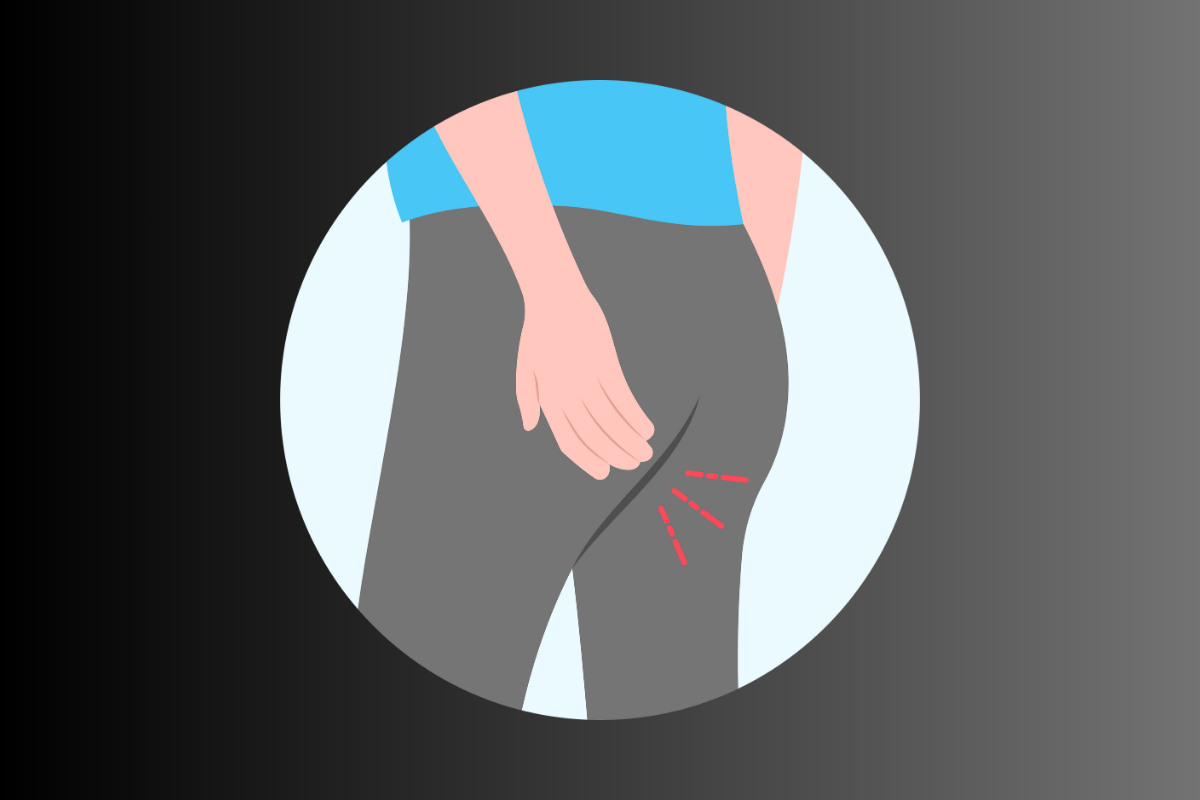
Piles (haemorrhoids) are swollen vascular cushions in the anal canal that become symptomatic — causing pain, bleeding, itching, discharge or prolapse. Causes include constipation, straining, prolonged sitting, pregnancy, low-fibre diets and weakened pelvic support. Severity ranges from mild, intermittent symptoms to thrombosed or prolapsed haemorrhoids requiring urgent care.
Common symptoms & red flags
- Bright red rectal bleeding (especially on toilet paper or with stool).
- Pain/discomfort while passing stool, anal itching, mucus discharge or anal lump (prolapse).
- Red flags: heavy bleeding, dizziness, fever, severe unrelieved pain or sudden prolapse — seek urgent medical attention.
Ayurvedic perspective
Basti (rectal treatments) and local therapies for perianal care are central in Ayurveda for ano-rectal disorders. Piles are often considered Arsha / Basti-vikara with Vata–Pitta involvement; treatment focuses on correcting Vata (to reduce prolapse/pain), pacifying Pitta (to control bleeding/inflammation), improving Agni (digestion), softening stools and local healing.
Critical Safety Note
If you experience heavy rectal bleeding, severe pain, syncope, high fever, or signs of anaemia, seek immediate medical or surgical care. Ayurvedic therapies are excellent for conservative management, symptom relief and rehabilitation, but acute surgical emergencies must be handled by appropriate medical teams. We coordinate care and request prior clinical assessment where needed.
Ayurvedic Care Pathway for Piles
- Initial assessment: Evaluate bleeding severity, prolapse grade, constipation, history of thrombosis and general health. Rule out red-flag conditions (colorectal pathology).
- Shamana & diet: Gentle herbal medicines to soften stools, reduce inflammation and support healing (e.g., Triphala, Haritaki-based formulations) plus high-fibre, Pitta-pacifying diet.
- Local therapies & Panchakarma: Targeted local treatments—Basti (medicated enemas), Kati Vasti / local oil signs, Nadi Swedan (local steam/fomentation), Lepam (local pastes), gentle Abhyanga—aim to relieve pain, improve local circulation, reduce congestion and heal tissue.
- Stool regulation: Correct constipation with diet, hydration, and mild laxatives (Triphala, prescribed tonics) to prevent straining and recurrence.
- Follow-up: Gradual rehabilitation with local fomentation, topical healing pastes, stool care and avoidance of strain.
Therapies We Use for Piles — with reference images
Below are the clinic therapies that are most commonly used in Ayurvedic management of piles. Each therapy includes a reference image. Therapy choice is individualized based on clinical grade, bleeding risk and overall health.
Basti (Medicated Enema) Core
What it is: Medicated decoction (Niruha) or oil (Anuvasana) administered rectally to correct Vata, lubricate the colon and promote local healing.
- Central Panchakarma for ano-rectal disorders — helps reduce pain, prolapse tendency and constipation.
- Formulations are chosen to be haemostatic (if bleeding) or Vata-nourishing (if prolapse/atrophy) as appropriate.
- Performed under physician supervision; contraindicated during severe active bleeding without clearance.
Kati Vasti (Local Oil Retention)
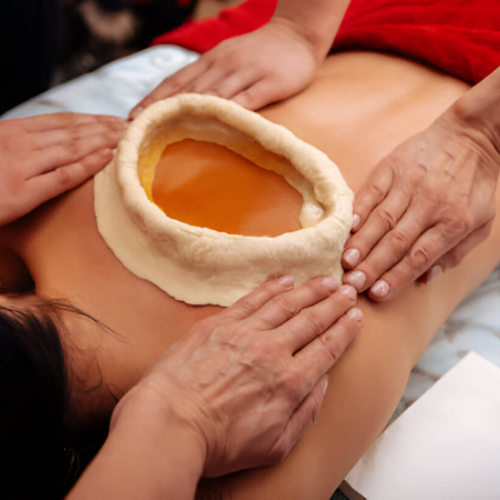
What it is: Warm medicated oil retained over the sacral/perianal region using a dough ring for a specified time to soothe local tissues.
- Promotes local circulation, reduces spasm and pain, softens the area and supports tissue healing.
- Gentle, well-tolerated — useful in sub-acute and recovery phases and as analgesic support.
Nadi Swedan (Local Steam / Fomentation)
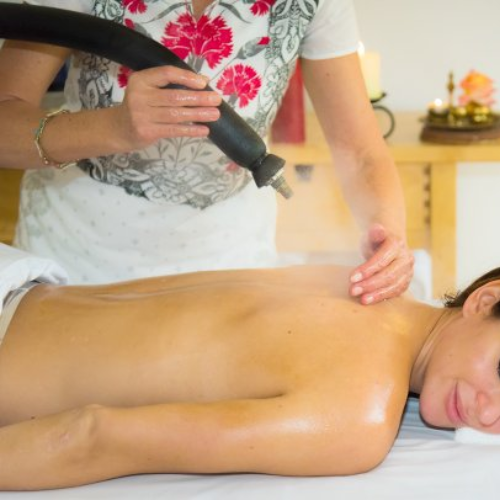
What it is: Directed warm steam or fomentation to the perianal area to relieve congestion, reduce pain and relax sphincter spasm.
- Helps ease pain and allows better local blood flow — often used before other local procedures to improve comfort.
- Applied with appropriate medicinal decoctions or plain steam depending on clinical need.
Lepam (Topical Medicinal Pastes)
What it is: Herbal pastes applied externally to the anal/perianal area to reduce inflammation, stop bleeding and promote healing.
- Commonly used post-procedure or during conservative management — haemostatic and wound-healing pastes are selected.
- Provides local cooling (Pitta control) and astringent effects to control seepage and itching.
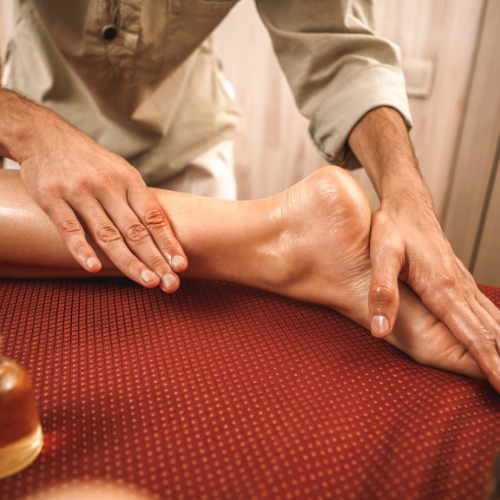
Abhyanga (Warm Oil Massage) — Supportive
What it is: Gentle full-body herbal oil massage to reduce systemic Vata, improve circulation and support healing.
- Not a primary cure for piles but helpful for overall Vata balance, improved bowel habits and symptom relief.
- Used in conjunction with local procedures and stool-regulating measures.
Herbal Medicines & Nutritional Support
Oral medicines and diet are essential in piles management — to soften stools, reduce inflammation and strengthen local tissues. All internal medicines are prescribed after assessment.
- Triphala: Gentle bowel regulator and tissue healer; helps correct constipation without harsh straining.
- Haritaki (Terminalia chebula): Mild laxative and astringent — used carefully to normalise bowel movements.
- Guggulu & Panchavalkala preparations: Used in specific formulations for wound healing and local astringent action.
- Diet: High-fibre, warm, regular meals — include whole grains, cooked vegetables, fruits like papaya/pear, soaked nuts and plenty of fluids.
- Avoid: Excess spicy/fried foods, heavy oily meals and prolonged sitting/straining during defecation.
- Bowel care: Aim for soft, formed stools — practice scheduled toileting, avoid straining, and use gentle stool softeners if prescribed.
Topical and oral Ayurvedic medicines are selected to be haemostatic, anti-inflammatory and stool-softening. For significant bleeding, febrile illness, or large prolapse, urgent medical/surgical evaluation is required.
Sample Clinic Plans (examples)
Conservative outpatient plan- Assessment + baseline vitals
- Triphala regimen for stool regulation; topical Lepam for local healing
- Nadi Swedan + Kati Vasti sessions to relieve pain and congestion
- Dietary & toileting advice
Integrated clinic plan (moderate symptoms)- Local Basti (Anuvasana/Niruha as indicated) under supervision
- Pre- and post-procedure Kati Vasti and Lepam
- Oral herbs (Triphala/Haṭhāyurvedic formulas) and follow-up
Rehabilitation & recurrence prevention- Maintenance diet + stool routine
- Periodic local fomentation and topical applications
- Pelvic floor strengthening advice and activity modification
All procedures are individualized — Basti and other local therapies require physician assessment and are performed with informed consent. Acute thrombosis or irreducible prolapse may need surgical referral.
Quick Reference — Therapies & Roles
| Therapy | Primary role | Notes |
|---|
| Basti | Correct Vata, relieve prolapse/pain, lubricate colon | Core localized Panchakarma; physician-supervised |
| Kati Vasti | Local analgesia & tissue nourishment | Good for pain/spasm in lower pelvic area |
| Nadi Swedan | Relieve congestion & spasm | Used prior to procedures or for symptomatic relief |
| Lepam | Topical healing & haemostasis | Applied post-procedure and for chronic seepage/itching |
| Abhyanga | Supportive systemic Vata reduction | Adjunct to improve bowel habits |
Need a balanced Ayurvedic plan for piles?
Book a consultation — we will review your symptoms, coordinate care if needed, and design a stepwise plan combining local therapies, herbs and diet to relieve symptoms and prevent recurrence.
Book ConsultationTreatment selection is based on clinical evaluation. Severe bleeding or large prolapse requires medical/surgical evaluation first.