Anal Fissure — Ayurvedic Support & Clinic Therapies
An anal fissure is a small tear in the lining of the anal canal that causes pain and bleeding with stools. Ayurveda treats fissure by reducing local inflammation, promoting wound healing, balancing Vata at the ano-rectal region, improving local circulation and softening stools to prevent recurrence.
What is an Anal Fissure?
- Common symptoms: severe pain during and after defecation, spotting of bright red blood, a visible tear or crack, and sphincter spasm.
- Common causes: hard stools/constipation, childbirth, repeated diarrhea, anal trauma, or chronic inflammation.
- Key clinical notes: Acute fissures often heal with conservative measures; chronic fissures may require procedural or surgical care. Always rule out serious causes with clinical exam and, if indicated, referral.
Ayurvedic view: Anal fissures are primarily Vata-related (shoola and vata prakopa at Guda), often with local Pitta inflammation. Healing focuses on Vata pacification, local lubrication, wound-healing formulations and gentle detoxification when required.
Important Safety Note
If you have severe bleeding, fever, worsening pain, or signs of infection, seek immediate medical/surgical care. Ayurvedic therapies below are complementary and should be applied after clinical assessment. For chronic or non-healing fissures we coordinate with proctology for best outcomes.
Therapies Useful in Healing Fissure — with reference images
Below are the clinic therapies commonly used to treat anal fissure. Each entry contains a short explanation and a reference photo. Treatments are individualized and require clinician assessment.
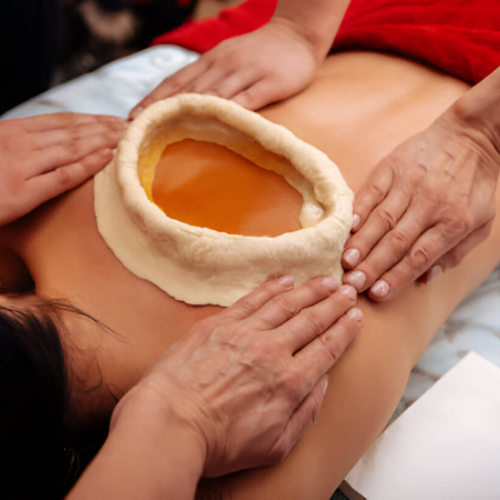
Kati Vasti Topical & Local
What it is: A ring of dough is placed over the affected area and warm medicated oil is retained to bathe the region for a fixed period.
- Provides sustained local warmth and lubrication, reduces sphincter spasm and pain.
- Promotes blood flow and softens tissues to help fissure edges approximate and heal.
- Common oils: herbalized sesame or medicated oils prepared for wound healing; applied under supervision for 20–40 minutes depending on tolerance.
Lepam (Herbal Paste)
What it is: Topical application of paste made from wound-healing herbs (e.g., turmeric, aloe, triphala in suitable bases) applied to the fissure site.
- Has local anti-inflammatory, antimicrobial and wound-healing properties.
- Used once or twice daily as advised; dressings and gentle hygiene are essential.
Oil Sitz / Oil Bath
What it is: Warm oil or warm water sitz baths with herbal decoctions or medicated oils to soothe and clean the perianal area.
- Reduces pain, relaxes the external sphincter and helps cleanse the area gently.
- Used multiple times daily in acute pain and after bowel movements to reduce irritation.
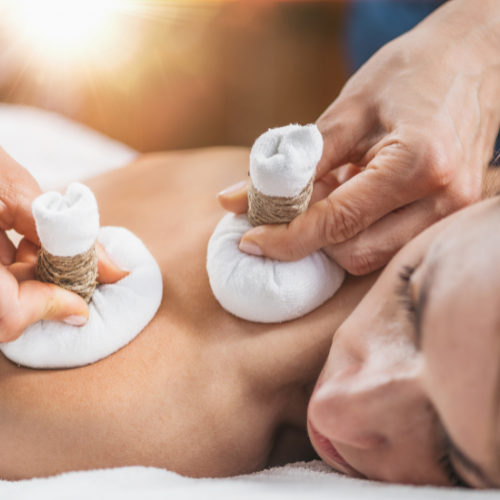
Patra Potli (Herbal Poultice)
What it is: Warm poultices made of medicinal leaves or powders tied in cloth and applied locally to reduce inflammation and encourage healing.
- Delivers herbal actives and local heat; useful for symptomatic relief of pain and swelling.
- Applied for short periods to avoid maceration; chosen herbs depend on wound status.
Basti (Medicated Enema) — Selected Use
What it is: Medicated enemas with oils or decoctions to regulate bowel movements, reduce Vata and support local healing.
- Helps relieve constipation and hard stools — a major precipitant of fissures — and softens stools to prevent re-injury.
- Prescribed selectively and performed under supervision; not always required for simple acute fissures.
Herbal & Dietary Measures
- Herbs commonly used: Triphala (for gentle bowel regulation), Haritaki (in controlled use), Yashtimadhu (licorice) for mucosal soothing, Aloe vera topically for wound healing — all prescribed carefully to avoid interactions.
- Local formulations: Medicated oils (e.g., naadi oils, sesame-based herbal oils), wound-healing pastes with turmeric, gandhaka in small traditional doses as per clinician.
- Diet & bowel care: High-fiber foods (cooked vegetables, soaked dals, psyllium if tolerated), warm fluids, avoid hard stools and straining.
- Behavioural: Sitz baths after defecation, avoid prolonged sitting, practice gentle bowel habits and adequate hydration.
Stool softening and prevention of constipation are central — without this, even the best topical care will fail to prevent recurrence.
Sample Clinic Plan (example)
Acute care (first 1–2 weeks)- Pain control: warm oil sitz baths 3–4x daily and after stools.
- Topical Lepam application and gentle Kati Vasti sessions to reduce spasm and pain.
- Short-term stool softeners and dietary fibre guidance.
- Avoid straining; coordinate with proctology if severe or persistent bleeding.
Subacute / Rehabilitation (2–6 weeks)- Regular Kati Vasti and Lepam, targeted Patra Potli as needed for inflammation.
- Basti therapy (if selected) for chronic constipation correction and Vata balance.
- Topical mucosal-soothing agents and continued diet/behavioural measures.
Maintenance & Prevention- Long-term attention to bowel habits, fiber, hydration and occasional supportive oil massages or local care.
- Follow-up to ensure complete mucosal healing; refer for surgical opinion if a chronic non-healing fissure persists beyond 8–12 weeks.
All clinical plans are individualized. Basti or internal procedures are only used when indicated and after assessment.
Quick Reference — Therapies & Roles
| Therapy | Primary role | Notes |
|---|
| Kati Vasti | Local lubrication, reduce spasm & pain | Used as short sessions with warm medicated oil |
| Lepam | Topical wound healing & anti-inflammatory | Apply as dressing; keep area clean |
| Oil Sitz / Oil Bath | Soothe perianal area & relax sphincter | Helpful after defecation and for pain control |
| Patra Potli | Local anti-inflammatory poultice | Short applications to avoid maceration |
| Basti | Correct constipation, reduce Vata | Selected use under supervision |
Need help healing a fissure safely?
Book a consultation — we assess the wound, review bowel habits and labs (if required), and design a stepwise Ayurvedic plan focused on healing and preventing recurrence.
Book ConsultationProcedures are performed by qualified Ayurvedic physicians. Seek immediate medical care for severe bleeding or infection.