What is Bronchitis?
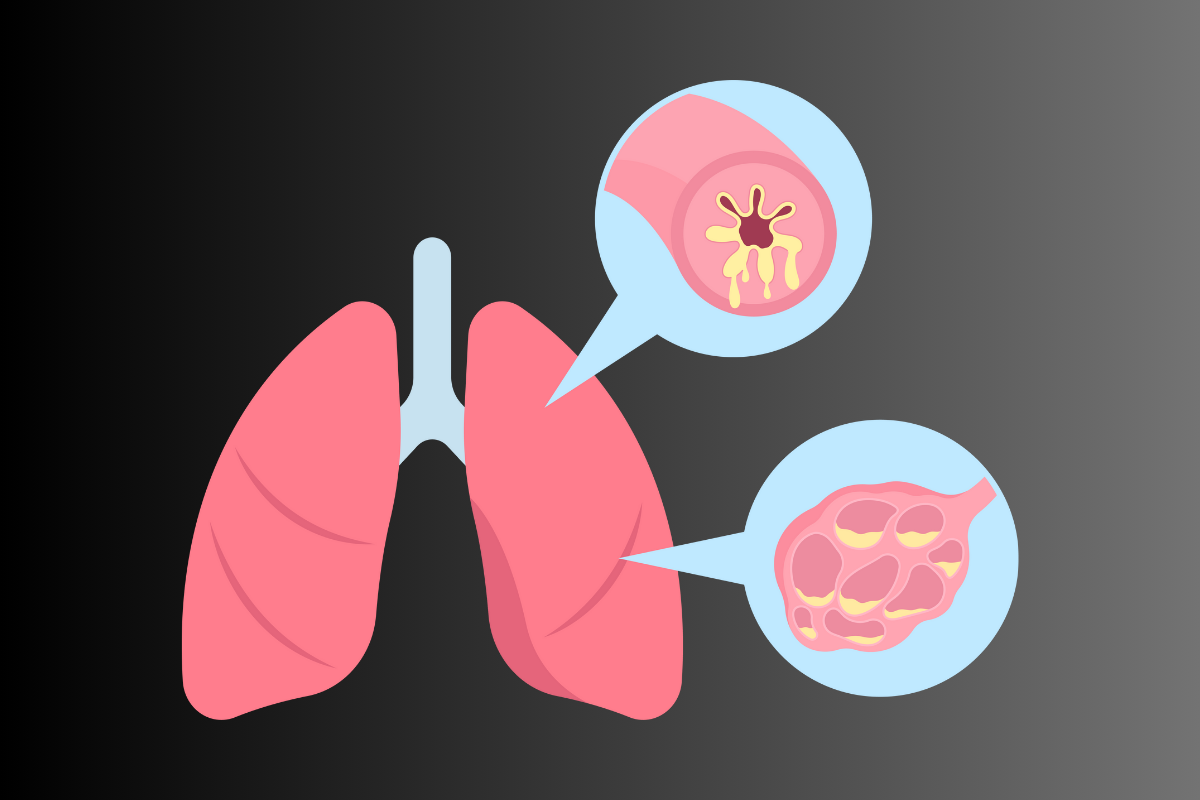
Bronchitis is inflammation of the bronchial tubes (airways) that carry air to the lungs. It can be acute (usually viral or post-infectious) or chronic (often related to long-term irritants). Symptoms include cough (with/without sputum), chest tightness, breathlessness, wheeze and fatigue. Severe cases require prompt medical attention.
Causes & investigations
- Acute: commonly viral infections, sometimes bacterial superinfection.
- Chronic: smoking, long-term air pollution, occupational exposures, repeated infections.
- Investigations: clinical exam, chest X-ray (if indicated), sputum tests, spirometry in chronic cases, pulse oximetry.
Ayurvedic view
In Ayurveda bronchitis is often seen as Kasa / Shwasa with Vata and Kapha involvement in the chest and respiratory channels (Pranavaha Srotas). Treatment focuses on clearing respiratory channels, dissolving Kapha/Ama, calming Vata, supporting Agni (digestion) and strengthening respiratory tissues.
Critical Safety Note
If you have acute difficulty breathing, high fever, blue lips, severe chest pain, or signs of pneumonia, seek emergency medical care immediately. Ayurvedic therapies can complement conventional treatment but do not replace emergency or indicated medical care. For chronic bronchitis/COPD we coordinate care with pulmonologists and use therapies as supportive adjuncts.
Ayurvedic Care — Goals
- Relieve airway obstruction: Reduce Kapha mucus and inflammation in the bronchial passages.
- Support expectoration & clearance: Gentle measures to liquefy and expel secretions when safe.
- Calm cough & wheeze: Reduce Vata-induced spasms and soothe irritated airways.
- Strengthen respiratory tissues: Rejuvenation and nourishment in recovery and chronic care.
- Address triggers: Smoking cessation, avoiding pollutants and allergen management.
Clinic Therapies Useful for Bronchitis — with reference images
The therapies below are commonly used in acute-adjunctive or rehabilitative settings, selected and timed according to the patient's condition and in coordination with medical care. Images are provided for reference.
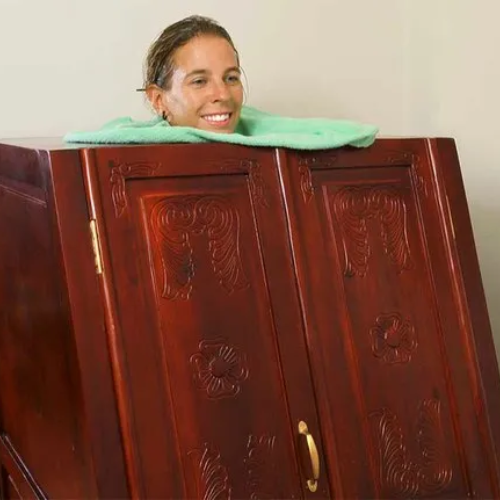
Swedan (Whole-body Steam / Sudation)
What it is: Therapeutic sweating using herbal steam to loosen mucus and reduce Kapha congestion.
- Helps liquefy bronchial secretions, eases expectoration and reduces chest congestion.
- Used in acute-subacute stages with caution; avoid if high fever or severe breathlessness.
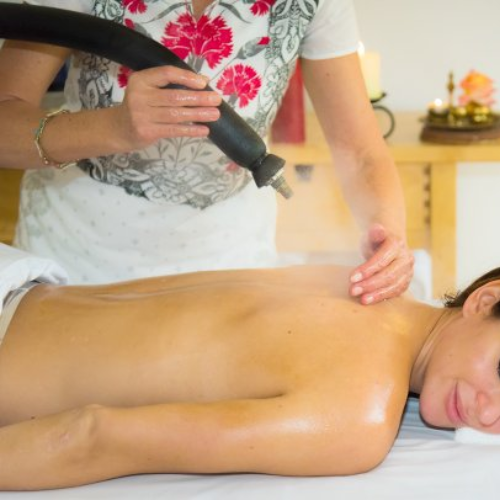
Nadi Swedan (Localized Steam to Chest)
What it is: Focused herbal steam applied to the chest and back to relieve bronchial congestion.
- Directly targets bronchial secretions, reduces chest tightness and improves breathing comfort.
- Often used before chest poultices or medicated oils to increase effectiveness.
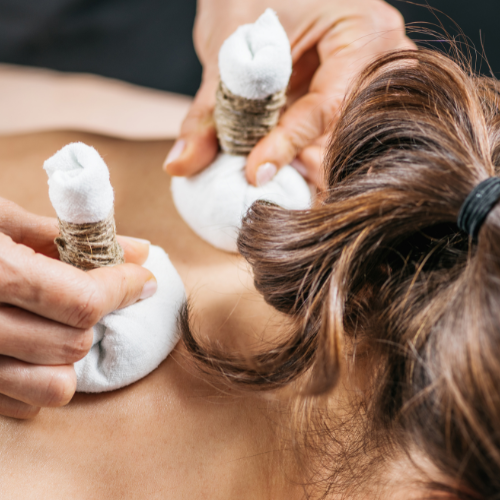
Patra Potli / Churna Potli (Herbal Poultice)
What it is: Warm herbal boluses (leaf or powdered herbal packs) applied to the chest/back to relieve congestion.
- Soothes inflamed bronchial tissues, helps break down mucus and eases coughing.
- Used after localized steam for better penetration; safe when applied under professional guidance.
Churn Potli (Powdered Herbal Poultice)
What it is: Boluses filled with powdered expectorant herbs applied warm to the chest to assist clearance.
- Often includes Kapha-clearing ingredients; used to reduce mucous viscosity and chest tightness.
Lepam (Medicated Pastes on Chest)
What it is: Topical herbal pastes applied to the chest to reduce inflammation and assist expectoration.
- Has local anti-inflammatory and decongestant effects; commonly used alongside steam and poultices.
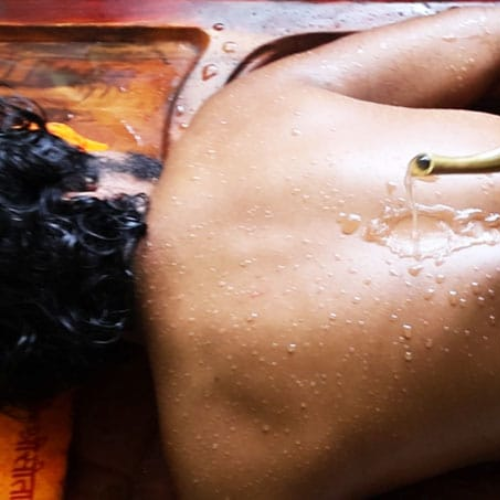
Kashaya Dhara (Herbal Decoction Pouring)
What it is: Gentle continuous pouring of a warm herbal decoction over the chest or upper back.
- Soothes bronchial irritation and has mild expectorant/anti-inflammatory effects when suitable decoctions are chosen.
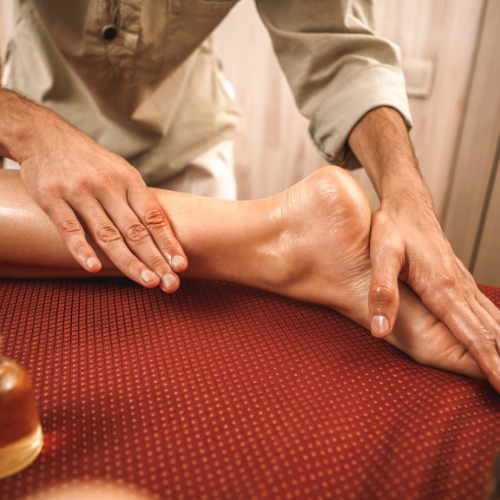
Abhyanga (Warm Oil Massage)
What it is: Gentle full-body oil massage to improve circulation, support respiratory musculature and calm the nervous system.
- Preparatory and supportive therapy; promotes relaxation, loosens mucus indirectly via improved circulation.
Nasyam (Nasal Administration)
What it is: Small, therapeutic drops or oils administered via the nose to clear upper airway congestion and support breathing.
- Helps clear nasal and upper bronchial secretions, improves breathing comfort and reduces post-nasal drip that can aggravate cough.
- Given with gentle, respiratory-safe formulations under clinician supervision.
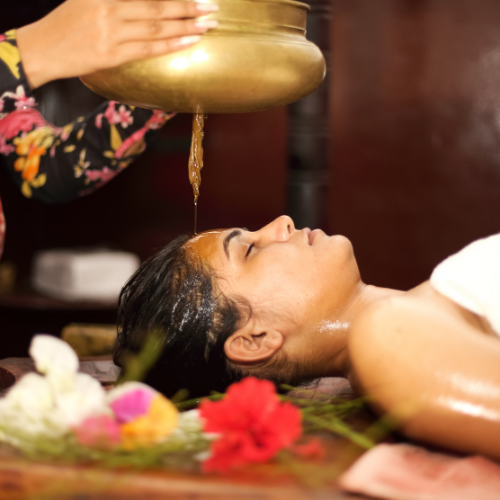
Shirodhara (Adjunct for Stress & Cough)
What it is: Continuous pouring of warm oil on the forehead to calm the nervous system and reduce cough sensitivity.
- Useful for coughs worsened by stress, poor sleep or nervous irritability; supports recovery and improves sleep.
Basti (Selected Use in Chronic Respiratory Care)
What it is: Medicated enemas to balance Vata and support systemic healing; used selectively in chronic bronchitis patterns with Vata involvement.
- May be part of a broader systemic rehabilitation program for chronic patients under full medical assessment.
Herbs, Diet & Self-care
- Herbs commonly used: Pippali (Piper longum), Vasaka/Adhatoda (for expectoration), Tulsi (Ocimum sanctum), Mulethi (licorice) — always used in clinician-prescribed, respiratory-safe formulations.
- Expectorant & bronchodilatory actions: Formulations are chosen to liquefy mucus, ease cough and reduce bronchial spasm.
- Diet & hydration: Warm liquids, soups, light kichadi, avoid cold/raw heavy Kapha-increasing foods, limit dairy if it worsens sputum.
- Avoid: Smoking, exposure to pollutants, cold drafts and excessive mucus-forming foods during active phase.
Herbs and internal medicines must be chosen with care in patients who use inhalers, blood thinners or have comorbidities. Always disclose medications to your Ayurvedic clinician.
Sample Clinic Plans (examples)
Acute Symptom Support- Medical assessment & oxygen/antibiotic support if indicated
- Gentle Nadi-Swedan to chest, warm poultices and steam inhalation
- Respiratory-safe herbal expectorants and rest
Subacute Rehabilitation- Chest poultices (Patra/Churn Potli), Lepam and Kashaya Dhara as indicated
- Abhyanga for systemic support and Nasyam for upper airway clearing
- Breathwork, smoking cessation and air-quality advice
Chronic Management- Individualized program: Basti (selected), herbal tonics, pulmonary rehabilitation
- Periodic follow-up, spirometry and coordination with pulmonology
All procedures are individualized. Acute respiratory compromise is a medical emergency — therapies are applied only after medical clearance when needed.
Need a safe Ayurvedic plan for bronchitis?
Book a consultation — we will review your clinical status, coordinate with your physician, and design a stepwise, monitored Ayurvedic plan to support airway recovery.
Book ConsultationAll procedures performed by qualified Ayurvedic physicians. Medical clearance is mandatory for therapies in active respiratory disease.