What are Adenoids?
Adenoids are a mass of lymphatic tissue located behind the nose (nasopharynx). In children they can enlarge (adenoid hypertrophy) causing nasal obstruction, mouth-breathing, snoring, recurrent ear and sinus infections, and speech or feeding issues. Persistent symptoms sometimes require ENT evaluation and — in selected cases — adenoidectomy (surgical removal).
Common signs & ENT evaluation
- Nasal blockage, chronic mouth-breathing, snoring and restless sleep.
- Recurrent otitis media or glue ear, nasal discharge, post-nasal drip and reduced sense of smell.
- ENT exam often includes anterior rhinoscopy, nasopharyngeal endoscopy (where available) and hearing checks; paediatric ENT determines need for surgery.
Ayurvedic perspective
In Ayurveda, recurrent nasal/ENT infections and obstructive symptoms are seen as involvement of Kapha with impaired Prana Vayu and accumulation of secretions (similar to Ama and Kapha stagnation) in the head region. Treatment aims to clear nasal channels, balance Kapha/Prana, improve local immunity and reduce recurrence — while coordinating with paediatric ENT care.
Critical Safety Note
If your child has breathing difficulty, recurrent ear infections, significant hearing loss, growth or sleep disturbance — please consult a paediatrician and ENT specialist first. Ayurvedic therapies can be supportive and may reduce symptoms and recurrence in mild–moderate cases, but they do not replace indicated surgical care when recommended by an ENT surgeon.
Ayurvedic Care Strategy for Adenoids
- ENT evaluation & monitoring: Audiometry/endoscopy as advised; baseline assessment before starting therapies.
- Local clearing (Pratyahara) & Nasya: Gentle nasal therapies (Nasya) are central — to liquefy & expel excess Kapha secretions and improve nasal patency.
- Supportive procedures: Nadi Swedan (localized steam), Patra Potli (herbal poultice to neck/chest), Greeva Vasti (if neck stiffness or lymphatic congestion present), mild Abhyanga and Shirodhara as calming adjuncts.
- Oral herbs & diet: Kapha-light diet, mucolytic and immune-modulating herbs (under physician supervision).
- Pediatric tailoring: Doses, techniques and oils are adjusted carefully for children; many procedures are modified or omitted depending on age and tolerance.
Therapies Helpful for Adenoids — with reference images
Below are the clinic therapies commonly used to support reduction of nasal blockage, clear secretions and strengthen local immunity. Each therapy includes a reference photo. Therapies are individualized and performed only after ENT clearance when necessary.
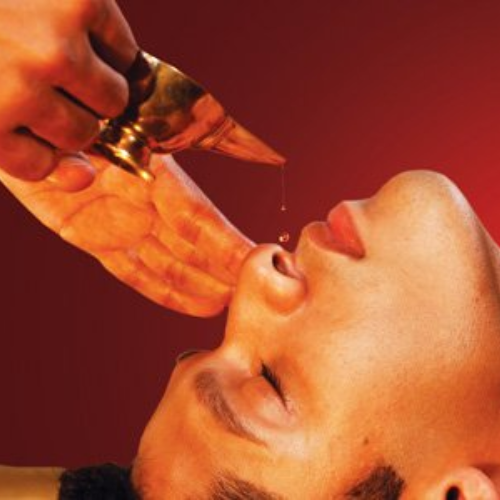
Nasya / Nasyam — Medicinal Nasal Administration Core
What it is: Administration of small, medicated oil drops, herbal powders or decoction-related preparations into the nose to clear the nasopharynx and balance Kapha/Prana.
- Primary procedure for adenoidal congestion — helps liquefy secretions, reduce inflammation and improve nasal breathing.
- Formulations and doses are chosen for safety in children; often performed as short courses with follow-up.
- May reduce snoring, mouth-breathing and recurrent nasal discharge when combined with other measures.
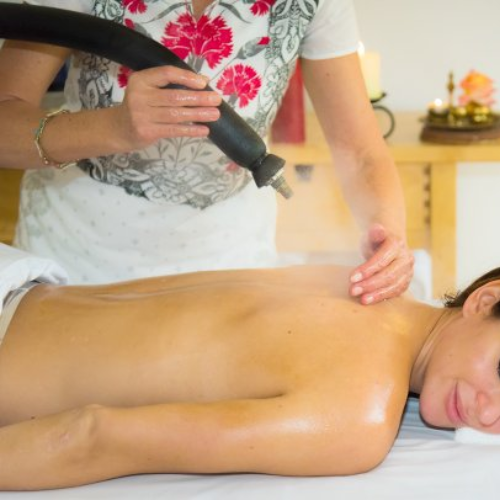
Nadi Swedan (Localized Steam)
What it is: Gentle warm steam focused on the head/neck area using medicinal decoctions to relieve nasal congestion and loosen mucus.
- Soothes inflamed mucosa, helps expectoration of thick secretions and opens nasal passages.
- Useful as a preparatory therapy before Nasya or topical applications; sessions and temperatures adjusted for children.
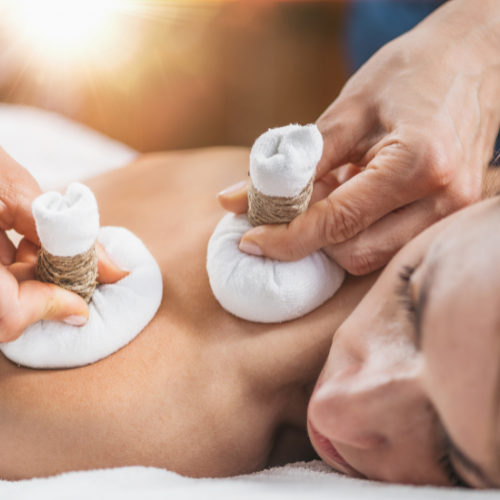
Patra Potli (Herbal Poultice)
What it is: Warm herbal poultices or boluses applied to the neck, chest or sinuses to reduce local congestion and promote lymphatic drainage.
- May relieve tenderness, help clear stagnant mucus in the upper respiratory tract and improve comfort.
- Used as supportive local therapy alongside Nasya and steam.
Greeva Vasti (Neck Oil Retention)
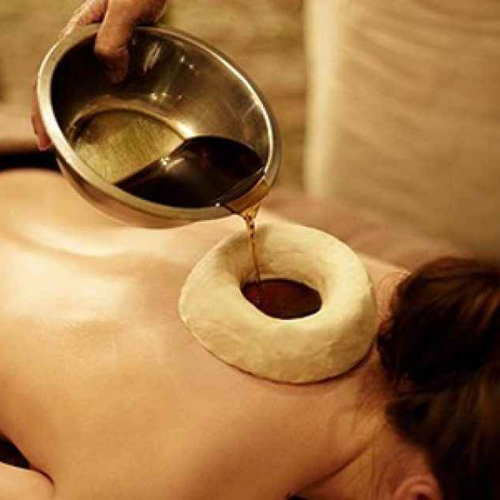
What it is: A warm medicated oil is retained over the cervical (neck) region in a dough boundary to nourish tissues and relieve lymphatic congestion.
- Can help reduce local stiffness and improve neck/upper airway circulation; chosen when cervical congestion or stiffness accompanies ENT symptoms.
- Comfort-oriented and modified for pediatric patients.
Abhyanga (Gentle Oil Massage) — Supportive
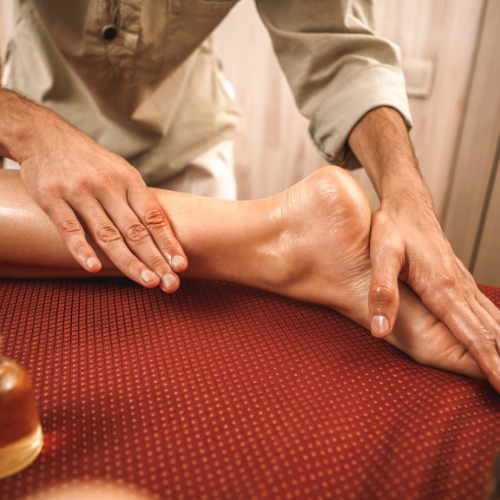
What it is: Mild, age-appropriate warm oil massage to improve circulation, lymphatic flow and overall wellbeing.
- Supports immune tone, calms the child and can reduce nasal congestion indirectly by improving systemic circulation.
- Oils and duration are selected for children; often a comforting daily home practice advised with clinician guidance.
Shirodhara (Calming Forehead Pouring) — Adjunct
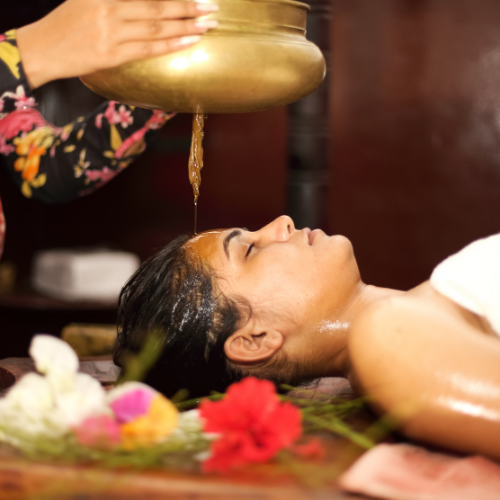
What it is: Warm herbal oil or decoction is gently poured over the forehead to calm the nervous system and improve sleep/behaviour in affected children.
- Useful when sleep disturbance, irritability or behavioural issues accompany nasal obstruction; supportive rather than primary for adenoids.
- Applied selectively and with pediatric modifications.
Lepam (Topical Herbal Pastes)
What it is: Cooling or clearing herbal pastes applied externally around the nose, sinuses or throat to reduce local inflammation and secretions.
- Applied for short durations; formulations are chosen for safety and age-appropriateness.
- Often combined with steam and Nasya for better symptomatic relief.
Herbal Support & Dietary Guidance
Herbs and diet are selected to reduce Kapha, improve mucociliary clearance and gently support immunity. All internal medicines must be prescribed by a qualified Ayurvedic physician — especially for children.
- Trikatu blend (ginger, black pepper, long pepper): Warm digestive support in small, clinician-guided doses.
- Tinospora / Guduchi: Immunomodulatory support under supervision (age-appropriate dosing).
- Licorice (Yashtimadhu): Demulcent support for mucosa — used cautiously and in proper doses.
- Diet: Warm, light meals; avoid dairy excess, cold/raw foods, deep-fried snacks and heavy sweets which increase Kapha and mucus.
- Hydration: Warm water and mild herbal teas (as guided). Avoid sugary drinks and excessive milk if mucus is profuse.
- Home measures: Gentle nasal saline irrigation (physiological saline) as advised by ENT; maintain good indoor air, reduce allergen exposure.
If hearing loss, recurrent infections, sleep apnoea signs or growth concerns are present, prioritize ENT assessment. Ayurvedic herbs can help but must not delay indicated ENT interventions.
Sample Supportive Clinic Plans (examples)
Mild / Early cases — conservative- ENT review and baseline hearing check
- Course of Nasya (mild, pediatric formulation) + Nadi Swedan
- Home care: saline nasal washes, Kapha-light diet
Recurrent / Moderate symptoms- ENT coordination (audiometry, endoscopy as needed)
- Targeted Nasya cycles, Patra Potli & Lepam to reduce local congestion
- Short supportive medicines for immunity; follow-up monitoring
Pre/post ENT surgery support- Pre-op optimization (reduce inflammation, improve mucosal condition)
- Post-op supportive Nasya (when permitted), gentle Abhyanga and dietary rehab
- Rehabilitation focus on breathing patterns and recurrence prevention
Therapies and herbs are tailored by age and clinical status. Many procedures require ENT clearance prior to initiation, especially in children with active infection or bleeding tendencies.
Quick Reference — Therapies & Roles
| Therapy | Primary role | Notes |
|---|
| Nasya | Clear nasopharynx, liquefy secretions | Core therapy; pediatric modifications required |
| Nadi Swedan | Loosen mucus, prepare for Nasya | Localized steam; safe preparatory step |
| Patra Potli | Local decongestion & lymphatic support | Supportive for neck/chest congestion |
| Greeva Vasti | Neck nourishment, reduce lymphatic obstruction | Chosen selectively |
| Abhyanga | General nourishment, immune support | Comforting adjunct for children |
| Shirodhara | Calm nervous system, improve sleep | Adjunct when sleep/behaviour affected |
| Lepam | Topical anti-inflammatory | Short external application |
Want a safe Ayurvedic plan for adenoids?
Book a pediatric ENT & Ayurvedic consultation — we'll review symptoms, coordinate care, and design a gentle, monitored plan tailored for your child.
Book ConsultationAll pediatric procedures are performed by qualified Ayurvedic physicians with paediatric experience. ENT clearance is obtained when indicated.