What are Warts?
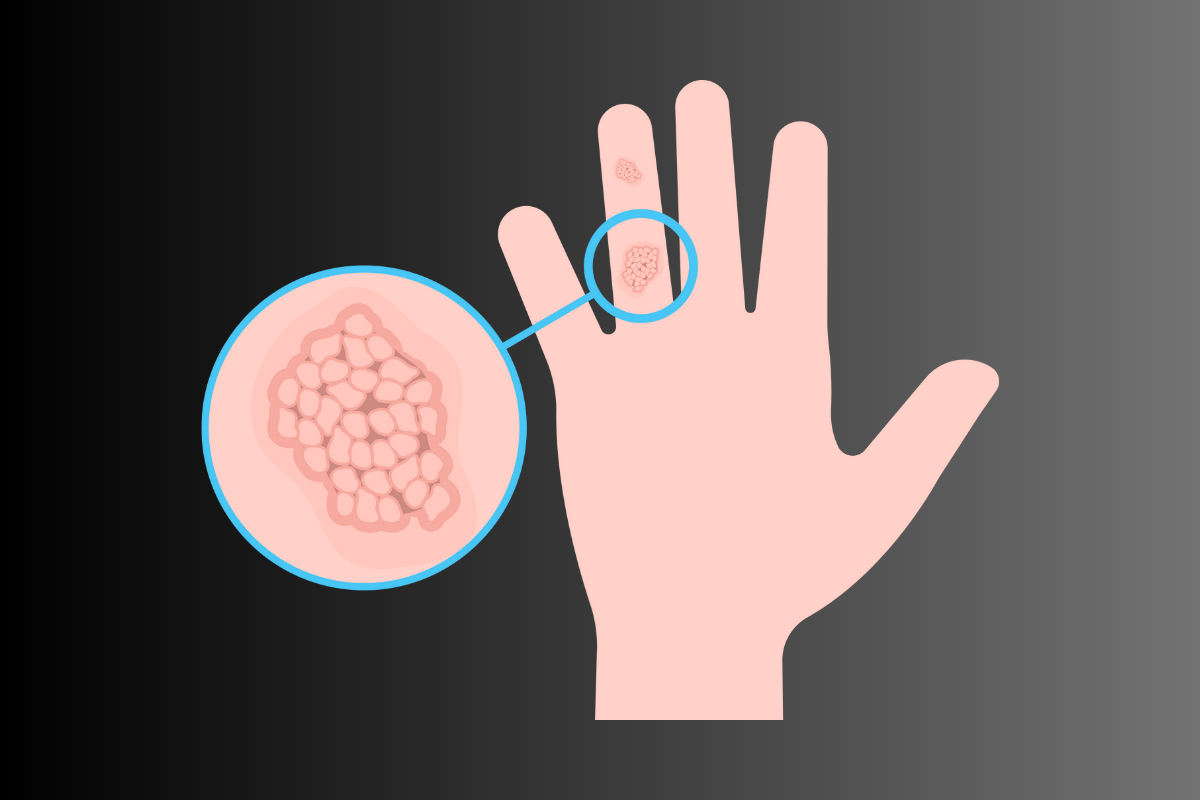
Warts are benign skin growths caused by certain types of human papillomavirus (HPV). They commonly appear as rough, raised bumps on hands, feet (plantar warts) or other skin surfaces. Treatment aims to remove the lesion, prevent spread/recurrence, and support skin repair. Consult a dermatologist for atypical or rapidly changing lesions.
Clinical points
- Common types: common warts, plantar warts, flat warts and filiform warts.
- Diagnosis: usually clinical; atypical lesions require dermatology review and sometimes biopsy.
- Conventional options include cryotherapy, salicylic acid, cautery — Ayurveda offers topical/therapeutic local procedures that can complement or be an alternative in selected non-urgent cases under clinician guidance.
Ayurvedic view (brief)
In Ayurveda warts and localized skin growths are approached as external skin disorders where local application (Lepa), scraping (Lekhana), cauterization (Agnikarma / Kshara) and skin-conditioning procedures are used depending on the lesion type. The goal is to locally remove/resolve the lesion, reduce Ama/infection and strengthen healthy skin. Clinic selection and medical safety are essential before any procedure.
Safety & when to see a doctor
Important: Any pigmented, changing, bleeding, painful or rapidly growing lesion should be assessed by a dermatologist before attempting topical or Ayurvedic procedures. For plantar warts causing functional problems or immunocompromised patients, medical/dermatology care is required.
Ayurvedic Therapies Useful for Warts (clinic-focused)
Below are the limited set of clinic therapies commonly used in Ayurveda to treat warts or support local skin healing. Images shown are for reference. Therapies are selected and combined based on lesion type, location and patient safety.
Lepam (Topical Medicinal Paste) Primary
What it is: A freshly prepared herbal paste (lepa) containing antiseptic, keratolytic and wound-healing herbs applied directly to the wart and covered for a period to soften and help resolve the lesion.
- Commonly used formulations include Rasothamadi, Mahatiktaka or specially prepared keratolytic lepas — selected to be antimicrobial and skin-safe.
- Applied daily or nightly for several sessions; paste is removed and lesion observed. May be combined with gentle mechanical debridement by the practitioner in clinic (never aggressive at home).
- Effective for small superficial warts and as an adjunct to other measures; avoids aggressive chemicals when done by a trained practitioner.
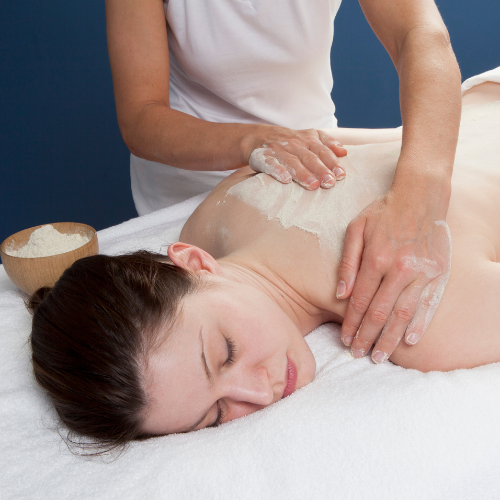
Udvartana (Herbal Powder Massage & Exfoliation)
What it is: Vigorous massage with herbal powders or coarse pastes that exfoliate, open clogged pores and improve local circulation and skin turnover.
- Used as a preparatory step to gently reduce hyperkeratotic tissue around warts (especially useful for rough/common warts).
- Helps enhance penetration of topical lepas and supports removal of dead skin. Should be performed carefully on delicate skin and not over warts that are inflamed or bleeding.
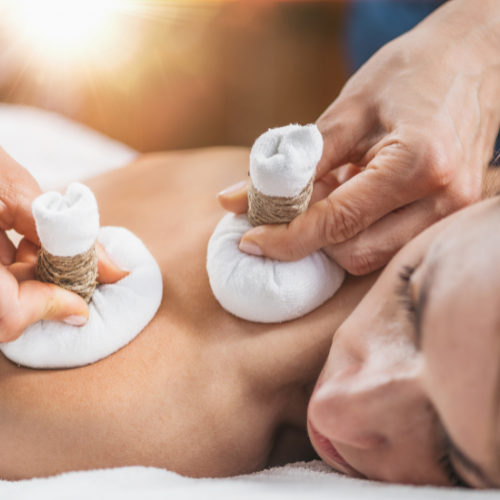
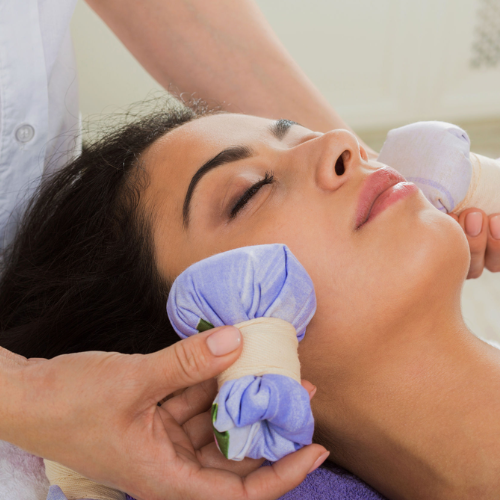
Patra Potli & Churn Potli (Local Herbal Fomentation)
What it is: Warm herbal boluses (patra potli) or churn-potli compresses applied locally to soften tissue, reduce local inflammation and allow better absorption of topical medicines.
- Useful immediately before applying lepa or for painful/tender lesions to reduce local discomfort and prepare the skin.
- Herbs chosen for their anti-inflammatory and antiviral/supportive properties; temperature and duration are tailored to avoid blistering.
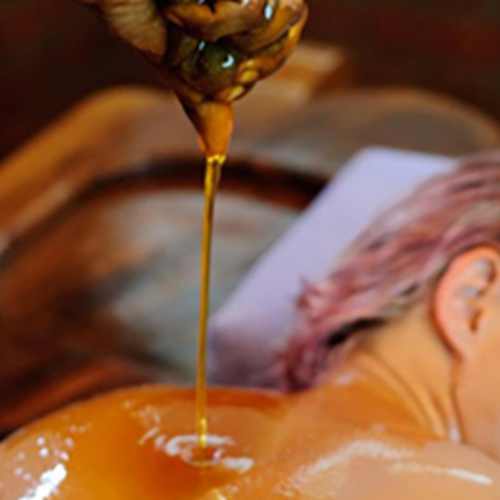
Oil Bath / Local Oiling
What it is: Application of medicated oils (external oleation) or localized oil baths to soften keratin, support skin barrier and assist lepa adherence.
- Warm medicated oils containing Neem, Karanja or other safe herbs may be used prior to paste application or after debridement to soothe skin.
- Not a standalone cure — supportive role to improve comfort and healing.
Navara / Skin Rejuvenation Facial (Adjunct)
What it is: Gentle topical rejuvenative treatments (eg. Navara-based poultices/facials) to promote healthy skin repair after lesion removal or healing.
- Helps reduce scarring, improves skin tone and supports re-epithelialization after topical therapy.
- Used in the recovery/maintenance phase rather than during acute inflammation.
Therapies above are clinic procedures best performed by trained Ayurvedic physicians. For many lesions the practitioner may combine a topical lepam with gentle exfoliation and local fomentation, monitor progress and repeat sessions until resolution.
Typical clinic workflow (example)
Assessment- Examine lesion & confirm benign nature (derm referral if uncertain)
- Document size, number, and symptoms (pain/bleeding)
Treatment session- Warm oiling or local oil bath → gentle udvartana/exfoliation (if suitable)
- Local patra/churn potli fomentation → apply chosen lepam and cover
- Review after 3–7 days; repeat 1–3 sessions depending on response
Recovery & maintenance- Navara facial / topical soothing treatments after lesion resolves
- Hygiene advice to avoid spread; consider immune-supportive herbs if recurrent
If a lesion does not respond or shows worrying features, refer to dermatology for cryotherapy, biopsy or other interventions.
Precautions & Patient Advice
- Do not attempt aggressive scraping, burning or home cautery — risk of scarring and secondary infection.
- Avoid putting unknown household caustics on warts; use clinic-prescribed lepa only.
- For children, plantar warts or immunosuppressed patients, obtain medical/dermatology clearance first.
Want a clinic evaluation for a wart?
Book a consultation — we will examine the lesion, confirm suitability for Ayurvedic topical care and prepare a safe treatment plan.
Book Consultation