What is Asthma (Shwasa)?
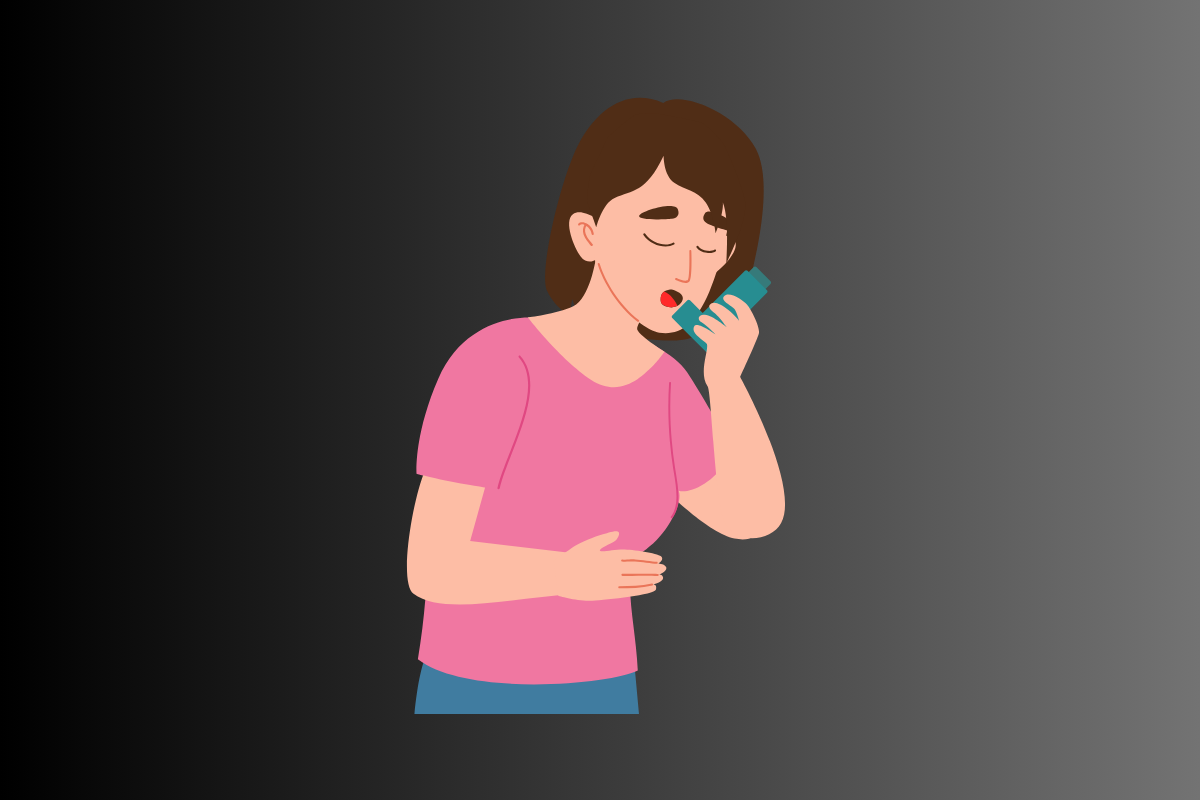
Asthma is a chronic inflammatory disease of the airways characterized by episodic breathlessness, wheeze, chest tightness and cough. Triggers include allergens, infections, cold air, stress and exercise. Severity ranges from intermittent mild symptoms to life-threatening attacks. Medical diagnosis (spirometry, peak flow, allergy testing, imaging) and an action plan are essential.
Clinical points
- Symptoms: wheeze, shortness of breath, cough (particularly at night/early morning), chest tightness.
- Investigations: spirometry, bronchodilator response, peak flow monitoring, allergy testing; severe exacerbations require urgent medical care.
- Management: inhaled bronchodilators and corticosteroids, rescue medications, trigger avoidance and an individualized action plan.
Ayurvedic view (brief)
In Ayurveda respiratory disorders including asthma are described under Shwasa Roga. Pathology commonly involves Vata and Kapha imbalance in Pranavaha Srotas (respiratory channels). Treatment aims: remove obstructive Kapha/Ama, pacify Vata, reduce inflammation, strengthen respiratory tissue and improve Agni (digestive/metabolic fire).
Critical Safety Note
Asthma can be life-threatening during acute attacks. Follow your medical action plan, use prescribed inhalers, and seek emergency care for severe breathlessness. Ayurvedic therapies can complement long-term management and rehabilitation but must never replace rescue medications or urgent medical care. Clinic therapies require physician coordination, especially when inhaled steroids or recent exacerbations are present.
Ayurvedic Care Strategy for Asthma
- Medical coordination: confirm diagnosis and current treatment; stabilise acute symptoms before any clinic procedures.
- Acute control: continue prescribed inhaled bronchodilators/steroids and follow action plan; Ayurvedic-first aid (steam inhalation with safe herbs) only under guidance.
- Detox & decongestion: therapies that reduce Kapha/Ama in chest and unblock Pranavaha srotas — especially Nasyam (nasal therapy), targeted steam (Nadi Swedan) and medicated poultices.
- Vata balancing & strengthening: gentle Abhyanga, selected Basti (when indicated) and nourishing therapies in rehabilitation to build respiratory strength.
- Rehabilitation & prevention: pranayama, breathing exercises as tolerated, diet & herbs to reduce mucous production and inflammation; regular follow-up with both Ayurvedic and medical teams.
Therapies Useful in Asthma — with reference images
Only therapies commonly used for respiratory support and asthma are included below. All procedures are individualized and performed after medical clearance and stabilisation of acute symptoms.
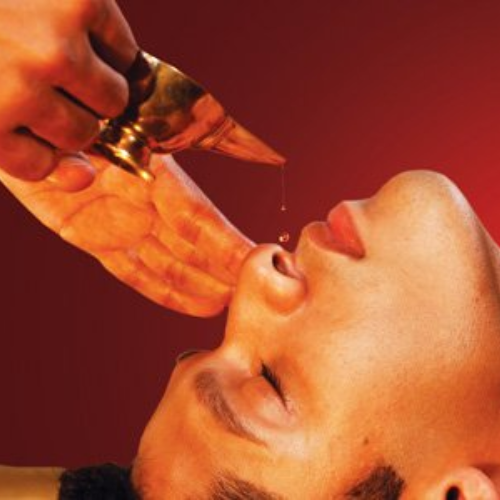
Nasyam (Nasal Therapy) Key
What it is: Administration of medicated herbal oils/medicaments via the nostrils to clear and strengthen the upper respiratory channels.
- Primary therapy to clear Kapha and Ama from Pranavaha srotas, improve nasal breathing and reduce cough/wheeze triggers.
- May improve mucociliary clearance and autonomic balance; specific formulations (e.g., Anu Taila variants) chosen by physician.
- Performed only when patient is stable and trained therapist supervises dosing and technique.
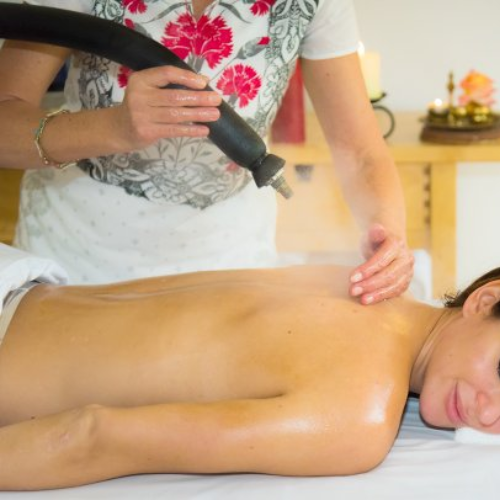
Nadi Swedan / Steam (Localized Steam to Chest)
What it is: Focused warm steam applied to the chest/upper back to liquefy mucus and relieve bronchial congestion.
- Helps mobilize bronchial secretions, reduces chest heaviness and eases breathing when used appropriately.
- Used as adjunct during recovery and with caution in fever or unstable patients.
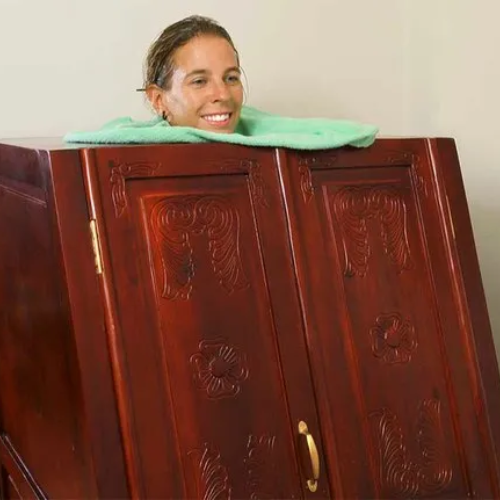
Swedan (Therapeutic Steam)
What it is: Controlled sudation to assist decongestion and improve circulation.
- Used to loosen phlegm and open respiratory channels; intensity and duration are adapted for asthma patients.
- Contraindicated during severe breathlessness, high fever, or unstable cardiovascular status.
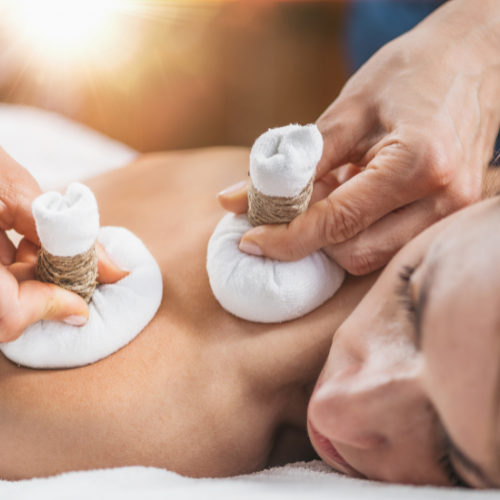
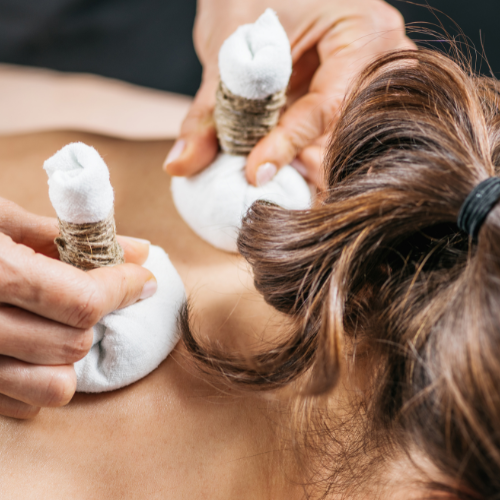
Patra Potli (Herbal Leaf Poultice)
What it is: Hot herbal leaf poultices applied over the chest and back to relieve congestion and bronchospasm.
- Clears local Kapha, soothes chest muscles and supports expectoration when combined with other therapies.
- Herbs chosen for bronchodilatory and mucolytic properties; therapist applies with care to avoid overheating.
Churn Potli (Powdered Herbal Bolus)
What it is: Hot poultice made from powdered herbs applied to chest/back to relieve stiffness and promote mucus clearance.
- Often used in combination with steam and oil therapies to enhance expectoration and ease breathing.
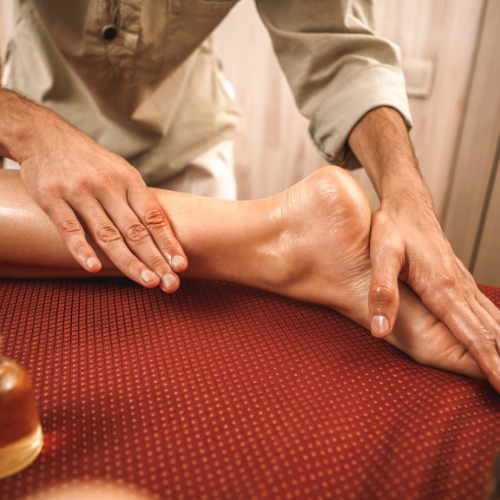
Abhyanga (Warm Oil Massage)
What it is: Gentle full-body massage with Vata/Kapha-balancing oils tailored for respiratory patients.
- Reduces Vata-related breathlessness, calms the nervous system, improves circulation and prepares the body for other therapies.
- Intensity is moderated for frail or breathless patients.
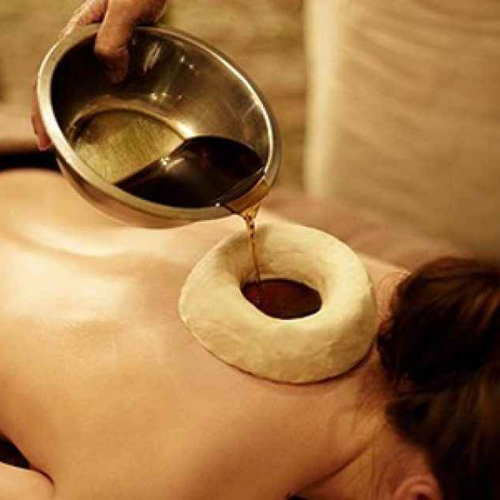
Greeva Vasti (Neck Oil Retention)
What it is: A well of medicated oil retained over the neck/upper chest to relax musculature and improve local circulation.
- Relieves neck tension that can worsen breathing patterns and supports respiratory nerve tone.
- Used as supportive therapy in rehab and chronic management.
Basti (Medicated Enema) — Selected Use
What it is: Medicated decoction or oil administered rectally to correct Vata and systemic balance.
- Often indicated in chronic asthma with Vata dominance to restore gut–respiratory axis and systemic regulation.
- Only given after full assessment, and not during acute severe exacerbations.
Njavara Kizhi (Rejuvenative Bolus Therapy) — Supportive
What it is: Warm Njavara rice boluses applied to the body to provide nourishment and improve systemic strength.
- Used in rehabilitation to build respiratory stamina and general vitality after repeated exacerbations.
Herbal Medicines, Breathing Practices & Lifestyle
Herbal medicines and practices should be prescribed by a qualified Ayurvedic physician in coordination with your medical team. Below are commonly used supportive measures in clinical Ayurvedic practice for asthma.
- Vasa / Vasaka (Adhatoda vasica): Expectorant and bronchodilatory actions in traditional use (used under supervision).
- Pippali (Piper longum): Supports bronchodilation and digestion; often combined in formulations.
- Kantakari (Solanum xanthocarpum), Tulsi (Ocimum sanctum): Used for respiratory relief and immune support.
- Sitopaladi / Talisadi formulations: Classical herbal powders/decotions used for bronchial conditions — prescribed and dosed clinically.
- Breathing practices (Pranayama): Gentle, supervised pranayama (e.g., Anulom Vilom, slow diaphragmatic breathing) as tolerated; avoid intense breath-holding techniques during instability.
- Diet & triggers: Avoid cold, heavy, mucous-forming foods (excess dairy/fermented items) and known allergens; prefer warm, light, easily digestible meals.
- Trigger control: Identify and reduce exposure to dust, smoke, pollen, pets, strong fragrances and indoor mould.
Do not stop prescribed inhalers or emergency medications without your physician’s explicit direction. Ayurveda complements long-term management and rehabilitation but is not a substitute for rescue therapy during exacerbations.
Sample Clinic Plans for Asthma (examples)
Acute Stabilisation- Follow medical action plan; use rescue inhaler and seek urgent care if needed
- Short-term gentle steam inhalation and rest; avoid Panchakarma until stable
- Physician coordination and baseline pulmonary function testing
Detox & Decongestion (post-stabilisation)- Supervised Nasyam sessions to clear upper airways
- Targeted Nadi Swedan / Patra or Churn Potli on chest/back to liquefy mucus
- Gentle Abhyanga and Greeva Vasti as supportive measures
Rehabilitation & Maintenance- Selected Basti protocols for chronic Vata patterns (if indicated)
- Njavara Kizhi or nourishing therapies to build stamina
- Herbal formulations, breathing exercises, trigger avoidance and periodic spirometry
All plans are individualized based on history, pulmonary function, allergies and medical treatment. Written informed consent, monitoring and coordination with a pulmonologist are standard before advanced procedures.
Quick Reference — Therapies & Roles
| Therapy | Primary role | Notes |
|---|
| Nasyam | Clear upper airway Kapha; strengthen Pranavaha srotas | Key respiratory therapy; only after clearance |
| Nadi Swedan / Steam | Liquefy mucus and relieve congestion | Used acutely with caution; avoid overheating |
| Patra / Churn Potli | Local broncho-support, mucolysis | Applied on chest/back with heat |
| Abhyanga | Calms Vata, improves circulation | Supportive, preparatory therapy |
| Greeva Vasti | Relax neck musculature, improve local nerve tone | Adjunctive supportive therapy |
| Basti | Restore systemic Vata balance | Selected for chronic cases; not during acute attack |
| Njavara Kizhi | Rebuilding strength & stamina | Rehabilitation phase |
Need an integrated Ayurvedic plan for asthma?
Book a consultation — we'll review your medical records, coordinate with your pulmonologist, and design a monitored, stepwise Ayurvedic plan to reduce symptoms and improve respiratory health.
Book ConsultationEmergency inhalers and medical management should always be accessible. Clinic therapies are performed by qualified Ayurvedic physicians after medical clearance.