What are diabetic complications?
Complications of diabetes arise when chronic high blood sugar damages blood vessels, nerves and organs. Common long-term complications include peripheral neuropathy, diabetic foot ulcers and infections, retinopathy (eye), nephropathy (kidney), cardiovascular disease and sexual dysfunction. Early detection and integrated care reduce progression and disability.
Common complication symptoms
- Numbness, tingling, burning or loss of sensation in feet/hands (peripheral neuropathy).
- Non-healing foot wounds, recurrent infections, reduced peripheral pulses.
- Blurred vision, floaters, gradual vision loss (retinopathy).
- Proteinuria, swelling, rising creatinine (nephropathy).
- Fatigue, breathlessness, chest pain (cardiovascular risk).
- Impotence, decreased libido, urinary problems.
Ayurvedic perspective
Ayurveda describes diabetes as Madhumeha — a metabolic disorder primarily involving Kapha and later Vata and Pitta dysfunction, leading to compromised circulation, nerve function and tissue nourishment. Chronic hyperglycaemic patterns cause Dhatu kshaya (tissue depletion), poor Srotas (channels), and impaired wound healing. Management focuses on metabolic regulation, improving tissue nutrition (Ras & Rakta), pacifying aggravated doshas and local care for wounds and neuropathy.
Critical Safety Note
Diabetic complications can be limb- or life-threatening (e.g., severe infections, advanced renal or cardiac disease). Always prioritise medical assessment — blood glucose control, HbA1c, vascular studies, wound cultures, ophthalmology and nephrology input when needed. Ayurvedic therapies here are **adjunctive** and used alongside medical care. We coordinate with medical teams and require baseline labs, vascular assessment and wound clearance before certain procedures.
Ayurvedic Care Pathway (Integrated)
- Medical coordination: Glycemic optimisation, vascular workup, wound care and specialist referrals as required.
- Metabolic regulation: Internal medicines & dietary rehabilitation to reduce Ama, balance Kapha/Pitta and support pancreatic and renal health.
- Local & systemic therapies: Therapies to improve microcirculation, nerve nourishment, wound healing and reduce inflammation (chosen per patient).
- Rehabilitation & prevention: Strength, balance, foot care education, periodic monitoring and lifestyle changes.
Therapies We Use for Diabetic Complications — with reference images
The therapies below are selected for neuropathy, poor circulation, wound-support, joint pain and systemic rehabilitation. Each therapy image is provided for clinic reference. All procedures are individualized and require medical clearance.
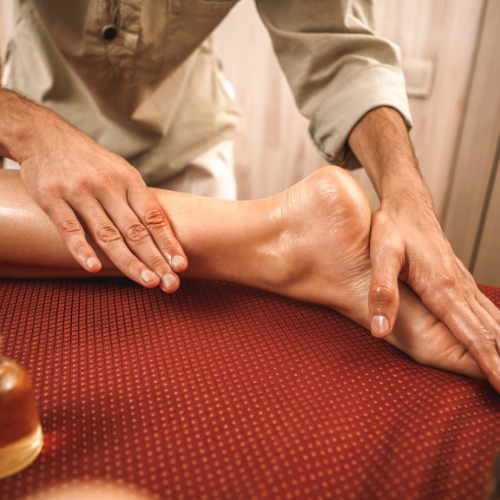
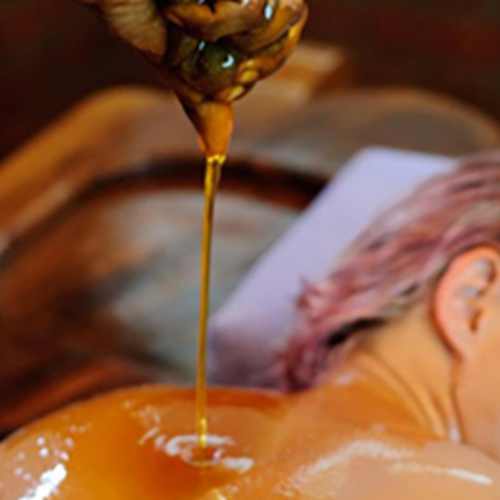
Abhyanga (Warm Oil Massage)
What it is: Full-body warm herbal oil massage tailored to improve circulation and nourish tissues.
- Enhances peripheral circulation and lymphatic drainage — useful for diabetic neuropathy and stiffness.
- Improves skin nutrition and can help maintain skin integrity around vulnerable areas.
- Gentle techniques and appropriate oils are selected for fragile skin and vascular compromise.
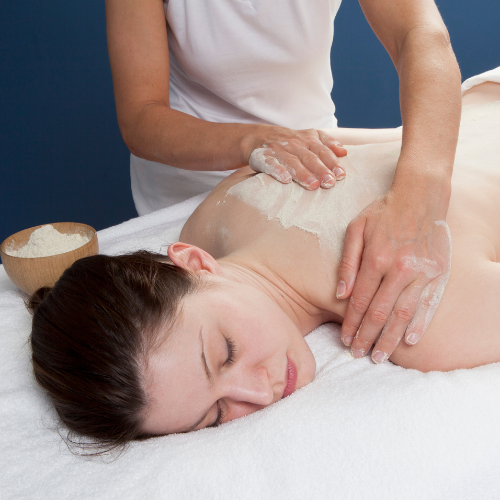
Udvartana (Medicated Powder Massage)
What it is: Dry powdered massage with herbal powders to stimulate microcirculation and reduce local stiffness.
- Useful for improving peripheral blood flow and reducing oedema or heaviness in limbs.
- Selected gentle protocols help with circulation without causing skin trauma—avoid on open wounds.
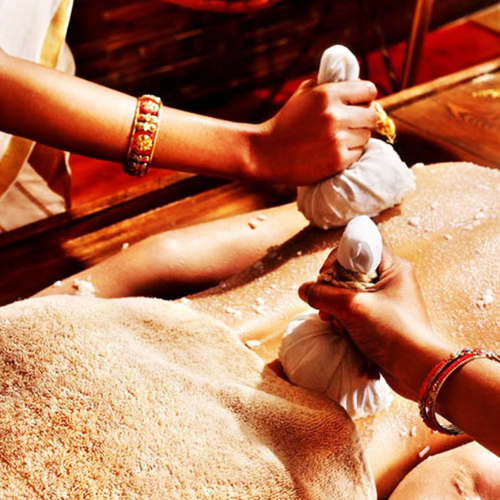
Njavara Kizhi (Rejuvenative Bolus Therapy)
What it is: Warm boluses of Njavara rice cooked in herbal decoction applied over the body to nourish tissues.
- Promotes deep tissue nourishment, strength and nerve support — beneficial in chronic neuropathy and systemic weakness.
- Used in rehabilitation to rebuild tissue nutrition after prolonged illness.
Basti (Medicated Enema) — Selected for Vata-related Neuropathy
What it is: Medicated oil or decoction administered rectally to pacify Vata and improve systemic digestion and nerve function.
- Considered a prime therapy when Vata disturbance underlies neuropathic pain or sensory loss.
- Given selectively after thorough assessment and when glycemic control & infection risk are managed.
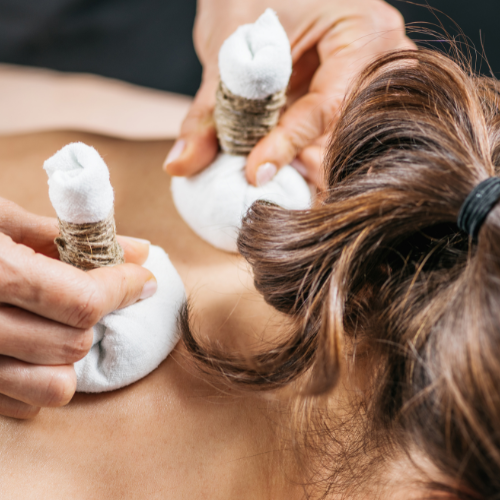
Churn Potli & Patra Potli (Herbal Poultices)
What it is: Warm herbal poultices (powder or leaf boluses) applied locally for pain relief and circulation.
- Helpful for localized neuropathic pain, joint discomfort and to improve soft-tissue circulation.
- Not applied over open, infected or debrided wounds; used once wounds are medically clean and sealed.
Lepam (Topical Herbal Pastes)
What it is: Medicinal pastes applied topically to support wound healing, inflammation control and local nourishment.
- Used as part of wound-support protocols (only after medical wound bed preparation and clearance).
- Formulations chosen for antimicrobial and wound-healing properties under clinician supervision.
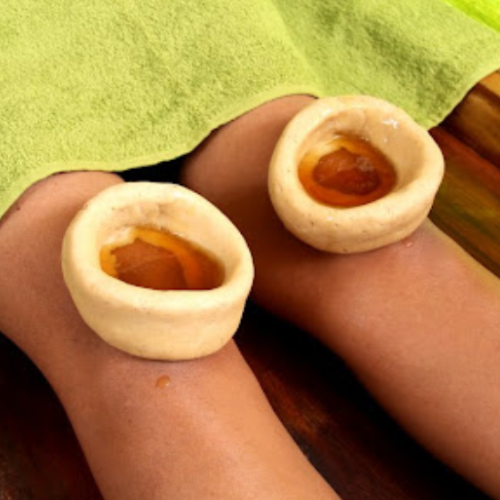
Janu Vasti (Knee Retention Therapy)
What it is: Localised retention of warm medicated oil over the knee to relieve pain and nourish joint tissues.
- Useful for diabetic arthropathy and local stiffness affecting mobility.
- Helps reduce pain and supports tissue nutrition when systemic circulation is compromised.
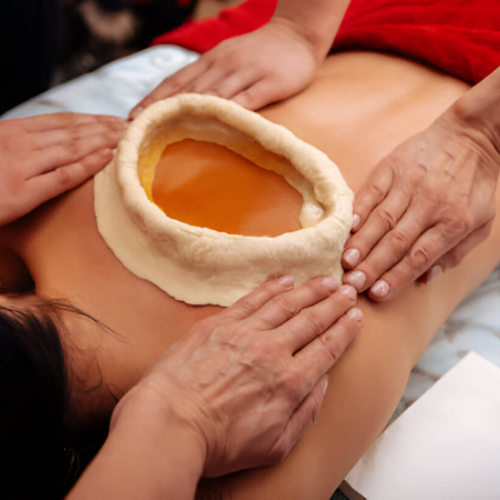
Kati / Prishtha Vasti (Local Retention Therapies)
What it is: Retention of warm medicated oils over lower back (Kati) or upper back (Prishtha) to relieve neuralgia and local pain.
- Used for neuropathic back pain or for symptomatic relief of resistant muscular pain.
- Selected when vascular status and skin integrity are suitable.
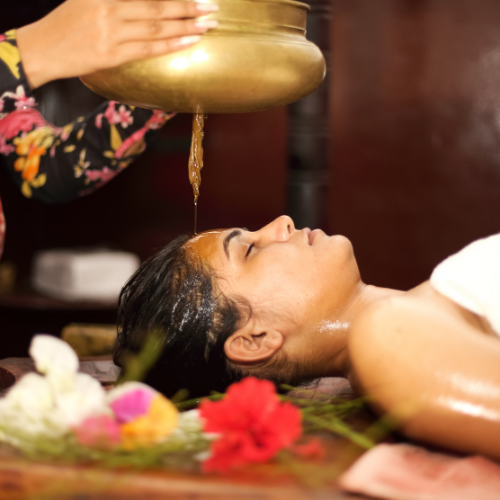
Shirodhara (Nervous System Support)
What it is: Continuous pouring of warm herbal oil on the forehead to calm the nervous system.
- Helps with sleep, stress reduction and autonomic balance — often useful adjunct in chronic diabetic patients with sleep or mood disturbance.
- Supports pain perception modulation when combined with other therapies.
Therapeutic Oil Bath
What it is: Warm oil immersion or localized oil applications to moisturise skin and improve cutaneous circulation.
- Supports skin health, reduces dryness and fissuring — important for foot care in diabetics.
- Used carefully in patients with peripheral vascular disease (medical assessment required).
Uttara Basti (Urogenital Retention) — Selective Use
What it is: Local instillation for urogenital conditions — used selectively for sexual dysfunction or genitourinary complaints linked to diabetes.
- Considered only after specialist clearance; used when standard medical care allows and skin/mucosa are healthy.
- Must be done by experienced physicians with informed consent.
Herbal Medicines & Nutritional Support
We use evidence-informed herbs and formulations, prioritising safety alongside conventional care. Internal medicines are prescribed individually and monitored.
- Guduchi (Tinospora cordifolia): Metabolic support and immune modulation (used under supervision).
- Daruharidra / Kutki: Support for metabolism and liver function—selected formulations to avoid hypoglycaemia risk.
- Triphala: Digestive support, mild detox and antioxidant benefits in maintenance phases.
- Diet: Low glycaemic, balanced meals — whole grains, pulses (moong), cooked vegetables, controlled portions, avoid refined sugars and excessive oils.
- Foot care: Daily inspection, gentle moisturisation, proper footwear, early medical review for any cuts or calluses.
- Hydration & activity: Regular walking, leg/foot exercises to improve circulation; avoid smoking.
If active foot ulcer, infection, advanced nephropathy or unstable cardiovascular disease is present, medical and surgical care take priority. Ayurvedic topical/wound-support therapies are used only after medical wound-bed preparation and specialist clearance.
Sample Clinic Plans (examples)
Acute wound & infection care (medical-first)- Urgent medical/surgical wound care, antibiotics as indicated
- No local compressive therapies until wound is clean and vascular status assessed
- Once safe: topical Lepam, medicated washes and supervised poultices as adjuncts
Neuropathy & circulation support- Improve glycemic control + Njavara Kizhi, Abhyanga, Basti (selected) and Udvartana for microcirculation
- Physiotherapy, balance & gait training
- Oral tonics and antioxidants as indicated
Rehabilitation & maintenance- Periodic rejuvenation (Njavara Kizhi), therapeutic oil baths, foot care education
- Dietary optimisation, HbA1c monitoring and coordination with endocrinology
- Long-term lifestyle changes and periodic therapy cycles
All plans are tailored. Procedures such as Basti or Uttara Basti require documented glycemic control, infection clearance and informed consent.
Quick Reference — Therapies & Roles
| Therapy | Primary role | Notes |
|---|
| Abhyanga | Improve circulation, nourish skin & nerves | Gentle strokes; safe for neuropathy support |
| Njavara Kizhi | Rejuvenation, nerve & tissue nourishment | Used in rehabilitation phases |
| Basti | Pacify Vata; neuropathy support | Selected use; needs metabolic & infection clearance |
| Udvartana | Stimulate microcirculation, reduce oedema | Avoid on open wounds |
| Churn/Patra Potli | Local pain relief & circulation | Not on active infected wounds |
| Lepam | Topical wound-support & anti-inflammatory | Only after medical wound-bed preparation |
| Janu / Kati / Prishtha Vasti | Local nourishment and pain relief | Useful for joint & back symptoms |
| Shirodhara | Autonomic balance, sleep & stress | Adjunct to systemic care |
Need an integrated plan for diabetic complications?
Book a consultation — we will review your blood reports, vascular/wound assessments and design a safe, stepwise Ayurvedic plan coordinated with your medical team.
Book ConsultationAll procedures are performed by qualified Ayurvedic physicians. Medical clearance (labs, clinician review) is mandatory before many therapies.