What is Gestational Diabetes?
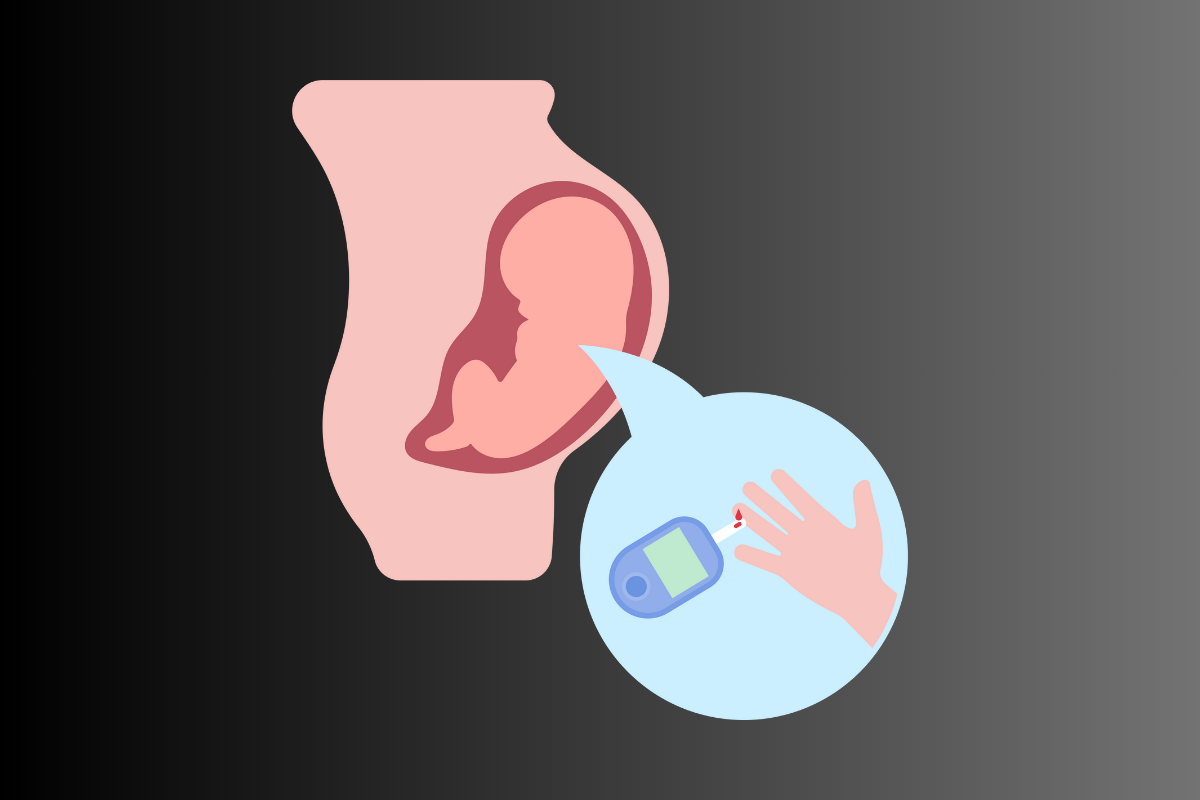
Gestational diabetes (GDM) is high blood sugar diagnosed during pregnancy. It affects maternal and fetal health if not controlled — increasing risks such as large-for-gestational-age baby, birth complications, and later type 2 diabetes risk. Early detection, blood-glucose monitoring and obstetric/diabetes team management are the primary steps. Ayurveda can provide supportive, safety-first care alongside medical treatment.
Key points & investigations
- Screening typically between 24–28 weeks (OGTT) or earlier if high-risk; ongoing glucose monitoring is essential. (See medical guidance: NHS/ACOG)
- Primary management is diet, exercise and medical therapy (insulin/metformin) when required — Ayurveda supports these but does not replace them.
- Any Ayurvedic therapy during pregnancy must be cleared by the obstetrician and diabetes team before starting.
Ayurvedic viewpoint (brief)
In Ayurveda, glucose/ metabolic dysregulation in pregnancy is addressed with gentle interventions that restore Agni (metabolic strength), balance Kapha–Pitta, reduce Ama and support healthy digestion and metabolism — all adapted for pregnancy and prioritizing fetal safety.
Critical Safety-first Notice
Pregnancy changes physiology — safety is the top priority. Do not attempt internal detox (virechana, vamana), enemas, or intense Panchakarma during pregnancy as they are generally contraindicated. Any herbs, supplements or therapies must be prescribed only after obstetric and diabetes-team clearance and with regular blood-glucose monitoring. If you have been prescribed insulin or other medications, continue them as directed; Ayurveda complements, not replaces, standard medical care.
(References for contraindications and medical guidance are listed below.)
Integrated, pregnancy-safe Ayurvedic approach
- Medical-first coordination: confirm diagnosis, glucose goals, and clearance from your obstetrician/endocrinologist.
- Diet & lifestyle (first-line): warm, low-glycemic, balanced meals (small frequent meals), light exercise as approved, and weight monitoring.
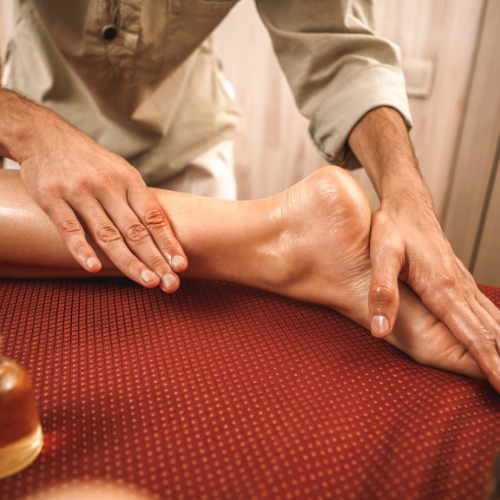
- Gentle, external therapies: pregnancy-adapted Abhyanga (prenatal massage), warm oil bathing and calming therapies to reduce stress and improve sleep — these support glycemic control indirectly by improving digestion, sleep and stress hormones.
- Herbs & internal medicines: some dietary herbs (fenugreek, bitter gourd preparations, dietary bitter vegetables) may help but must be used only under supervised prescription — many internal herbal purificatory medicines are contraindicated in pregnancy.
Pregnancy-safe therapies we offer — with reference images
Below are therapies commonly used in pregnancy for symptomatic support, stress reduction, digestion and overall nourishment. Each therapy is provided only after obstetric and diabetes-team clearance and adapted for comfort and safety.
Abhyanga — Prenatal Oil Massage Safe (with precautions)
What it is: Gentle, full-body warm oil massage adapted for pregnancy (Garbhini Abhyanga).
- Promotes relaxation, reduces swelling and stress, improves sleep and supports circulation — all beneficial for maternal metabolic health and wellbeing.
- Techniques avoid abdominal pressure, use light strokes, and prefer side-lying or semi-reclining positions after the first trimester.
- Always performed by a therapist trained in prenatal Ayurvedic massage and after obstetric approval.
Warm Oil Bath (Gentle Snehana)
What it is: Warm oil application followed by a gentle bath — used to relax muscles, improve sleep and skin nourishment.
- Helps reduce stress and improve overall comfort — which can indirectly benefit blood sugar control via better sleep and lower stress hormones.
- Temperature and duration strictly controlled for pregnancy comfort; avoid overheating and prolonged steam on abdomen.
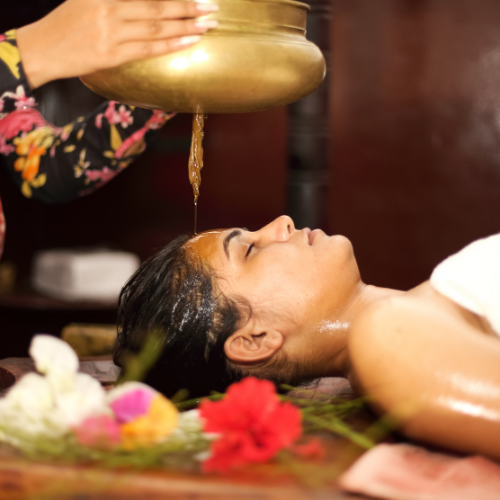
Shirodhara (Calming Pour) — Conditional
What it is: Continuous, gentle pouring of warm oil or decoction on the forehead to reduce stress and improve sleep.
- May be offered in pregnancy with strict modifications (positioning, oil choice, shorter duration) and only after clinician clearance — many centers offer this after the first trimester for stress and insomnia.
- Primary benefit is autonomic calming (lowering stress hormones), which supports metabolic control.
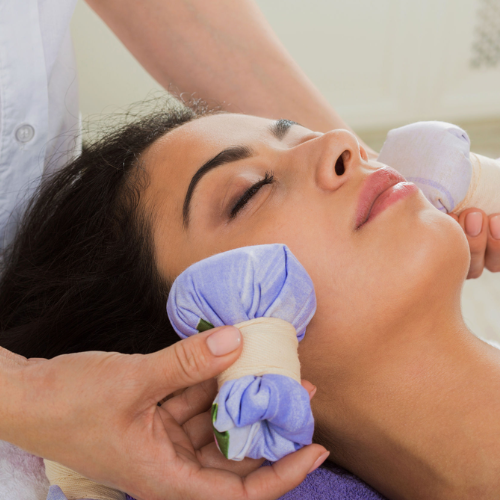
Navara Facial / Gentle Rejuvenation
What it is: Nourishing, gentle facial and topical therapies using pregnancy-safe ingredients (Navara rice based bolus or gentle pastes).
- Supports skin, stress relief and hydration — completely external and non-invasive when pregnancy-safe herbs/oils are used.
- Useful for relaxation and wellbeing during pregnancy.
Dietary & Herbal Guidance — cautious & supervised
Dietary measures are first-line for GDM: low-glycemic foods, small frequent meals, fiber, and approved exercise. Some food/herbal elements (fenugreek, bitter gourd) have traditional and studied blood-glucose benefits — but internal herbs or concentrated preparations must only be used under supervision (obstetrician + Ayurvedic physician + diabetes team) because several Ayurvedic purificatory medicines or strong herbal extracts are contraindicated in pregnancy.
- Diet principles: complex carbohydrates (whole grains in controlled portions), legumes, vegetables, lean protein, avoid excess sugars and deep-fried foods.
- Safe food herbs (with supervision): dietary fenugreek seeds (in food amounts), bitter vegetables and fiber-rich foods — only as advised by your care team.
- What to avoid without clearance: potent internal detox herbs, unsupervised herbal extracts, and any drug/herb that might affect uterine activity or fetal growth.
- Monitoring: regular capillary glucose checks, HbA1c when indicated, and coordinated follow-up with obstetric/diabetes teams.
Herbal/dietary references and clinical guidance are summarized below for your review. Always bring medication and lab reports to any Ayurveda consultation.
Sample Pregnancy-safe Plan (example)
Initial (on diagnosis)- Coordinate with obstetrician and diabetes team; start glucose monitoring and diet plan.
- Gentle Abhyanga weekly or biweekly for stress relief and improved sleep.
- Nutrition counselling (Ayurvedic + diabetic) for blood-sugar friendly meals.
Stabilization & Support- Short Shirodhara sessions (if cleared) for stress/insomnia; warm oil baths for relaxation.
- Topical/rejuvenative therapies (Navara facial) for wellbeing.
- Monitoring and adjustment of medical therapy (insulin/metformin) remains with diabetes team.
Follow-up & Postpartum- Postpartum metabolic assessment (6–12 weeks) and continued lifestyle support to reduce future diabetes risk.
- Postpartum rejuvenation (Njavara Kizhi etc.) may be offered after delivery if desired and cleared.
Important: internal Panchakarma (virechana, vamana, basti, uttara basti) and procedures involving strong purgation or uterine/abdominal manipulation are generally not performed during pregnancy. These are usually planned either pre-conception or postpartum when appropriate and safe.
Quick Reference — Therapies & Roles
| Therapy | Primary role | Pregnancy note |
|---|
| Abhyanga | Relaxation, circulation, swelling reduction | Safe when prenatal techniques used; avoid deep pressure. |
| Warm Oil Bath | Relaxation, improved sleep | Safe with temperature control; avoid overheating. |
| Shirodhara | Stress & sleep support | Conditional — offered with modifications and clearance. |
| Navara Facial | Nourishment & relaxation | External, non-invasive — safe when pregnancy-safe ingredients used. |
Need a safe Ayurvedic plan during pregnancy?
Book a consultation — we will review your OB and diabetes reports, coordinate with your physicians, and design a monitored, pregnancy-safe Ayurvedic plan to support wellbeing during pregnancy and postpartum recovery.
Book ConsultationAll procedures are supervised by qualified Ayurvedic physicians and therapists. Obstetric and diabetes-team clearance is mandatory before any therapy.