What is Vitiligo?
Vitiligo is a condition characterised by loss of pigment (depigmented white patches) due to melanocyte dysfunction or destruction. Common features include well-defined pale/white patches on the skin, sometimes with spreading, occasional itching, or sensitivity to sun. Onset may be gradual or sudden. Medical evaluation (dermatology, autoimmune screening when indicated) is recommended to determine cause and management options.
Symptoms & clinical points
- Symptoms: well-demarcated white patches, often symmetric; changes in hair color in affected areas (poliosis).
- Investigations: clinical exam, Wood's lamp, blood tests for autoimmune markers in selected cases (e.g., thyroid), and photographic mapping for follow-up.
- Treatment goals: stabilise spread, support repigmentation where possible, improve skin health and psychosocial support.
Ayurvedic view (brief)
In Ayurveda vitiligo is commonly equated with Shvitra/Switra. The pathology often involves Vata and Kapha with dosha imbalance affecting the skin (Twak) and pigment-producing tissues. Treatment aims to balance doshas, remove toxins, nourish the skin/tissues (Twak, Mamsa, Rakta), and encourage repigmentation using systemic and local measures.
Important Safety & Realistic Expectations
Vitiligo outcomes vary widely. Ayurveda can offer supportive therapies that aim to stabilise progression, nourish skin tissues and assist repigmentation in some patients, but results depend on disease stage, chronicity and individual factors. Always coordinate with a dermatologist — combine approaches only under clinician guidance. Avoid unverified topical products and sun exposure without protection.
Ayurvedic Care Strategy for Vitiligo
- Assessment: Determine activity (spreading vs stable), age of lesions, autoimmune risk and general health before any interventions.
- Stabilisation: Aim to stop spread using internal herbs, lifestyle changes and gentle procedures — avoid aggressive detox when disease is spreading.
- Local & systemic nourishment: Topical lepams, oil applications, and rejuvenative therapies to nourish skin and support melanocyte recovery.
- Supportive Shodhana (selective): In stable, chronic cases — carefully selected therapies (e.g., Virechana in Pitta-predominant patterns or Basti for Vata dominance) may be used after full evaluation.
- Rehabilitation: Rejuvenative procedures (Njavara Kizhi), topical therapies and long-term dietary/lifestyle modifications to maintain results.
Therapies Useful in Vitiligo — with reference images
The list below shows clinic therapies commonly used in Ayurvedic management of vitiligo. Each therapy is individualized; not all are appropriate for every patient. Photos are included for reference.
Lepam (Topical Medicinal Paste) Primary
What it is: Application of carefully prepared herbal pastes (lepa) containing nourishing and pigment-supportive herbs on depigmented patches.
- Used to nourish local skin, reduce local dosha imbalance and support repigmentation when combined with systemic care.
- Formulations and frequency are tailored — strict patch testing and sun-protection guidelines are followed.
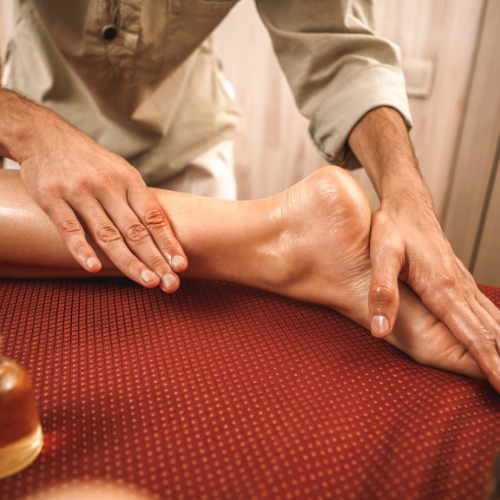
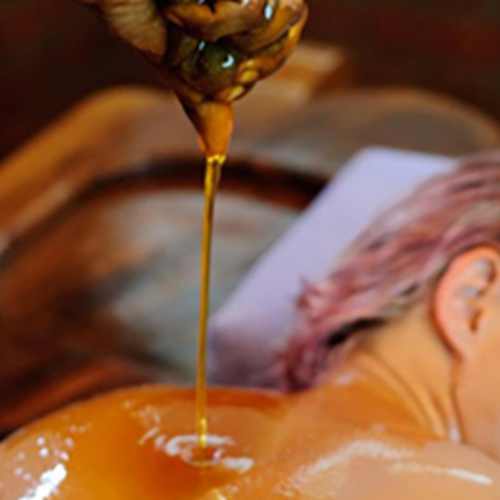
Abhyanga (Therapeutic Oil Massage)
What it is: Gentle full-body massage with nourishing oils chosen to pacify relevant doshas and improve tissue nutrition.
- Improves circulation to the skin, calms nervous system, supports overall tissue health and prepares skin for topical therapies.
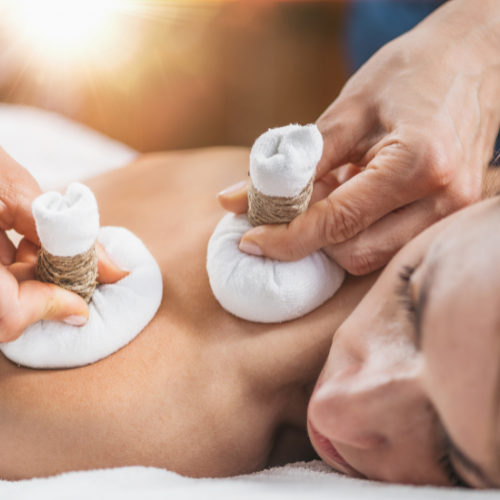
Patra Potli (Herbal Leaf Bolus/Compress)
What it is: Warm herbal leaf boluses applied topically to affected areas or over the body to deliver medicated heat and herbal action.
- Helps local nourishment, improves microcirculation and assists the action of topical lepams in selected protocols.
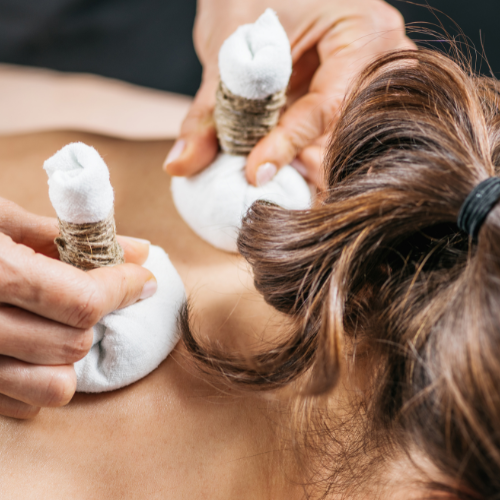
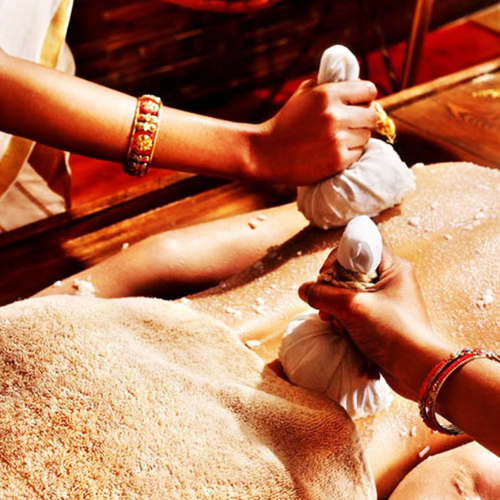
Churn Potli (Herbal Powder Poultice)
What it is: Warm poultices made from specific herbal powders to apply medicinal heat and herbs to skin patches.
- Used as an adjunct to lepams and topical therapies to enhance local effect and reduce stagnation.
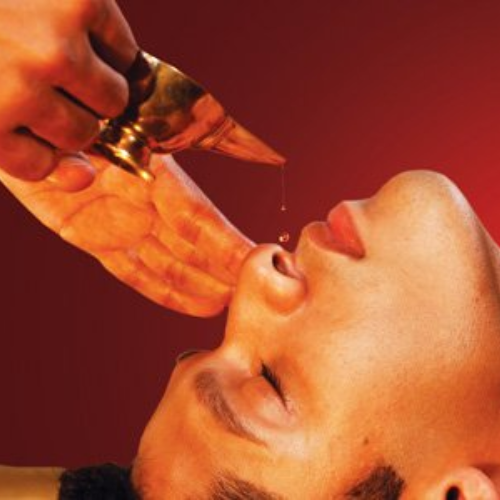
Nasyam (Nasal Administration) — Adjunct
What it is: Administration of mild, medicated oils or herbal preparations via the nose to influence head and skin-related doshas.
- Can be helpful when vitiligo involves facial or scalp areas, to correct dosha imbalance affecting the head region; used cautiously and in stable patients.
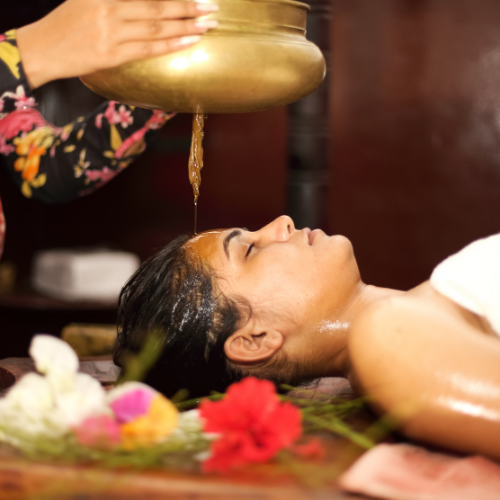
Shirodhara (Nervous-System Support)
What it is: Continuous gentle pouring of medicated oil over the forehead to calm the nervous system and reduce stress.
- Addresses stress-related triggers and supports sleep and mental wellbeing — important for long-term management of vitiligo.
Njavara Kizhi (Rejuvenative Bolus Therapy)
What it is: Warm boluses of Njavara rice in herbal decoction applied to the body to nourish and rejuvenate tissues.
- Useful in rehabilitation to restore tissue strength, immunity and support pigment recovery when combined with topical measures.
Basti (Medicated Enema) — Selected Use
What it is: Medicated oil or decoction administered rectally to correct Vata and improve systemic balance.
- Used selectively in Vata-dominant patterns or chronic cases to stabilise disease and support systemic nourishment — only after full assessment.
Oil Bath (Post-treatment Nourishment)
What it is: Therapeutic oil application followed by warm bath to nourish and soothe the skin.
- Helps maintain skin moisture, improves texture and supports the action of topical lepams and other local treatments.
Herbal Medicines & Nutritional Support
Internal medicines and supplements are prescribed after assessment. The aim is to support immunity, nourish skin tissues (Twak, Rakta, Mamsa) and correct dosha imbalance.
- Gandhak (processed sulphur) & herbal formulations: Traditional topical and internal agents used in some protocols — only under physician supervision.
- Manjistha (Rubia cordifolia): Blood-purifying herb used in formulas to support skin health.
- Amalaki & Guduchi: Antioxidant and immunomodulatory herbs used to support general health and dosha balance.
- Diet: Balanced, easily digestible, sattvic diet with adequate protein, fresh fruits and vegetables; avoid known food triggers and maintain regular meal timings.
- Sun protection: Protect depigmented areas from sun exposure (sunscreen, clothing) to avoid burns and contrast.
- Lifestyle: Stress management, regular sleep and gentle exercise (yoga) as part of long-term care.
All internal and topical medications must be prescribed by a qualified Ayurvedic physician and coordinated with dermatology when using concurrent conventional treatments (e.g., topical steroids, phototherapy).
Sample Clinic Plans for Vitiligo (examples)
Stabilisation (active/spreading)- Urgent dermatology coordination to rule out triggers
- Internal medicines to calm activity, avoid aggressive Panchakarma
- Topical lepams and gentle oil applications; strict sun protection
Detox & Correction (stable disease)- Selected Shodhana only after full assessment (Virechana/Basti in selected patterns)
- Adjunctive Nasyam, Patra/Churn potli & topical lepam for targeted areas
- Monitoring and photographic follow-up to track repigmentation
Rehabilitation & Maintenance- Njavara Kizhi, Abhyanga and oil baths to nourish tissues
- Long-term herbs, diet, stress management and periodic reviews
- Combination therapy with dermatology (e.g., controlled phototherapy) when appropriate
Plans are examples — actual protocols are personalised. Photographic documentation and periodic lab checks (when needed) help in objective monitoring.
Quick Reference — Therapies & Roles
| Therapy | Primary role | When used / notes |
|---|
| Lepam | Topical nourishment & repigmentation support | Primary topical therapy; requires patch testing |
| Patra / Churn Potli | Local herbal heat & nourishment | Adjunct to lepam and topical care |
| Abhyanga | Improve circulation & tissue nutrition | Supportive and preparatory |
| Nasyam | Head/face dosha correction | Adjunct for facial/scalp involvement |
| Njavara Kizhi | Rejuvenation & strengthening | Rehab phase for chronic cases |
| Basti | Correct Vata & systemic stabilisation | Selected use in chronic/stable patterns |
| Shirodhara | Stress reduction & nervous-system support | Adjunctive therapy |
Looking for a personalised Ayurvedic plan for vitiligo?
Book a consultation — we will assess disease activity, coordinate with dermatology, and design a safe, stepwise plan combining topical and systemic care when appropriate.
Book ConsultationTherapies are performed by qualified Ayurvedic physicians. Coordination with dermatology and informed consent are mandatory.