What is Scleroderma?
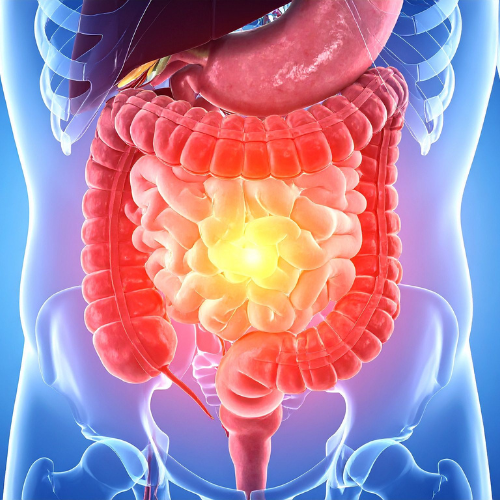
Scleroderma (systemic sclerosis) is a group of disorders characterised by skin thickening and fibrosis and — in many patients — internal organ involvement. Symptoms can include skin tightness, Raynaud's phenomenon, joint stiffness, digestive difficulties and, in systemic disease, lung or kidney involvement. Early medical diagnosis (rheumatology, autoantibodies, imaging and organ screening) is essential.
In Ayurvedic texts and modern Ayurvedic case reports, scleroderma-like presentations are commonly correlated with Uttana Vatarakta, Twakgata (skin) vitiations, and involvement of Vata and Rakta/Mamsa dhatus — thus informing a combined strategy of nourishment (Snigdha), channel-clearing (Shodhana) and local therapies to improve skin mobility and reduce fibrosis-related stiffness. :contentReference[oaicite:1]{index=1}
Critical Safety Note
Scleroderma can be a serious systemic disease. Ayurvedic therapies offered in the clinic are supportive and rehabilitative — they are NOT a substitute for specialist rheumatology, immunology or organ-directed medical care. We require recent medical evaluation, organ screening (pulmonary, renal, cardiac where indicated), and written clearance from the treating physician before any Shodhana (purificatory) procedure. :contentReference[oaicite:2]{index=2}
Ayurvedic Care Pathway (Conservative & Individualized)
- Medical coordination: confirm diagnosis, rule out active organ crisis, review immunosuppressive therapy and get clearance.
- Goals: reduce Vata-driven stiffness, clear channel obstruction (Ama/Rakta), nourish Mamsa and Twak (skin), and improve circulation and mobility.
- Therapeutic pillars: gentle Snehana (oil nourishment), Swedana (mild sudation), localized Lepana (herbal pastes), internal Rasayana & anti-inflammatory herbs, selected Basti (medicated enemas) for Vata modulation, and rehabilitative bolus therapies such as Njavara Kizhi in the recovery phase. Case reports document benefits when applied under supervision. :contentReference[oaicite:3]{index=3}
Clinic Therapies We Use for Scleroderma — with reference images
Below are the clinic therapies commonly used in Ayurvedic management of scleroderma presentations. Therapies are individualized: not every therapy is appropriate for every patient. Each therapy entry includes a reference image. Medical clearance is mandatory for purificatory (Shodhana) procedures. :contentReference[oaicite:4]{index=4}
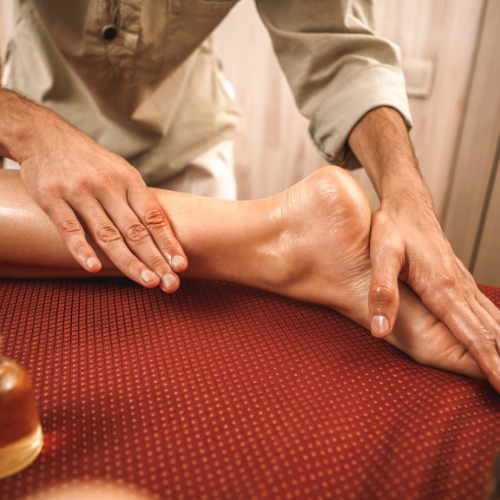
Abhyanga (Full-body Oil Massage)
What it is: Warm herbal oil massage (often with medicated oils and gentle strokes).
- Deep nourishes skin and muscle (Twak & Mamsa), improves local circulation and reduces stiffness.
- Regular, gentle Abhyanga combined with mild passive movements helps maintain skin mobility and relieve joint tightness.
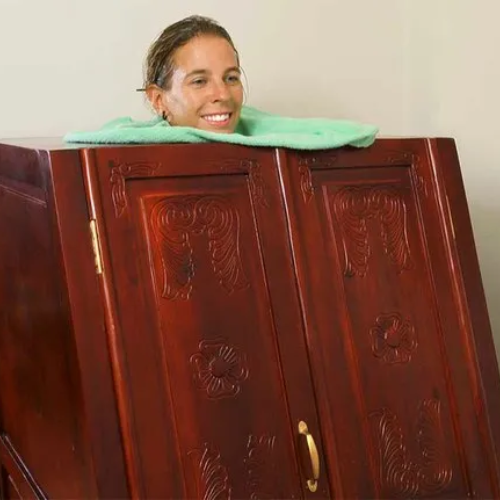
Swedana / Nadi Swedan (Mild Sudation & Steam)
What it is: Mild whole-body or localized steam and medicated fomentation (Nadi Swedan) to loosen tissues.
- Helps soften fibrosed areas after adequate Snehana (oil application) so tissues are more pliable for physiotherapy.
- Used carefully — avoid strong heat in active inflammation or when medical conditions contraindicate heat therapy.
Lepam / Sarvanga Lepa (Herbal Paste Applications)
What it is: Topical application of medicated herbal pastes chosen for Vata-pacifying, anti-fibrotic and penetrating properties.
- Applied to areas of skin tightness to improve local circulation and reduce induration; formulas and duration are individualized.
- Often combined with prior Abhyanga and mild Swedana to improve absorption.
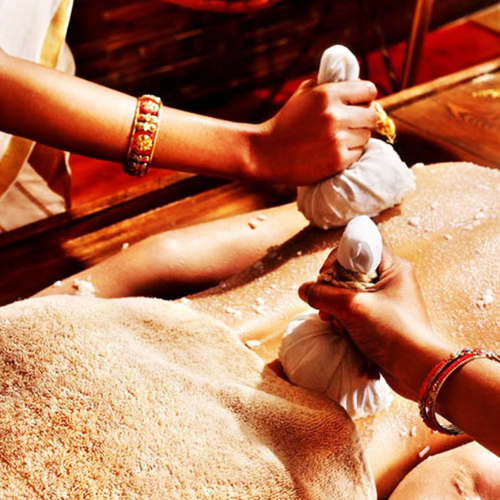
Njavara Kizhi (Rejuvenative Bolus Therapy)
What it is: Warm Njavara rice boluses cooked in herbal decoction applied to the whole body.
- Used in the rehabilitation phase to nourish mamsa/twak dhatus, strengthen tissues and reduce weakness and stiffness.
- Helpful when the patient is stable and needs restorative therapy to improve tone and mobility. :contentReference[oaicite:5]{index=5}
Basti (Medicated Enemas — Ksheera/Matra Basti)
What it is: Medicated enema therapies aimed at pacifying Vata and supporting gut–immune balance.
- When indicated, basti (particularly nourishing ksheera basti or matra basti) is used to modulate Vata and to support systemic rehabilitation.
- Selected carefully after assessment; many Ayurvedic case series report improvement in skin symptoms with combined basti protocols. :contentReference[oaicite:6]{index=6}
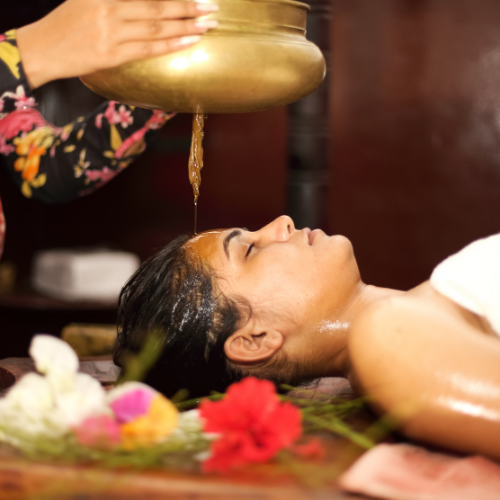
Shirodhara (Nervous & Stress Support)
What it is: Continuous, gentle pour of warm oil on the forehead to calm the nervous system.
- Used as an adjunct to reduce stress, improve sleep and support autonomic balance — helpful because stress can aggravate autoimmune conditions.
Virechana (Therapeutic Purgation) — Selective Use
What it is: Supervised herbal purgation to clear Pitta-related toxins; considered only in selected patients and after full medical and Ayurvedic assessment.
- Some Ayurvedic case reports include Virechana as part of a multi-step protocol — it must only be performed after stabilization, monitoring and informed consent. :contentReference[oaicite:7]{index=7}
Herbal Medicines & Nutritional Support
Internal medicines and diet are selected for safety and to support anti-inflammatory, immunomodulatory and reparative processes. Commonly used herbs/formulations (as per Ayurvedic practice and case reports) include:
- Guduchi (Tinospora cordifolia): Immunomodulatory and supportive in many Ayurvedic autoimmune protocols (used under supervision).
- Dashamoola / Bala-based rasayanas: To support Vata reduction, muscle and nerve nourishment.
- Kaishor guggulu / Manjishtha-containing formulations: Used by clinicians for skin and rakta support depending on presentation.
- Diet: Warm, nourishing, easy-to-digest meals; focus on anti-oxidant, anti-inflammatory foods, avoid extreme cold/raw heavy foods if digestion is weak.
- Physiotherapy & exercise: Gentle stretching, supervised physiotherapy and hand/skin mobilization are essential alongside topical and internal therapies.
All internal medicines must be checked for safety with concurrent immunosuppressants or prescription drugs. Prescription is individualized and lab monitoring is recommended. :contentReference[oaicite:8]{index=8}
Sample Clinic Plans (examples — illustrative)
Stabilization & Symptom Relief- Medical clearance and organ screening
- Gentle Abhyanga, mild Swedana, topical Lepanam for localized areas
- Begin physiotherapy & gentle stretching
Targeted Rehabilitative Protocol- Course of Njavara Kizhi + Abhyanga to nourish tissues
- Matra/ksheera Basti cycles for Vata modulation (if indicated)
- Oral rasayanas and topical herbal pastes; ongoing physiotherapy
Maintenance & Follow-up- Periodic supportive sessions (Abhyanga/Shirodhara), monitoring
- Long-term diet & lifestyle; coordinate with rheumatology for meds and organ surveillance
- Labs and functional assessments periodically
These are sample frameworks — every plan is individualized. Purificatory therapies (Virechana, strong Shodhana) are only used selectively after multidisciplinary review and monitoring. :contentReference[oaicite:9]{index=9}
Quick Reference — Therapies & Roles
| Therapy | Primary role | Notes |
|---|
| Abhyanga | Nourish skin & muscle; improve circulation | Core supportive therapy |
| Swedana / Nadi Swedan | Loosen fibrosed tissue after oiling | Use mild heat; avoid in active inflammation |
| Lepam (Herbal paste) | Local anti-indurative & penetrating therapy | Selected herbal pastes based on presentation |
| Njavara Kizhi | Rejuvenation & tissue strengthening | Rehabilitative phase therapy |
| Basti (Matra / Ksheera) | Vata modulation; systemic support | Used selectively with medical clearance |
| Shirodhara | Stress & autonomic support | Adjunctive therapy |
| Virechana | Purgation (selective) | Only after full assessment and clearance |
Want an individualized Ayurvedic plan for scleroderma?
Book a clinical consultation — we will review your medical records, coordinate with your specialists, and design a stepwise, monitored Ayurvedic rehabilitation program focused on safety and functional outcomes.
Book ConsultationAll procedures are performed by qualified Ayurvedic physicians. Medical clearance (recent labs, specialist review) is mandatory before purificatory therapies.