What are Breast Disorders?
Breast disorders include a range of non-cancerous and cancerous conditions. Common benign problems are mastitis (infection/inflammation), galactocele (milk retention), fibrocystic changes (lumps/cysts), painful breasts (mastalgia), and postoperative or radiation-related tissue changes. Any new lump, persistent pain, nipple discharge (especially bloody), skin changes or lymph node enlargement requires urgent medical evaluation (clinical exam, ultrasound/mammography, and biopsy when indicated).
Red flags — when to seek immediate medical care
- New, hard, immobile lump or rapidly growing mass.
- Skin dimpling, nipple retraction, or ulceration.
- Persistent bloody nipple discharge.
- Systemic signs of infection — high fever, severe pain, spreading redness (cellulitis).
Ayurvedic perspective
Ayurveda views many breast complaints as a combination of Vata and Kapha disturbances with local Ama (toxins/inflammation) and impaired Dhatvagni (tissue metabolism). Management focuses on reducing local inflammation, improving circulation and lymphatic drainage, clearing Ama, supporting tissue regeneration and reducing pain — using local therapies (poultices, fomentation, medicated dhara), systemic detox or rejuvenation when indicated, and dietary/lifestyle measures.
Critical Safety Note
If you discover a new breast lump, suspicious discharge, or concerning skin changes — do not delay conventional medical workup. Ayurveda is offered as a complementary, supportive system and must not replace urgent surgical, oncological, or infectious disease care. For mastitis with systemic infection we coordinate with physicians and treat after stabilization.
Ayurvedic Care Pathway (Integrated)
- Medical coordination & diagnosis: Imaging (ultrasound/mammogram) and biopsy when indicated — confirm benign vs malignant and exclude abscess requiring drainage.
- Local therapies: Patra/Churn potli, Kashaya Dhara, Nadi Swedan and Lepam for targeted inflammation relief, lymphatic stimulation and cyst softening.
- Supportive systemic care: Gentle Abhyanga, Njavara Kizhi for nourishment and tissue repair; selected Basti or mild Shodhana only after assessment.
- Adjuncts: Stress-reducing therapies (Shirodhara), dietary/lifestyle changes and liver/gut supportive herbs to improve overall metabolism and reduce Ama.
- Rehabilitation: Njavara Kizhi and restorative regimes to rebuild tissue tone after infection, surgery or prolonged inflammation.
Therapies We Use for Breast Disorders — with reference images
Therapies below are commonly used in clinic practice to relieve local inflammation, improve drainage, reduce pain and support tissue healing. Each therapy entry includes a reference photo. All procedures are individualized and require prior medical clearance.
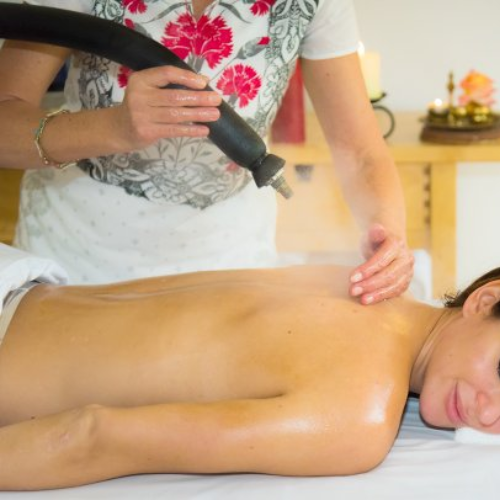
Abhyanga (Warm Oil Massage)
What it is: Gentle full-body herbal oil massage tailored to reduce pain, improve circulation and lymphatic flow.
- Improves local and systemic circulation, eases pain and reduces muscle tension in chest/shoulder girdle.
- Prepares tissues for local therapies and supports recovery after infection or surgery.
- Technique and pressure modified for comfort in breast-sensitive patients.
Swedan (Therapeutic Steam)
What it is: Whole-body or localized steam to promote sweating, encourage circulation and soften local congestion.
- Helpful in early inflammatory stages to reduce local congestion and soften cystic areas (used judiciously).
- Often paired with poultice (patra/churn) for better penetration.
- Avoid intense heat in acute infection with open wounds or when abscess is suspected without surgical drainage.
Nadi Swedan (Localized Steam Fomentation)
What it is: Focused steam over the breast area to relieve local stiffness, promote drainage and reduce pain.
- Used for mastalgia and fibrocystic nodularity to encourage fluid movement and aid subsequent poultice therapy.
- Applied under supervision; heat intensity and duration adjusted to the condition.
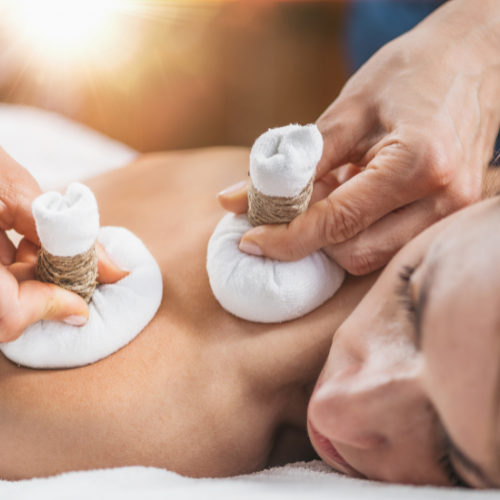
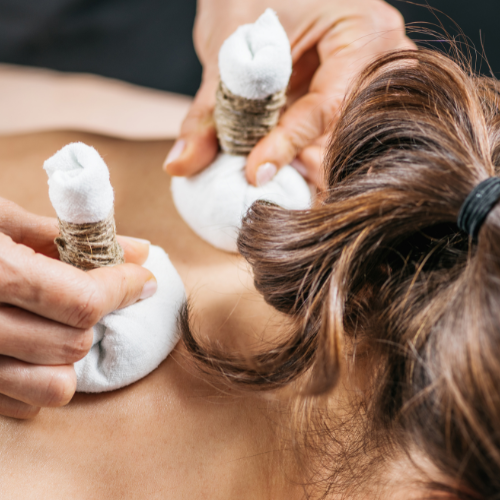
Patra Potli (Herbal Leaf/Fabric Poultice)
What it is: Warm poultice made with specific leaves/herbs applied over the breast to reduce inflammation and improve local circulation.
- Targets localized inflammation, eases pain and supports lymphatic drainage.
- Formula chosen to avoid irritants and ensure skin safety; ideal after fomentation (Swedan).
Churn Potli (Powdered Herbal Poultice)
What it is: Warm bolus containing powdered herbs tailored for anti-inflammatory and lymphatic action.
- Useful for cystic, painful breasts and chronic localized inflammation.
- Applied by trained therapists; skin tested first to avoid irritation.
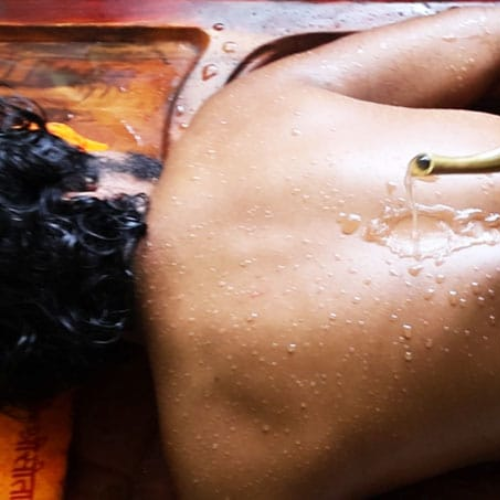
Kashaya Dhara (Herbal Decoction Pouring)
What it is: Gentle continuous pouring of warm, liver-safe herbal decoction over the breast/chest area to soothe tissues and reduce inflammation.
- Used in non-acute phases for symptomatic relief, tissue calming and to support local healing.
- Decoctions chosen for safety and anti-inflammatory profile.
Lepam (Medicated Paste)
What it is: Topical medicated paste applied to the breast to reduce inflammation, soften tissues and support local detoxification.
- Formulated to be non-irritating; often used after poultices and steam to enhance penetration.
- Avoid using over open wounds or where surgical drainage is required.
Njavara Kizhi (Rejuvenative Bolus Therapy)
What it is: Warm Njavara rice boluses prepared in herbal decoction applied to the body for systemic nourishment and tissue repair.
- Useful in rehabilitation after infection/surgery to restore strength, improve tissue nutrition and reduce residual stiffness.
- Helps reduce chronic pain and supports lymphatic clearance when used in a restorative plan.
Basti (Medicated Enema) — Selected/Systemic Use
What it is: Medicated oil/decoction enemas used to correct Vata, improve tissue metabolism and support systemic detox.
- May be recommended in chronic, recurrent breast complaints where systemic Vata/Ama imbalance is identified.
- Given only after thorough assessment and medical clearance; not used in acute infections without coordination.
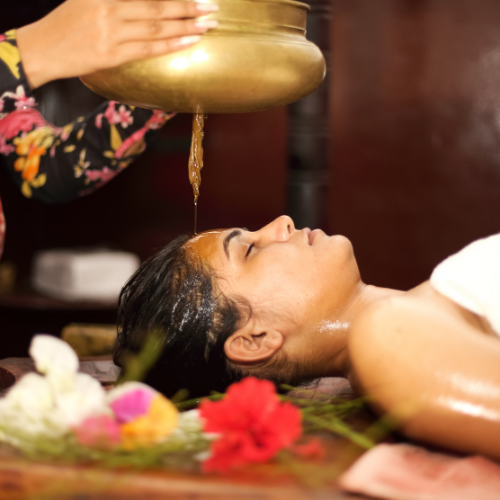
Shirodhara (Nervous System & Stress Support)
What it is: Continuous pouring of warm herbal oil on the forehead to calm the nervous system and reduce stress.
- Useful adjunct to reduce stress-related mastalgia and to improve sleep and recovery.
- Often included in multi-modal rehabilitation plans.
Herbal Medicines & Nutritional Support
Internal herbs are chosen for anti-inflammatory, lymphatic-supportive and tissue-nourishing properties, and must be selected to avoid hormone interactions. Prescriptions are individualized and coordinated with medical care.
- Triphala: Gentle detox & bowel regulation to reduce Ama and support systemic clearance.
- Guduchi (Tinospora cordifolia): Anti-inflammatory and immune-modulating support under supervision.
- Isi (Guggul) combinations: When indicated and safe, used to support tissue metabolism — only under clinician guidance.
- Diet: Anti-inflammatory, Pitta-balancing diet — warm, cooked vegetables, wholesome grains, avoid excessive caffeine/alcohol and strong stimulants.
- Topical care: Avoid irritants, harsh soaps or fragrances on the breast; use clinician-recommended topical paste/oil only.
- Hydration & rest: Adequate fluids, gentle movement and lymphatic exercises as advised.
If imaging/biopsy suggests malignancy or an abscess requiring surgical drainage, immediate referral to appropriate medical/surgical specialists is essential. Ayurvedic therapies may be offered as adjuncts after medical stabilization and with clear multidisciplinary coordination.
Sample Clinic Plans (examples)
Acute mastitis / infected breast- Immediate medical evaluation and antibiotics/drainage if abscess present
- Supportive rest, warm fomentation (Nadi Swedan) and gentle Abhyanga after infection control
- Topical poultices as adjunct after clinician approval
Fibrocystic / chronic mastalgia- Assessment (ultrasound) → nutritional & hormonal review
- Targeted local therapy: Nadi Swedan → Patra/Churn Potli → Lepam
- Supportive Njavara Kizhi, Abhyanga and stress reduction (Shirodhara)
Post-operative / rehabilitation- Wound monitoring and surgeon clearance
- Gentle Njavara Kizhi, lymphatic mobilization and nourishing oral herbs
- Long-term lifestyle, physiotherapy coordination and periodic follow up
All plans are individualized. Procedures such as Basti or any form of internal detox are considered only after careful review and medical clearance. Written consent and clear pre/post instructions are provided.
Quick Reference — Therapies & Roles
| Therapy | Primary role | Notes |
|---|
| Patra / Churn Potli | Local anti-inflammatory, pain relief | Used after steam/fomentation |
| Nadi Swedan | Localized heat to aid drainage & soften nodules | Adjust intensity; avoid open wounds |
| Kashaya Dhara | Soothing decoction pouring for local calming | Decoctions selected for safety |
| Lepam | Topical anti-inflammatory paste | Avoid on broken skin |
| Abhyanga | Systemic nourishment & circulation | Gentle techniques for breast sensitivity |
| Njavara Kizhi | Rehabilitation & tissue strengthening | Used in restorative phase |
| Shirodhara | Stress & sleep support | Adjunctive therapy |
| Basti | Systemic Vata correction (selected) | Only after assessment |
Concerned about a breast lump or persistent pain?
Book a multidisciplinary consultation — we will review your imaging and reports, coordinate with your physician/surgeon, and design a safe, stepwise Ayurvedic plan to support healing and recovery.
Book ConsultationImportant: New lumps or suspicious signs must be evaluated urgently by medical specialists. Ayurveda complements medical care and is provided only with proper medical coordination.