What is Meningitis?
Meningitis is inflammation of the meninges — the membranes that surround the brain and spinal cord. It can be caused by bacteria, viruses, fungi or other agents. Bacterial meningitis is potentially life-threatening and needs urgent hospital treatment (antibiotics, supportive ICU care). Viral meningitis is often self-limiting but still requires medical evaluation.
Common signs & symptoms
- High fever, severe and persistent headache
- Neck stiffness (inability to touch chin to chest)
- Nausea, vomiting, photophobia (sensitivity to light)
- Confusion, drowsiness, seizures, or altered consciousness
Medical priorities
Rapid diagnosis (lumbar puncture, CSF analysis), prompt antibiotics (for bacterial meningitis), and supportive care (fluid balance, anti-seizure meds, oxygenation) are essential. Ayurveda can help in rehabilitation and nervous system support after stabilization, and in symptom relief under supervision.
What Ayurveda Can Offer (Supportive — not curative in acute phase)
After medical stabilization and clearance by your treating physician, Ayurvedic care can support recovery by:
- Calming the nervous system, reducing post-illness anxiety, insomnia and headaches.
- Supporting neurological recovery (nerve nourishment, improved circulation).
- Reducing residual muscle stiffness, spasm and pain.
- Helping improve appetite, digestion and general strength using Rasayanas (rejuvenators).
Critical: Do not delay or replace emergency hospital treatment with Ayurveda. All Ayurvedic interventions must be coordinated with the treating medical team, especially if the patient is on antibiotics, anticoagulants, or other critical medications.
Clinic Therapies — Supportive & Rehabilitative (post-stabilization)
Therapies shown below are those we commonly use to support neurological recovery, reduce headaches, improve sleep and rebuild strength after the acute phase of meningitis. Each therapy includes a photo for reference. Therapies are selected only after medical clearance.
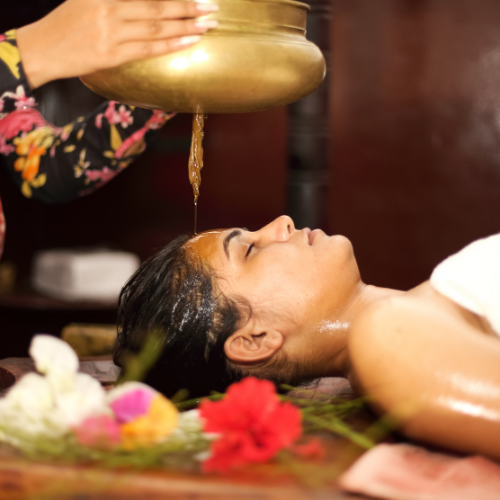
Shirodhara (Forehead Oil Pouring)
Role: Calming the central nervous system, improving sleep and reducing headache, anxiety and irritability during recovery.
- Promotes parasympathetic relaxation and deep, restorative sleep.
- Helps with post-illness headache and cognitive fatigue.
- Used once patient is hemodynamically stable, afebrile and cleared by physician.
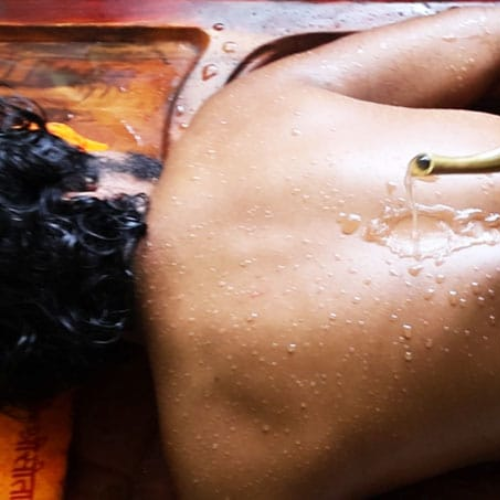
Kashaya Dhara (Herbal Decoction Pouring)
Role: Warm herbal decoctions gently poured over the head or specific regions to soothe inflammation and support nervous tissue recovery.
- Can be chosen when a decoction with nervine, anti-inflammatory herbs is desirable (post-fever).
- Reduces persistent headache and soothes scalp/neck muscle tension.
- Requires medical clearance if any open wounds, infection or ongoing fever exist.
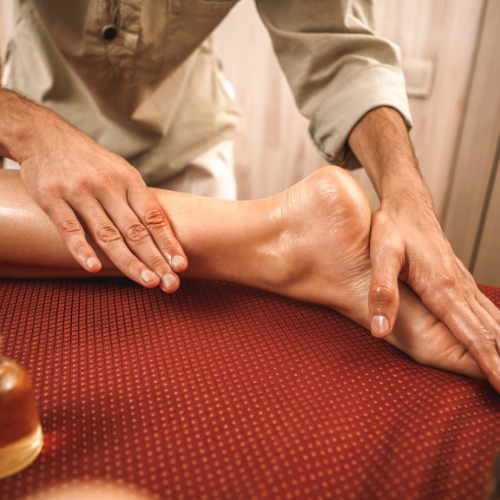
Abhyanga (Gentle Full-Body Oil Massage)
Role: Improves circulation, reduces muscle stiffness, supports lymphatic drainage and overall comfort during convalescence.
- Promotes relaxation, reduces anxiety and helps restore sleep patterns.
- Supports nutritional recovery by improving appetite and digestion.
- Sessions are gentle, with attention to hemodynamic stability and comfort; avoid in acute fever or unstable patients.
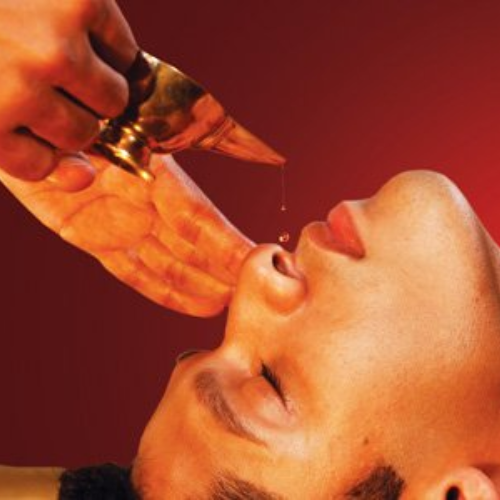
Nasyam (Nasal Administration of Oils/Medications) — Conditional
Role: Used cautiously to nourish the head region, clear nasal passages and support cranial nerve health — only after medical clearance.
- May be beneficial in postinfectious residual symptoms (head heaviness, mild cranial nerve dysfunction) when patient is stable and there is no active CNS infection.
- Strictly contraindicated during active infection, high fever, or when CSF/clinical status is unstable.
- Administered by experienced physician with prior ENT/neurology clearance when needed.
Basti (Medicated Enema) — Supportive Use
Role: Systemic Vata pacification and nourishment which may support neurological recovery when used appropriately.
- Used selectively in recovery phase to correct Vata imbalance, improve bowel function and systemic nourishment.
- Requires full clinical assessment and is not used in the acute infectious stage.
Lepam (Topical Herbal Paste)
Role: Localized application for neck or scalp tenderness, muscle spasm and residual focal pain.
- Soothes local inflammation and reduces tenderness after acute phase.
- Applied only to intact skin and when infection is resolved.
Herbs & Supportive Medicines (Adjunctive)
We use nervous-system nourishing, anti-inflammatory and restorative herbs as adjuncts during recovery — always with physician oversight and after reviewing blood tests and current medications.
- Brahmi (Bacopa monnieri): Nervine tonic, supports cognition and nerve repair.
- Ashwagandha: Adaptogen and nervous system supportive; helps fatigue and recovery.
- Guduchi (Tinospora): Immune-modulating and detox supportive in convalescence.
- Shankhapushpi: Calming nervine used for cognitive recovery and sleep support.
- Turmeric / Curcumin: Anti-inflammatory antioxidant support (dosage adjusted to meds).
- Nutritive Rasayanas: Bone & tissue builders and general rejuvenators as needed.
Interactions: many herbs interact with medications (antibiotics, anticonvulsants, anticoagulants). We always review the patient's medications and medical records before starting internal herbs.
Rehabilitation & Follow-Up
- Neuro-rehabilitation: Physiotherapy for gait, balance and strength if there was neurological deficit.
- Cognitive support: Gradual cognitive exercises, sleep hygiene and Brahmi/Ashwagandha support when safe.
- Monitoring: Regular follow-up with neurology/infectious disease and labs as advised by physicians.
- Gradual therapy escalation: Start with very gentle Abhyanga and Shirodhara, escalate based on tolerance and medical clearance.
Sample Post-Acute Recovery Plan (illustrative)
Every plan is individualized after clinical review and medical clearance.
Phase A — Immediate Post-Hospital (week 1–2)- Rest, nutrition, light Abhyanga (gentle) to reduce muscle stiffness
- Sleep & stress support (Shirodhara only if cleared)
- Start mild Rasayanas (Brahmi) if no contraindication
Phase B — Early Rehab (week 2–6)- Shirodhara / Kashaya Dhara sessions (as tolerated)
- Supervised physiotherapy + progressive mobilization
- Targeted Lepam for local neck/back tenderness
Phase C — Strength & Long-Term Recovery- Basti (if indicated) for systemic Vata balance
- Continuation of nervine rasayanas and graded neurorehab
- Periodic follow up with medical team and Ayurvedic physician
Timing and eligibility for each therapy depends on medical stability, absence of fever, normal labs, and clearance from the treating team.
Quick Reference — What To Do If You Suspect Meningitis
| Action | Why |
|---|
| Seek immediate ER care | Rapid diagnosis and treatment (antibiotics/antivirals) can be lifesaving |
| Do not delay with home remedies | Delay increases risk of complications |
| Only consider Ayurvedic therapies after stabilization | Support recovery and rehabilitation — not a substitute for emergency care |
| Coordinate all Ayurvedic care with treating physicians | To avoid interactions and ensure safety |
Need support after hospital care for meningitis?
If the patient has been stabilized and cleared by their neurologist/infectious disease team, book a consultation for an individualized, medically coordinated Ayurvedic recovery plan.
Book ConsultationAll Ayurvedic interventions require prior medical clearance and full review of current medications and labs.