What is a Herniated Disc?
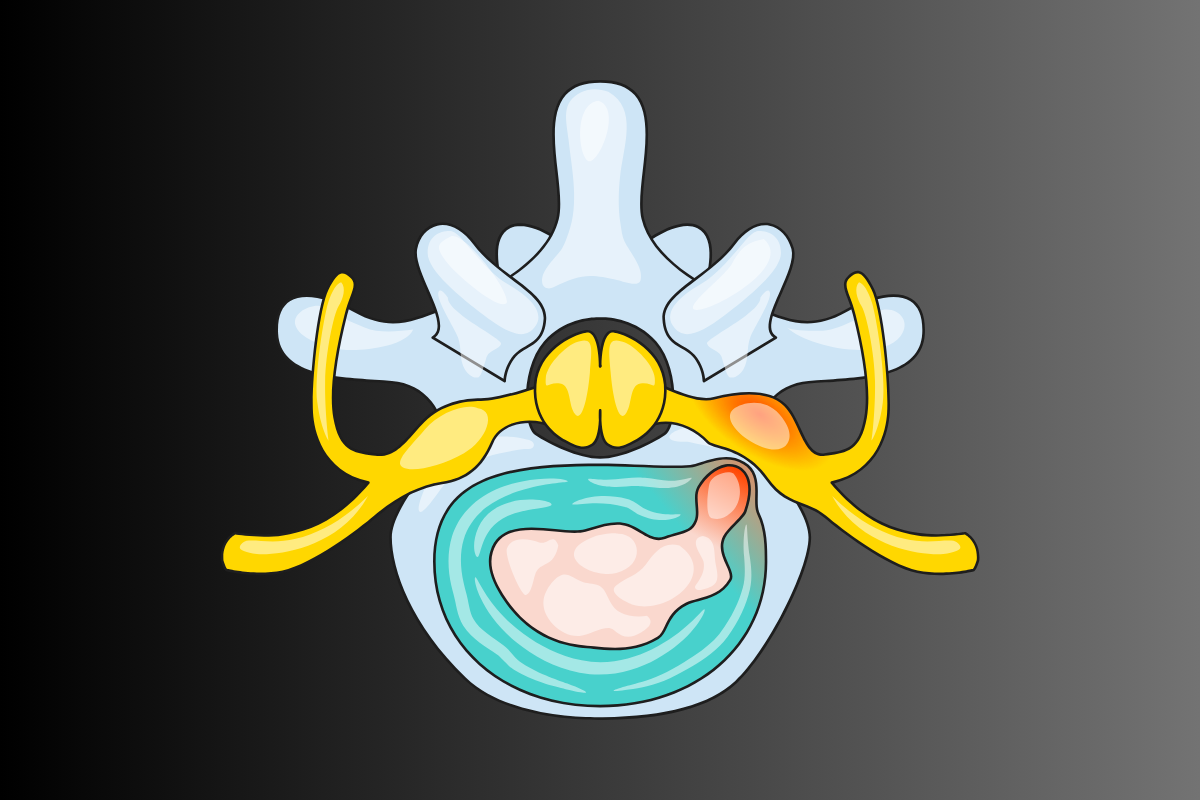
A herniated (slipped) disc occurs when the soft inner nucleus of an intervertebral disc pushes through its tougher outer ring, potentially compressing nearby spinal nerves. This can cause localized back/neck pain, radiating nerve pain (sciatica/arm pain), numbness, tingling, and muscle weakness.
Common symptoms
- Localized back or neck pain
- Radiating pain down the leg (sciatica) or arm
- Numbness, tingling, muscle weakness in affected limb
- Worse with coughing, sneezing, bending or prolonged sitting
Red flags (seek immediate medical care)
Loss of bladder/bowel control, severe progressive weakness, high fever or unexplained weight loss — these require urgent medical evaluation and imaging.
Ayurvedic View & Treatment Goals
Ayurveda views disc disorders primarily as a Vata disturbance (dryness, degeneration) with local Ama (toxins) and muscle imbalance. The clinic goal is to relieve nerve compression, reduce pain & inflammation, nourish spinal tissues, and rehabilitate through natural strengthening and posture correction.
- Pain relief & reduce nerve irritation
- Reduce local inflammation and muscle spasm
- Improve circulation and nutrient supply to discs and paraspinal tissues
- Restore mobility and prevent recurrence via strengthening & posture
In-Clinic Therapies Effective for Herniated Disc (with photos)
Below are the therapies we use at the clinic that help relieve symptoms, reduce nerve compression, nourish tissues and support rehabilitation. Each therapy block includes a reference photo.
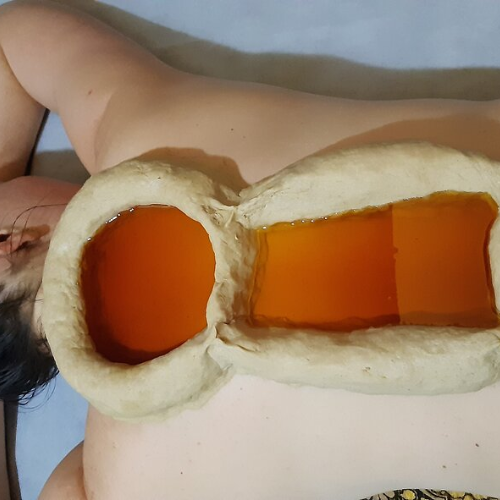
Kati Vasti (Lower Back Oil Retention) Disc
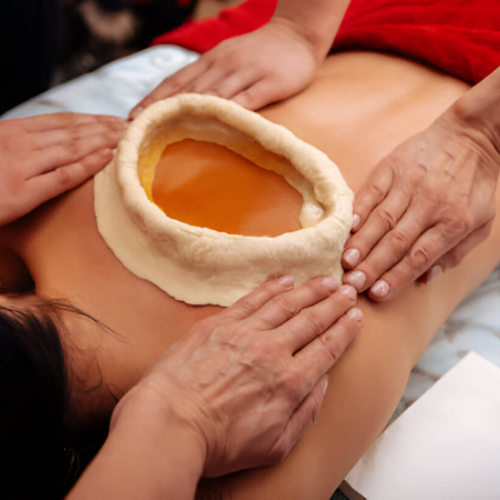
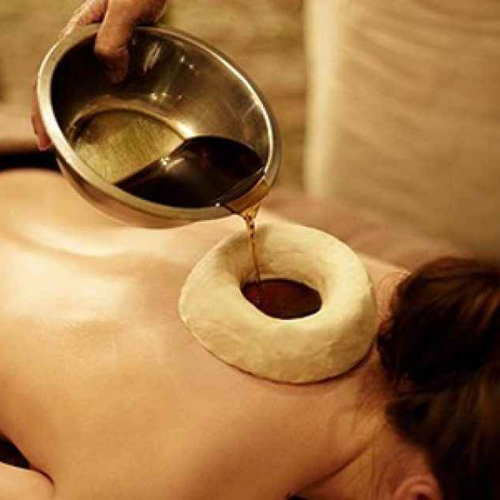
What it is: Warm medicated oil retained over the lumbar area using a dough ring for a fixed time to deeply nourish and relax paraspinal tissues.
- Delivers concentrated heat and medicated oil to paraspinal muscles, reduces spasm and local inflammation.
- Helps reduce pressure on nerve roots by relaxing surrounding muscles and improving circulation.
- Ideal for lumbar disc problems with localized low back pain and sciatica when no urgent red flags are present.
- Sessions: daily during intensive phase (5–10 sessions), then taper per response.
- Precautions: avoid in active skin infection; not a substitute for urgent surgical cases with progressive deficit.
Greeva Vasti (Cervical Oil Retention)
What it is: Medicated oil retained over the neck (cervical region) using a dough boundary to treat cervical disc issues.
- Relieves neck muscle spasm, reduces nerve root irritation and improves local blood flow.
- Useful in cervical disc bulge/prolapse causing radicular arm pain.
- Often combined with gentle traction, posture correction and physiotherapy for best outcomes.
Prishtha Vasti (Back Oil Retention)
What it is: Retention of medicated oil on the upper/lower back to calm paraspinal muscles and nourish dorsal tissues.
- Supports spinal tissue health, reduces chronic paraspinal tension and referred pain.
- Often used alongside Kati Vasti in cases with widespread paraspinal stiffness.
Nadi Swedan (Localized Steam)
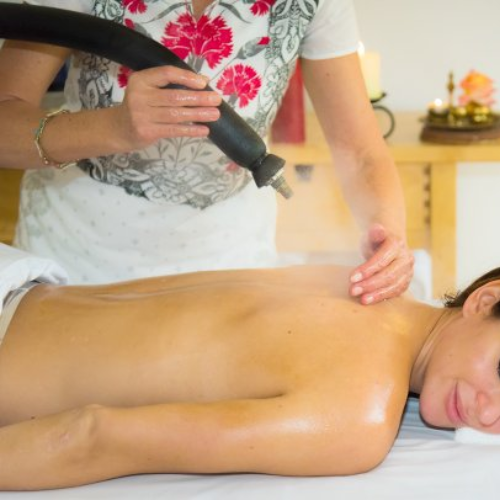
What it is: Focused herbal steam applied via tubes to the affected spinal region to provide controlled deep heat.
- Helps relax deep muscles, reduces stiffness and aids in loosening adhesions around the spine.
- Improves local circulation enabling better penetration of topical oils.
- Used before oil retention therapies to enhance therapeutic effect.
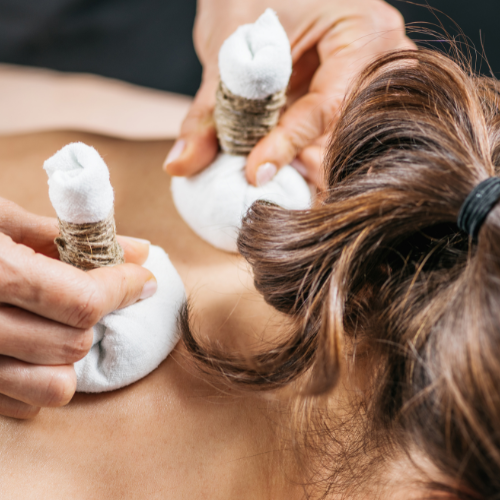
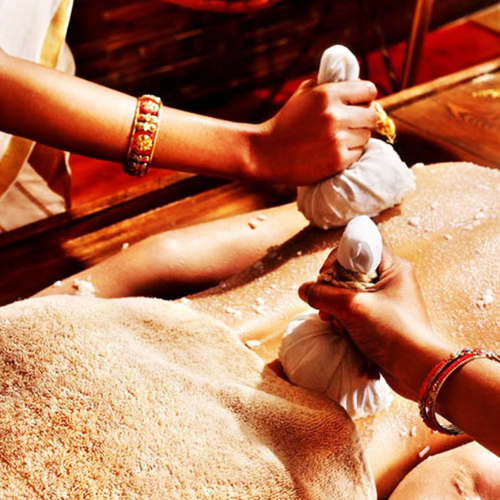
Churn Potli (Herbal Powder Bolus)
What it is: Heated herbal powder boluses applied with rhythmic strokes to the back and affected areas.
- Provides strong localized mechanical and thermal stimulus to reduce deep adhesions and improve tissue mobility.
- Useful for chronic cases where soft-tissue adhesions restrict movement and contribute to nerve irritation.
- Often combined with oil therapies for improved effect.
Patra Potli (Herbal Leaves Bolus)
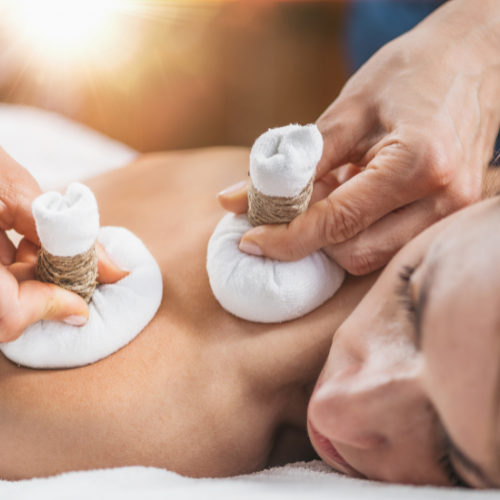
What it is: Boluses made of warmed medicinal leaves applied to relieve pain and inflammation.
- Gives gentler herbal heat than churn potli — preferred when skin is sensitive.
- Reduces local swelling, eases muscle spasm and complements Vasti/oil therapies.
Njavara Kizhi
What it is: Warm Njavara rice boluses cooked in herbal decoction applied rhythmically over the back and limbs.
- Deeply nourishes paraspinal muscles, increases local circulation and aids tissue regeneration.
- Reduces chronic Vata-related stiffness and supports recovery during rehabilitation.
Lepam (Topical Herbal Paste)
What it is: Topical herbal paste applied post-therapy to soothe inflammation and support healing.
- Soothes irritated tissues, provides local anti-inflammatory effect and reduces pain sensation.
- Used after oil therapies or potli to consolidate benefits.
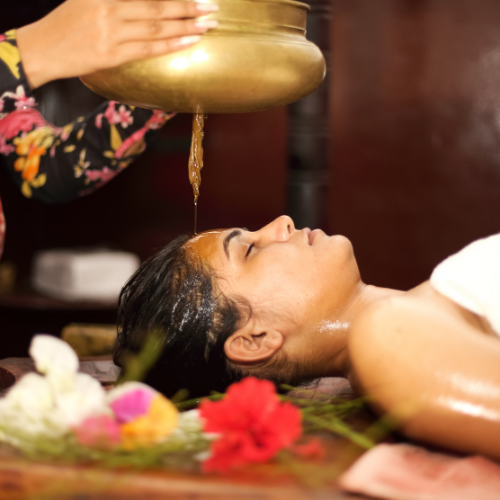
Shirodhara (Nervous System Calm)
What it is: Continuous warm oil pouring on forehead to calm nervous system and reduce pain sensitivity.
- Reduces sympathetic overactivity, improves sleep and lowers pain perception — useful adjunct for chronic pain states.
- Helps patients cope with chronic nerve pain during rehabilitation.
Basti (Medicated Enema) — Systemic Vata Support
What it is: Medicated oil or decoction enemas administered to correct Vata imbalance.
- One of the most powerful systemic therapies to pacify Vata and reduce degenerative progression related to Vata imbalance.
- Improves gut-mediated nourishment and systemic tissue repair — often used as a course alongside local therapies.
- Prescribed only after careful assessment and monitoring.
Herbal & Medical Support
Oral herbs and formulations complement in-clinic therapies to reduce inflammation, support nerve health and slow degeneration. All prescriptions are individualized.
- Guggulu: Anti-inflammatory, supports musculoskeletal repair.
- Ashwagandha: Nerve-supportive and anti-inflammatory adaptogen.
- Shallaki (Boswellia): Supports cartilage and reduces inflammatory mediators.
- Dashmoola formulations: Vata pacification and musculoskeletal nourishment.
- Topical medicated oils: Customized for better penetration and symptom control.
We coordinate herbal plans with any ongoing conventional treatments; some herbs may interact with medicines so we monitor closely.
Rehabilitation & Return to Function
Therapies are always combined with a structured rehabilitation program to restore mobility, strengthen core & paraspinal muscles, correct posture, and prevent recurrence.
- Phase 1 — Pain control & gentle mobilization: Short-term rest, Kati Vasti, Nadi Swedan, pain-relieving lepam, and gentle neural mobilization.
- Phase 2 — Strength & stabilization: Core strengthening, lumbar stabilization exercises, progressive loading under physiotherapist guidance.
- Phase 3 — Maintenance: Periodic Abhyanga, Njavara Kizhi, posture training and home exercise program.
Physiotherapy is integrated and timed with Ayurvedic sessions for safe progression.
Sample Clinic Treatment Plans
Acute Symptom Relief (1–2 weeks)- Rest + Kati Vasti daily for 5–7 days
- Nadi Swedan prior to Kati Vasti, Lepam for local inflammation
- Short course of nerve-supportive herbs and analgesic measures as advised
Recovery & Rehab Cycle (3–6 weeks)- Kati/Prishtha Vasti + Njavara Kizhi (alternate days) for 2–3 weeks
- Course of Basti (if indicated) for systemic Vata pacification
- Physio-guided core strengthening & posture correction from week 2
Maintenance & Prevention- Monthly Abhyanga / Njavara Kizhi
- Home exercise program, ergonomic advice, and topical oil routine
Plans are individualized and adjusted depending on imaging, neurologic status, and response to therapy.
Quick Reference — Therapies & Roles
| Therapy | Primary role | Best for |
|---|
| Kati Vasti | Local nourishment, reduce muscle spasm | Lumbar disc pain / sciatica |
| Greeva Vasti | Cervical nourishment, relieve radiculopathy | Cervical disc bulge |
| Nadi Swedan | Localized heat to relax muscles | Prepares tissues for oil therapies |
| Churn / Patra Potli | Break adhesions, reduce stiffness | Chronic soft-tissue restrictions |
| Njavara Kizhi | Deep tissue nourishment | Rehabilitation phase |
| Basti | Systemic Vata pacification | Degenerative Vata-dominant progression |
Safety, Red Flags & Medical Coordination
- Immediate medical attention is required for red flags: loss of bladder/bowel control, severe progressive weakness, sudden severe symptoms — these may need surgical evaluation.
- We require imaging review (MRI) and neurologic assessment for moderate-to-severe cases before intensive therapies.
- Panchakarma (Basti) and other systemic therapies are prescribed only after a full assessment; some procedures are contraindicated in acute surgical emergencies.
- Therapies are delivered under qualified Ayurvedic physicians and in coordination with physiotherapists and medical specialists as required.
Want a safe, conservative Ayurvedic plan for disc recovery?
Book a consultation — we'll review your history, imaging and neurologic status, design a personalized combination of in-clinic therapies, herbs and rehabilitation, and coordinate with your medical team if needed.
Book ConsultationAll interventions are supervised by qualified Ayurvedic doctors. We prioritize safety and medical coordination for optimal outcomes.