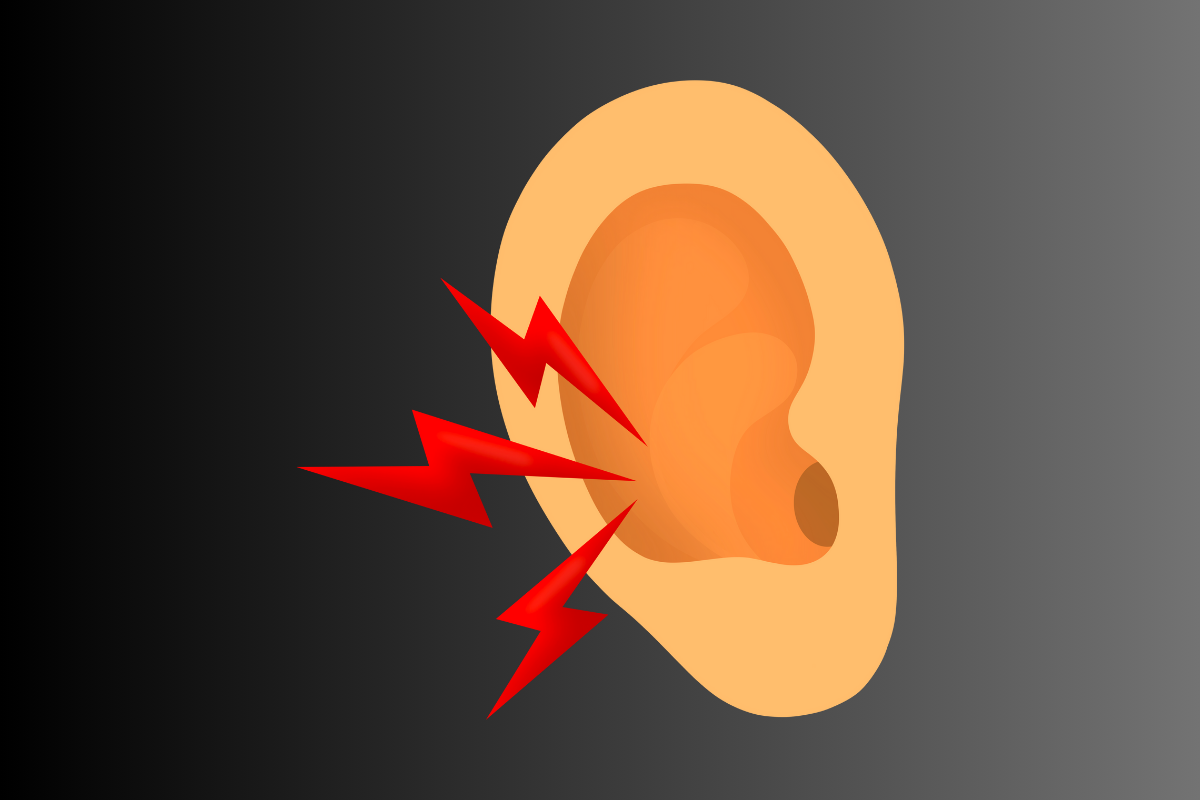
What is a Headache?
Headache is a common symptom with many causes: primary headaches (migraine, tension-type), secondary headaches (cervicogenic, sinus, medication-overuse), and those related to neurological or systemic disease. Ayurveda classifies headaches by doshic imbalance — Vata, Pitta or Kapha predominance — and treats them accordingly.
Common types
- Migraine — unilateral, throbbing, often with nausea/sensitivity.
- Tension-type — bilateral, pressing/tightening, related to stress/posture.
- Cervicogenic — starts from neck/shoulder, radiates to head.
- Sinus/secondary — associated with nasal congestion or infection.
Ayurvedic perspective
Headache (Siroroga/Shirovasti contexts) is commonly a result of Vata aggravation in the head or disturbed Rakta/Pitta in cases of inflammatory headaches. Management includes calming Vata, cooling Pitta, clearing sinuses if present, and strengthening neurological resilience.
Ayurvedic Approach to Headache
We blend symptom relief with root-cause correction: calming the nervous system, improving circulation, clearing sinuses, correcting digestion (to remove Ama) and addressing musculoskeletal contributors (neck/shoulder tension).
- Shamana measures — calming herbs, pranayama, dietary adjustments.
- Localized therapies — Shirodhara, Nasyam, Greeva Vasti for cervicogenic headaches.
- Preparatory & nurturing therapies — Abhyanga, Kashaya Dhara and Lepam for local soothing.
- Prevention — stress management, sleep hygiene, trigger elimination and herbal tonics for long-term resilience.
Clinic Therapies Useful for Headache (with reference photos)
These are the in-clinic therapies we commonly use for different headache types. Photos are included for your reference.
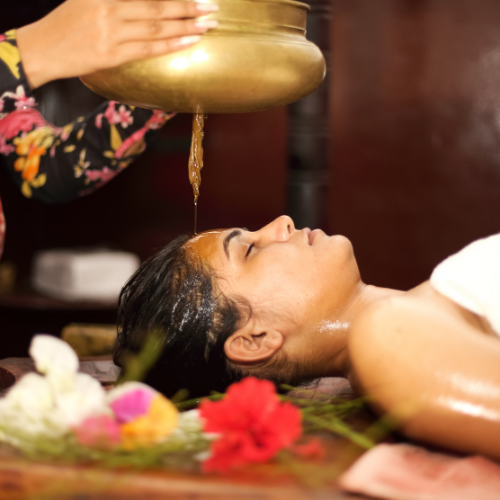
Shirodhara Headache
What it is: Continuous, slow pouring of warm medicated oil (or herbal decoction) on the forehead (third eye area).
- Calms the autonomic nervous system and reduces stress/anxiety — potent for migraine and tension headaches.
- Improves sleep, reduces headache frequency and intensity over repeated sessions.
- Helpful in trigeminal/autonomic-related headaches when combined with internal medicines.
- Course: often 3–7 sessions depending on severity; adjunct to oral herbs and lifestyle changes.
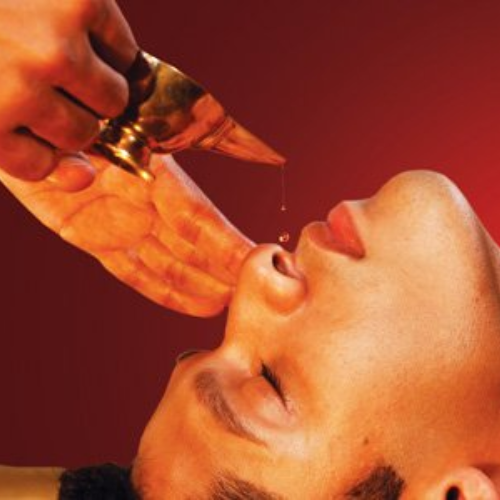
Nasyam (Nasal Administration)
What it is: Administration of herbal oil/medicated drops or powders into the nostrils.
- Clears sinus congestion and reduces Pitta/Rakta-related headaches arising from sinusitis.
- Delivers medicines directly to head region — effective for migraine aura, frontal headaches, and chronic sinus-related head pain.
- Often used as an immediate relief measure and as part of a longer treatment plan (in-office procedure).
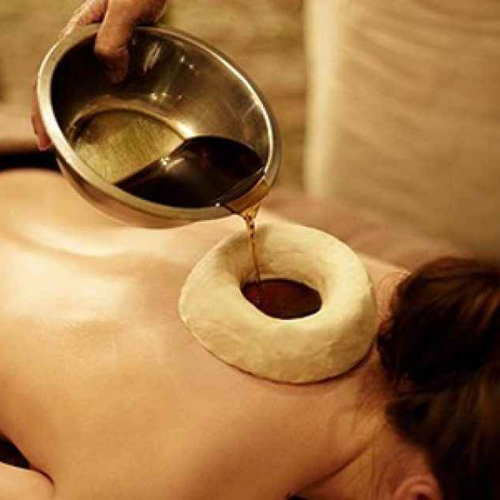
Greeva Vasti (Cervical Oil Retention)
What it is: Retaining warm medicated oil over the cervical (neck) region inside a dough boundary.
- Powerful for cervicogenic headaches originating from neck stiffness, cervical spondylosis or muscle spasm.
- Relieves nerve compression, improves cervical mobility and reduces referred head pain.
- Best combined with gentle neck physiotherapy and posture correction for lasting benefit.
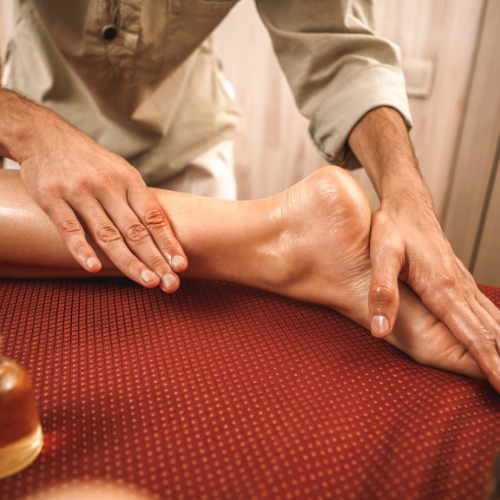
Abhyanga (Warm Oil Massage)
What it is: Full-body or targeted warm herbal oil massage.
- Reduces muscular tension in neck/shoulder that contributes to tension-type headaches.
- Improves circulation, calms the nervous system and enhances sleep quality.
- Often used before Shirodhara or Nasyam to maximize therapeutic absorption.
Kashaya Dhara (Herbal Decoction Pouring)
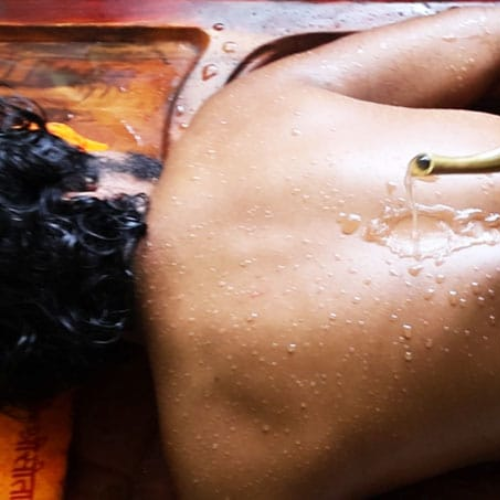
What it is: Continuous pouring of warm herbal decoction on the head/neck/affected area.
- Used for inflammatory or stubborn headaches to reduce local inflammation and soothe tissues.
- Particularly useful in subacute stages or when scalp/neck tenderness is present.
- Choice of decoction is individualized (cooling for Pitta-related headaches, warming for Vata-related tension that is cold).
Lepam (Topical Herbal Paste)
What it is: Topical herbal pastes applied to forehead, scalp or neck.
- Provides direct symptomatic relief and cooling in acute Pitta headaches (e.g., certain migraines).
- Can be combined with mild oil massage for tension-type headaches.
- Safe, quick adjunct — often used for immediate comfort between sessions.
Herbs, Diet & Lifestyle for Headache
Common Ayurvedic herbs
- Brahmi (Bacopa monnieri): Nervine tonic — improves migraine resilience and cognition.
- Shankhapushpi: Calms the nervous system and reduces anxiety-tension triggers.
- Ashwagandha: Adaptogen to reduce stress-related headaches.
- Turmeric & Ginger: Anti-inflammatory support for Pitta-associated and inflammatory headaches.
Diet & practical measures
- Identify & avoid triggers (caffeine, aged cheeses, alcohol, strong perfumes, disrupted sleep).
- Regular meals, good hydration (lukewarm water), and avoidance of heavy/undigested food (Ama) which can trigger headaches.
- Stress management: daily pranayama, short relaxation breaks and sleep hygiene.
- Posture & ergonomics: correct desk posture, micro-breaks to avoid cervicogenic headache.
Herbal medicines and dosages are individualized. If you are on prescription migraine preventives or anticoagulants, inform the Ayurvedic physician before starting herbs.
Sample Treatment Plans
Example plans — every patient receives a customized program after assessment.
Acute Relief (single session)- Nasyam (if sinus-related) or Lepam for immediate comfort
- Short Abhyanga for neck/shoulder tension
- Guided rest, hydration and herbal tea support
Stabilize & Reduce Frequency (2–4 weeks)- Course of Shirodhara (3–7 sessions) + Abhyanga
- Nasyam on alternate days if indicated
- Brahmi/Shankhapushpi based internal regimen
Long-term Maintenance- Monthly calming therapy (Shirodhara/Abhyanga), daily pranayama & sleep hygiene
- Dietary trigger avoidance + tailored rasayana
- Physio/posture program for cervicogenic types
Quick Reference — Headache Therapies
| Therapy | Primary role | Best for |
|---|
| Shirodhara | Calm nervous system, reduce migraine frequency | Migraine, stress-related headaches |
| Nasyam | Clear sinuses, deliver meds to head | Sinus / frontal headaches |
| Greeva Vasti | Relieve cervicogenic referred pain | Neck-origin headaches |
| Abhyanga | Reduce muscular tension, prepare for other therapies | Tension-type headaches |
| Kashaya Dhara | Local anti-inflammatory pouring | Stubborn scalp/neck tenderness |
| Lepam | Immediate topical relief | Acute Pitta or focal headaches |
Safety & When to Seek Urgent Care
- Red flags: sudden severe "thunderclap" headache, loss of consciousness, weakness, vision loss, stiff neck, fever — seek emergency care immediately.
- Share all medications with your Ayurvedic physician (esp. anticoagulants, triptans, anti-epileptics).
- Panchakarma or in-clinic procedures require evaluation — Nasyam and Shirodhara are done under physician guidance and may be contraindicated in some conditions.
Ready to reduce headaches naturally?
Book a consultation — we will assess your headache type, triggers, perform an Ayurvedic exam and propose a tailored therapy plan (in-clinic + herbal + lifestyle).
Book ConsultationAll therapies are administered by qualified Ayurvedic practitioners. We coordinate with medical specialists when needed.