What is Plantar Fasciitis?
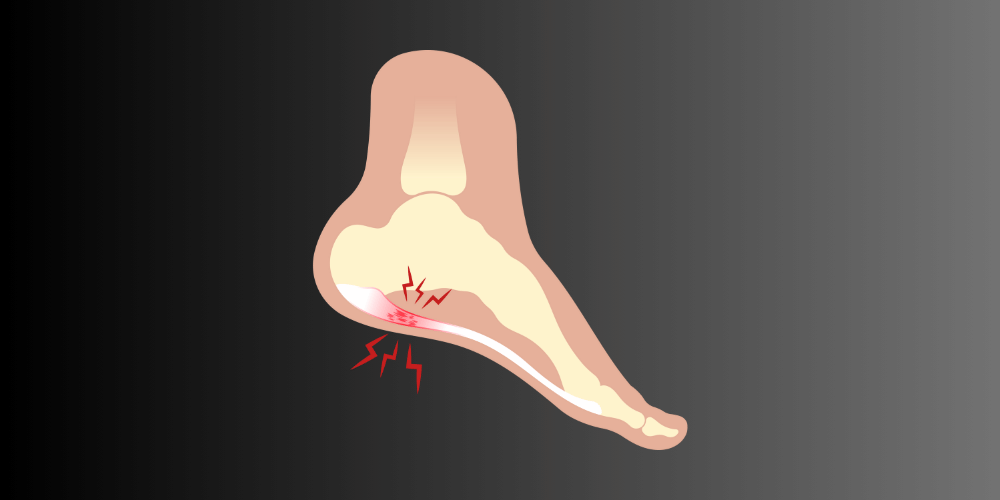
Plantar fasciitis is inflammation and micro-tearing of the plantar fascia — the thick band of tissue along the sole of the foot that supports the arch. Typical presentation: sharp heel pain on first steps in the morning or after rest, pain with prolonged standing/walking, and tenderness at the heel.
Key features
- Sharp heel pain on first steps (morning pain) and after prolonged rest.
- Tenderness at the medial plantar heel (insertion of plantar fascia).
- Worse with barefoot walking on hard surfaces, tight calves, or poor footwear.
Ayurvedic view
In Ayurveda plantar fasciitis is considered a Vata-dominant musculoskeletal disorder (Sandhi/ Snayu related) with local Ama (toxins), dryness and compromised circulation. Treatment aims to reduce Vata, remove local Ama, increase lubrication/nourishment, and restore flexibility of the plantar fascia and calf muscles.
Ayurvedic Approach for Plantar Fasciitis
Our clinic treatment strategy focuses on localized healing, pain relief and long-term prevention:
- Local therapy: Topical medicated pastes (Lepam), warm oil treatments, and herbal bolus therapy to reduce inflammation and promote healing.
- Thermal & steam therapies: Nadi/Swedan to relax tight tissues and increase local circulation.
- Mechanical release: Churn/Patra potli and Njavara Kizhi to break adhesions and nourish tissues.
- Functional rehab: Calf stretching, plantar fascia mobilization, footwear correction and strengthening to prevent recurrence.
- Nutritional & herbal support: Anti-inflammatory herbs and diet to reduce Ama and support tissue repair.
Clinic Therapies Useful for Plantar Fasciitis (with photos)
Therapies below are specifically chosen for heel/plantar fascia healing. Each entry contains a reference image, explanation and practical notes about usage and frequency.
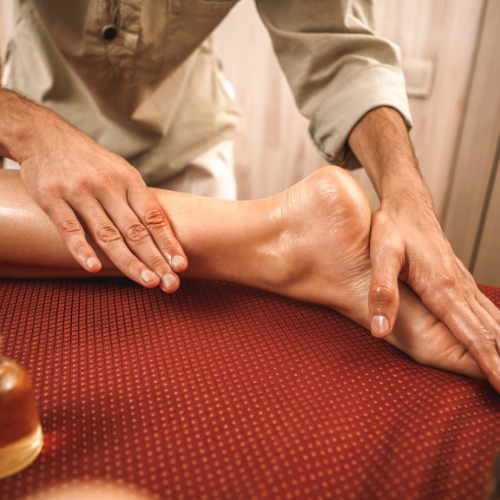
Padabhyanga (Foot Massage) — Abhyanga technique
What it is: Focused warm oil massage of the feet and calves using medicated oils (Padabhyanga). We use Abhyanga principles but concentrate on plantar fascia, heels and calf muscles.
- Warms and lubricates the plantar fascia, reducing morning stiffness and pain.
- Improves local circulation, lymphatic drainage and tissue nutrition.
- Relaxes tight calf muscles (gastrocnemius–soleus complex) that strain the plantar fascia.
- How often: daily during acute phase, 2–3× weekly during rehab/maintenance.
Lepam (Topical Herbal Paste)
What it is: Medicated herbal paste applied to the heel and plantar surface to reduce inflammation and promote tissue repair.
- Contains anti-inflammatory and analgesic herbs to reduce local swelling and pain.
- Applied after oiling or steam — helps draw out local Ama and soothe the fascia insertion point.
- Often recommended nightly with a short rest period; safe for most skin types (patch test done if sensitive).
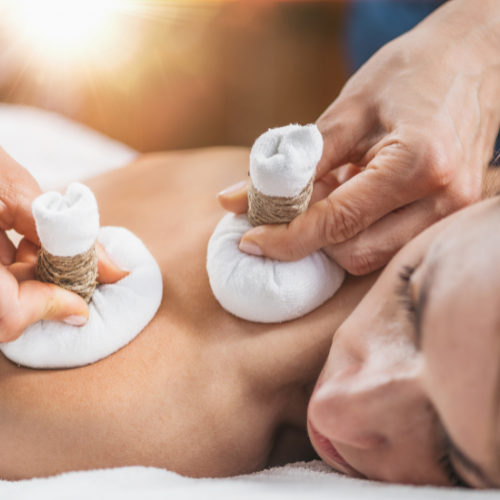
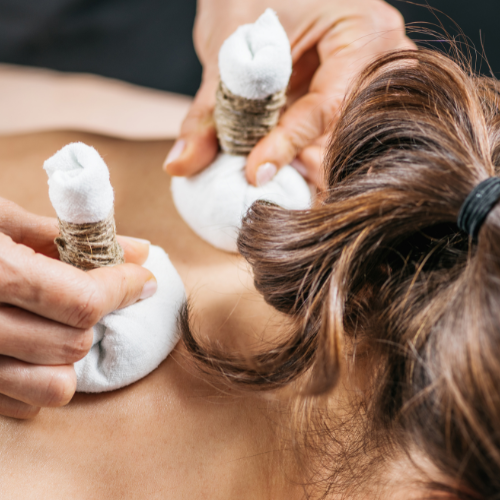
Patra Potli (Herbal Leaves Bolus)
What it is: Warm boluses made from medicinal leaves gently applied to the heel and plantar area to reduce inflammation and provide soothing heat.
- Provides gentle steam/heat and herbal absorption; useful when skin is sensitive to powdered boluses.
- Helps relax local soft tissues and reduce pain originating from the fascia and plantar muscles.
- Best combined with Padabhyanga and followed by rest/immobilization for best effect.
Churn Potli (Powder Bolus)
What it is: Heated boluses of powdered herbs applied with rhythmic strokes to the sole and calf to break adhesions and stimulate circulation.
- Applies focused mechanical and thermal stimulation to loosen fibrotic adhesions in chronic plantar fasciitis.
- Increases local blood flow and accelerates healing in long-standing cases.
- Used cautiously in acute inflammation (more suited to subacute/chronic phases).
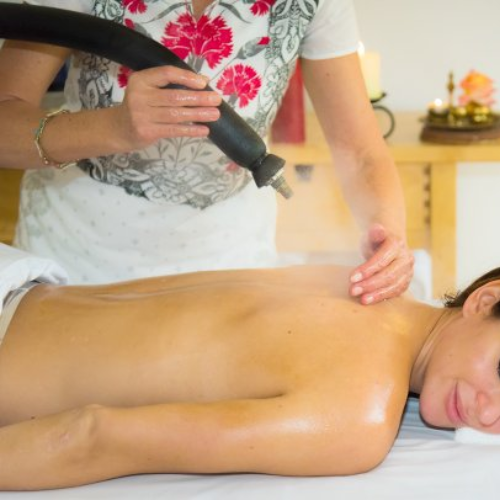
Nadi Swedan (Localized Steam)
What it is: Focused steam therapy delivered to the plantar surface and calf to relax tissues and enable better absorption of oils and pastes.
- Helps liquefy local Ama and reduces tightness in the calf/heel complex.
- Prepares the area for deeper therapies like potli and lepam.
- Contraindicated in very acute, hot, infected inflammation — clinically assessed before use.
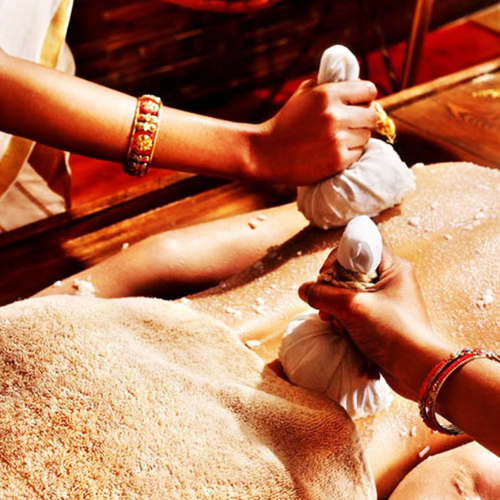
Njavara Kizhi
What it is: Warm boluses of Njavara rice in herbal decoction applied to the foot and calf to deeply nourish tissues and reduce chronic stiffness.
- Excellent for chronic plantar fasciitis where tissue nutrition and repair are needed.
- Promotes deeper tissue healing, reduces chronic pain and improves muscular function supporting the arch.
- Typically used as a course (several sessions) during the rehabilitation phase.
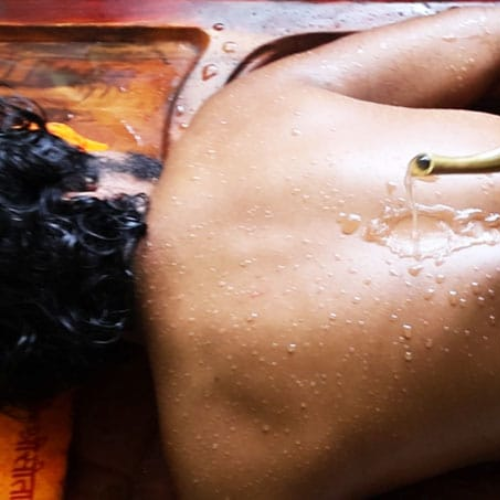
Kashaya Dhara (Herbal Decoction Pouring)
What it is: Controlled pouring of warm herbal decoction over the plantar area to reduce inflammation and soothe tissues.
- Delivers anti-inflammatory herbs in a thermic medium to reduce local pain and swelling.
- Useful where continuous warm contact with herbal decoction improves comfort and absorption.
- Often combined with Padabhyanga and lepam for integrated effect.
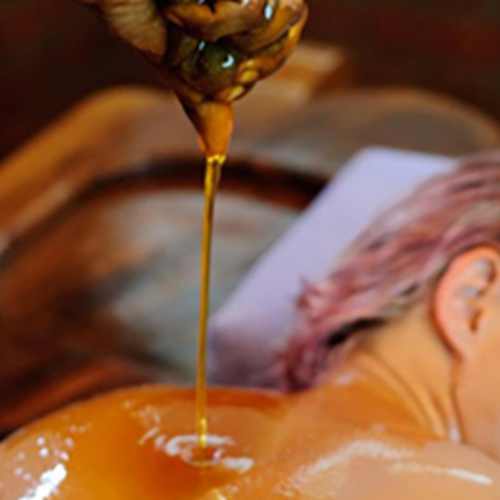
Oil Bath / Foot Oil Soak
What it is: Warm medicated oil soak or application for the feet to deeply lubricate tissues and relieve chronic stiffness.
- Softens fascia, reduces pain and prepares the foot for massage and potli therapies.
- Helps maintain lubrication between therapy sessions (home regimen possible with guidance).
Herbal & Nutritional Support
We combine topical/in-clinic therapies with internal herbal support to reduce inflammation, improve tissue repair and correct underlying Vata imbalance.
- Herbs: Guggulu, Shallaki (Boswellia), Ashwagandha & Turmeric — anti-inflammatory and musculoskeletal support.
- Digestive support: Triphala / ginger formulations to prevent Ama production that perpetuates pain.
- Topical oils: Custom medicated oils (Mahanarayana oil, Dhanvantaram oil alternatives) to enhance penetration and lubrication.
- Nutrition: Anti-inflammatory diet, adequate protein for tissue repair, healthy fats (ghee, sesame), and vitamin D & calcium assessment as needed.
- Home care: Nightly lepam, warm oil foot soak, and proper footwear/insoles to reduce strain.
Oral herbs and nutraceuticals are prescribed after clinical assessment and in coordination with any other medications you may be taking.
Exercise, Stretching & Foot Care (Essential)
Therapies are most effective when combined with a consistent home rehabilitation program.
Calf Stretch
Stand facing a wall, step the affected foot back, keep heel down and lean forward. Hold 30s × 3 reps, twice daily.
Plantar Fascia Stretch
Sitting, cross ankle over knee, pull toes toward you to stretch arch. Hold 30s × 3 reps, morning & evening.
Towel Curl / Marble Pick-up
Use toes to scrunch towel or pick marbles to strengthen intrinsic foot muscles — 2–3 sets daily.
Heel Raises
Slow calf raises (double-leg → single-leg as tolerated) 2 sets × 10–15 reps to strengthen calf and reduce fascia strain.
Use supportive footwear, avoid barefoot walking on hard surfaces, consider orthotic insoles to support the arch during healing.
Sample Clinic Treatment Plans
Acute Relief (1–2 weeks)- Padabhyanga (daily) + localized Nadi Swedan
- Night lepam application and rest/orthotic support
- Short course of anti-inflammatory herbal medicines
Rehabilitation Cycle (3–4 weeks)- Padabhyanga + Njavara Kizhi (2–3 sessions) + Churn/Patra Potli
- Physio-guided stretching & strengthening program
- Topical & oral herbal support for tissue repair
Maintenance & Prevention- Weekly/biweekly padabhyanga or home oil regimen
- Orthotic footwear, periodic lepam & exercise maintenance
Treatment is individualized — we assess for contributing factors (flat feet, tight calves, inappropriate footwear, overweight) and address them as part of the plan.
Quick Reference — Therapies & Roles
| Therapy | Main benefit | Best used for |
|---|
| Padabhyanga / Abhyanga | Local lubrication & circulation | Acute & subacute heel pain |
| Lepam | Topical anti-inflammatory | Pain relief at insertion |
| Nadi Swedan | Local warmth & relaxation | Tight calf/plantar muscles |
| Churn / Patra Potli | Break adhesions, improve mobility | Chronic/stiff cases |
| Njavara Kizhi | Deep tissue nourishment | Rehabilitation phase |
| Kashaya Dhara | Continuous herbal decoction contact | Focal inflammation & pain |
Safety & When to Seek Medical Care
- If swelling, fever, red hot joint or severe worsening pain occurs — seek immediate medical/orthopedic evaluation (rule out infection or fracture).
- If symptoms persist despite 6–8 weeks of conservative care, imaging (X-ray / ultrasound) or orthopedic consultation may be needed — we coordinate investigations.
- Certain therapies (heated boluses, potli) are used cautiously in active inflammation — your practitioner will individualize timing and intensity.
Ready to stop heel pain and restore your walk?
Book a consultation — we will assess your foot biomechanics, tailor a therapy + rehab plan, and provide a safe home program to speed recovery.
Book ConsultationAll procedures are performed by qualified Ayurvedic physicians and therapists, with physiotherapy coordination when indicated.