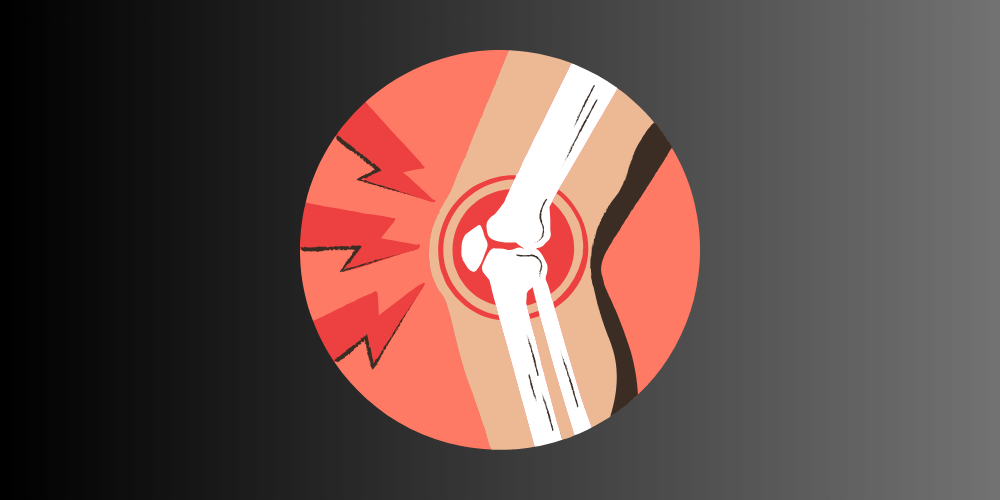
What is Knee Pain?
Knee pain can arise from acute injury, degenerative changes (osteoarthritis), inflammatory conditions, or biomechanical and muscular imbalance. Symptoms include pain during movement, swelling, stiffness, reduced range of motion and difficulty with daily activities like climbing stairs or squatting.
Common causes
- Osteoarthritis (wear-and-tear), meniscal or ligament injury
- Inflammatory arthritis, bursitis, tendonitis
- Overuse, muscle weakness or misalignment
Ayurvedic perspective
In Ayurveda, knee pain is most commonly associated with Vata imbalance (dryness, stiffness) and Ama (toxins) accumulation leading to Sandhigata Vata (joint-related Vata disorders). Treatment focuses on reducing pain/inflammation, removing Ama, nourishing Sandhi (joints) and Asthi (bone), and restoring strength.
Our Ayurvedic Approach for Knee Pain
We use a layered approach to treat knee pain:
- Pain relief & inflammation control: Topical lepams, local oil therapies and potli to reduce swelling and pain.
- Detox & correct metabolism: Swedana (steam) and Basti where indicated to remove Ama and balance Vata.
- Nourish & rebuild: Janu Vasti, Njavara Kizhi and targeted rasayanas to nourish cartilage and peri-articular tissues.
- Rehabilitation: Physiotherapy-guided strengthening, weight management and home-care routines to prevent recurrence.
Therapies We Provide — Focused on Knee Pain (with photos)
Below are the clinic therapies that are most useful for knee pain. Each includes a therapy image for reference and practical notes on indications and frequency.
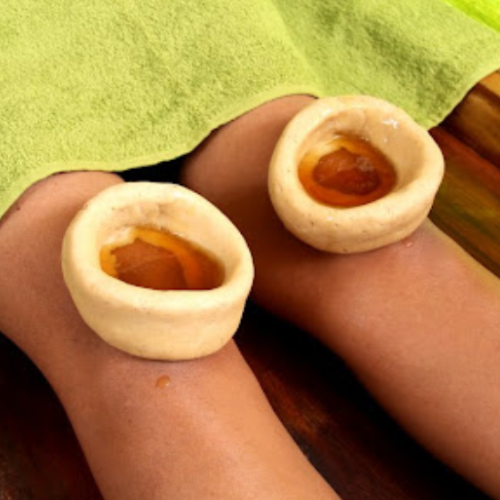
Janu Vasti (Knee Oil Retention) Knee
What it is: Warm medicated oil retained over the knee joint inside a dough ring for a fixed duration to allow deep penetration.
- Directly nourishes articular cartilage, synovium and peri-articular tissues.
- Reduces pain, swelling and stiffness; improves range of motion.
- Ideal for osteoarthritis of knee, post-injury stiffness and chronic joint pain.
- Typical course: repeated sessions (e.g., several weekly sessions) tailored to severity.
Lepam (Topical Herbal Paste) Knee
What it is: Herbal paste applied directly to the knee after cleansing and oil therapy.
- Reduces localized inflammation, pain and heat.
- Provides anti-inflammatory and cooling effect when formulated appropriately.
- Used as part of daily clinic care or given as a take-home topical regimen when appropriate.
Herbal & Oral Support for Knee Pain
Oral medicines and nutraceuticals support pain control, reduce inflammation and help tissue repair. All internal medicines are prescribed after assessment and considering interactions with other drugs.
- Guggulu: Anti-inflammatory, useful for joint pain.
- Shallaki (Boswellia serrata): Supports cartilage health and reduces pain.
- Ashwagandha: Reduces inflammatory stress, supports muscles.
- Dashmoola: Vata-balancing for musculoskeletal pain.
- Topical medicated oils: For home application to complement clinic potli / lepam therapies.
- Calcium & Vitamin D (if needed): Added if bone health or deficiency is identified (coordinate with physician).
Herbs and dosages are individualized. We coordinate with your physician (especially if you take NSAIDs, blood thinners or other systemic medications).
Rehabilitation — Exercise & Home Care
Therapies are most effective when combined with a supervised rehabilitation program focused on strengthening, flexibility and gait correction.
- Quadriceps strengthening: Straight leg raises, mini-squats (as tolerated), physiotherapist- guided program.
- Hamstring & hip strengthening: To stabilize the knee joint.
- Low-impact cardio: Walking, cycling, swimming to reduce load and improve conditioning.
- Weight management: Reduce joint load; combine with Udvartana and diet if overweight.
- Home care: Warm topical oil application, short rest after intensive sessions, avoid heavy loading during recovery.
Sample Clinic Plans for Knee Pain
Plans are illustrative — each patient receives an individualized program based on diagnosis, radiology and response.
Acute Relief (5–7 days)- Lepam + gentle Abhyanga (daily)
- Local Swedana / Nadi Swedana
- Short course of anti-inflammatory herbs
Rehabilitation Cycle (3–4 weeks)- Abhyanga → Njavara Kizhi twice weekly → Janu Vasti sessions
- Complementary Churn / Patra Potli as needed
- Physio strength program from week 2
Maintenance & Prevention- Monthly Janu Vasti or Abhyanga
- Home topical oil routine + strengthening exercises
- Periodic herbal rasayana courses
If there is evidence of structural instability, ligament tear, or severe degenerative joint disease, we coordinate with orthopedics for imaging and combined care.
Quick Reference — Therapies & Roles
| Therapy | Main Benefit | Best for |
|---|
| Janu Vasti | Local nourishment & lubrication | Knee OA, chronic knee pain |
| Njavara Kizhi | Deep tissue nourishment | Chronic stiffness, degenerative changes |
| Abhyanga | Muscle relaxation & circulation | Muscle tightness, pre/post therapy |
| Churn / Patra Potli | Breaks adhesions & improves mobility | Peri-articular fibrosis, stiffness |
| Lepam | Local cooling & pain relief | Acute inflammation, flare-ups |
| Swedan / Nadi Swedan | Warmth & detox | Prepare for potli/Vasti and ease stiffness |
Safety, Contraindications & Medical Coordination
- Panchakarma procedures require evaluation — active infection, open wounds over knee, uncontrolled systemic illness or pregnancy may contraindicate some therapies.
- We check imaging (X-ray / MRI) and lab tests as needed to guide therapy selection.
- If you use anticoagulants, steroids, or immunosuppressants, inform the clinic so therapies and herbs can be adjusted safely.
- We coordinate with orthopedists and physiotherapists when structural issues are present.
Ready to relieve knee pain and regain mobility?
Book a personalized consultation — we'll assess your knee, recommend imaging if needed, and design a targeted Ayurvedic therapy + rehab plan.
Book ConsultationAll therapies are conducted by qualified Ayurvedic practitioners with customized safety checks and follow-ups.