What is Disc Pain?
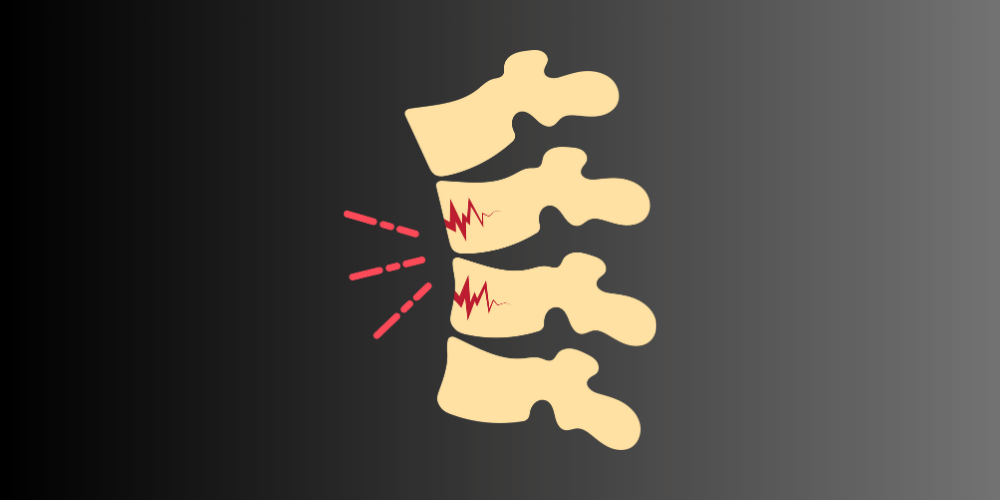
Disc pain typically arises from degeneration, bulging or herniation of the intervertebral disc which may press on nerve roots. Symptoms include localized back/neck pain, radiating pain (sciatica or radiculopathy), numbness, tingling, weakness and reduced mobility.
Common causes & symptoms
- Herniated/bulging discs due to wear, injury, poor posture or sudden strain.
- Nerve compression causing radiating pain down arms or legs, numbness and weakness.
- Muscle spasm and reduced range of motion.
- Chronic degenerative changes leading to recurring pain episodes.
Ayurvedic understanding
Classically considered a Vata-dominant disorder (e.g., Katigata Vata, Gridhrasi when sciatica is present). Vata aggravation causes dessication, weakening of disc & surrounding tissues, and impaired nourishment. The plan: pacify Vata, restore tissue nourishment (Asthi, Majja), reduce inflammation and relieve nerve compression.
Ayurvedic Management Principles
At our clinic we follow a multi-step approach:
- Palliative & local therapies: Abhyanga, Kati Vasti / Greeva Vasti, Prishtha Vasti to apply medicated oils to the affected region and reduce pain & spasm.
- Detox & systemic balancing: Basti (medicated enemas) to pacify Vata at root, often the most effective Panchakarma for spine disorders.
- Focused heat & bolus therapies: Nadi Swedan, Churn/Patra Potli, Kashaya Dhara for controlled local warming and penetration of herbal actives.
- Rehabilitation & strengthening: Physiotherapy, guided exercises and gradual mobilization to restore function and prevent recurrence.
- Herbal & nutritional support: Anti-inflammatory and nerve-supportive herbs (Ashwagandha, Guggulu, Dashmoola) and diet to support tissue healing.
Therapies We Provide — Useful for Disc Pain (with reference photos)
Therapies below are selected specifically for disc-related pain (lumbar & cervical). Each therapy includes an image for reference and clear practical notes.
Kati Vasti Lumbar Disc
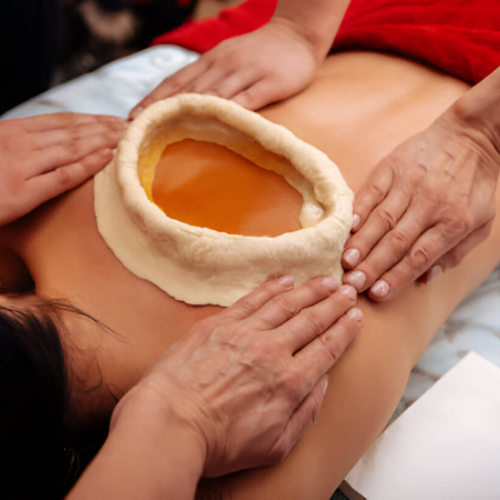
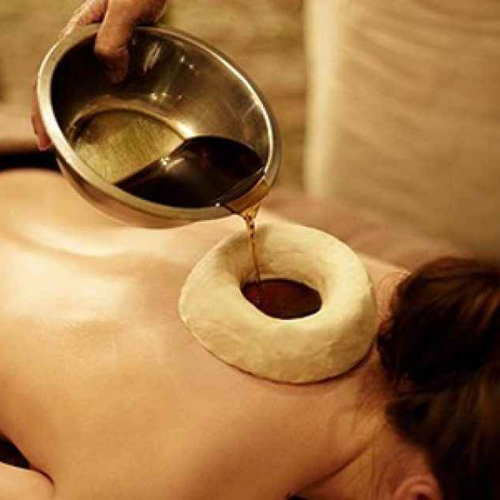
What it is: Warm medicated oil is retained over the lower back inside a dough boundary for a fixed duration.
- Directly nourishes lumbar muscles, ligaments and spinal tissues — reduces deep muscular spasm.
- Promotes local circulation and penetration of herbs to ligaments and paraspinal tissues.
- Useful for lumbar disc bulge/herniation pain, chronic low back spasm and radicular symptoms when combined with other therapies.
- Typically applied daily during an intensive phase and then tapered.
Greeva Vasti Cervical Disc
What it is: Oil retention over the cervical region to treat neck disc problems and radicular pain.
- Reduces neck stiffness, improves local circulation and eases nerve root irritation.
- Helps when cervical discs produce radicular arm pain or restricted neck movement.
- Often performed with supporting neck-mobility and ergonomic corrections.
Basti (Medicated Enema) Core
What it is: Medicated oil or decoction administered rectally to pacify Vata and nourish tissues systemically.
- Considered one of the most powerful treatments for Vata-related spinal disorders and disc pain.
- Reduces Vata-induced degeneration, improves local nourishment and decreases chronic pain intensity.
- Administered as a supervised course; individualized formulations and schedule are essential.
Herbal & Nutritional Support
Medicinal herbs and diet support healing, reduce inflammation and strengthen connective tissues. Individualized prescriptions are essential.
- Ashwagandha: Nerve and muscle support, reduces inflammation and improves strength.
- Guggulu: Anti-inflammatory, helps modulate degenerative changes.
- Dashmoola: Traditional Vata-pacifying formulation used for spine disorders and pain relief.
- Anti-inflammatory diet: Cooked vegetables, turmeric, ginger, healthy fats (ghee, olive oil), lean proteins.
- Hydration & gut health: Good digestion (Agni) prevents Ama formation that can worsen Vata and pain.
- Supplements: Used only if clinically indicated and coordinated with your physician (e.g., vitamin D if deficient).
All internal medicines are prescribed after evaluation; if you are on analgesics, anti-inflammatories or other meds we coordinate care and monitor interactions.
Rehabilitation, Ergonomics & Home Care
- Physio & targeted exercises: Core and paraspinal strengthening, neural mobilization, and gentle stretching — essential to restore function.
- Posture & ergonomics: Correction of sitting/standing posture, workstation changes, safe lifting techniques.
- Activity modification: Avoid heavy lifting and repeated flexion/rotation during acute phases; gradual return under guidance.
- Home therapies: Short home-based topical oil routine, heat guidance, and sleep ergonomics (firm mattress, supportive pillows).
Sample Clinic Plans (examples)
Acute Phase — Pain Relief (1–2 weeks)- Abhyanga + Nadi Swedan (localized) to reduce spasm
- Lepam & Kashaya Dhara on painful area for analgesia
- Short rest, analgesic herbs and strict posture modifications
Detox & Repair (2–4 weeks)- Course of Basti (as indicated) to pacify Vata
- Kati / Prishtha Vasti + Njavara Kizhi for nourishment
- Begin graded physiotherapy from week 2
Maintenance & Prevention- Monthly Abhyanga or targeted Vasti as needed
- Home exercise plan, ergonomics and anti-inflammatory diet
- Periodic herbal rasayanas for tissue resilience
Therapy choice and duration are individualized based on imaging, neurological findings, severity, and overall health. Severe progressive neurological deficits require urgent medical/surgical evaluation; Ayurveda supports conservative management when clinically appropriate.
Quick Reference — Therapies & Roles
| Therapy | Primary Role | Best for |
|---|
| Kati / Prishtha Vasti | Local oil retention & nourishment | Low back disc pain, muscle spasm |
| Greeva Vasti | Cervical nourishment & pain relief | Neck disc pain |
| Basti | Systemic Vata pacification | Chronic Vata-related disc disorders |
| Nadi Swedan / Churn Potli | Localized heat & de-adhesion | Acute spasms, localized stiffness |
| Njavara Kizhi | Tissue rejuvenation | Rehab phase, chronic stiffness |
| Lepam / Kashaya Dhara | Topical analgesia & anti-inflammatory | Acute pain points |
Safety, Red Flags & Medical Coordination
- Red flags (urgent medical referral): Rapid progressive weakness, bowel/bladder dysfunction, severe progressive neurological deficit — seek immediate medical/surgical attention.
- Panchakarma and Basti are performed after clinical assessment and are not suitable during certain acute conditions or uncontrolled comorbidities.
- We coordinate with orthopedics/neurosurgery and physiotherapy when imaging or neurologic signs require multidisciplinary care.
- Expect baseline assessment (history, exam, selective imaging and tests) before intensive procedures.
Ready to reduce disc pain and regain mobility?
Book an evaluation — we'll review your history and imaging, design a safe, individualized Ayurvedic plan (therapies + herbs + rehab) and coordinate referrals if needed.
Book ConsultationAll therapies are performed by qualified Ayurvedic physicians with close monitoring and coordination with medical specialists when necessary.