What is Cervical Spondylosis?
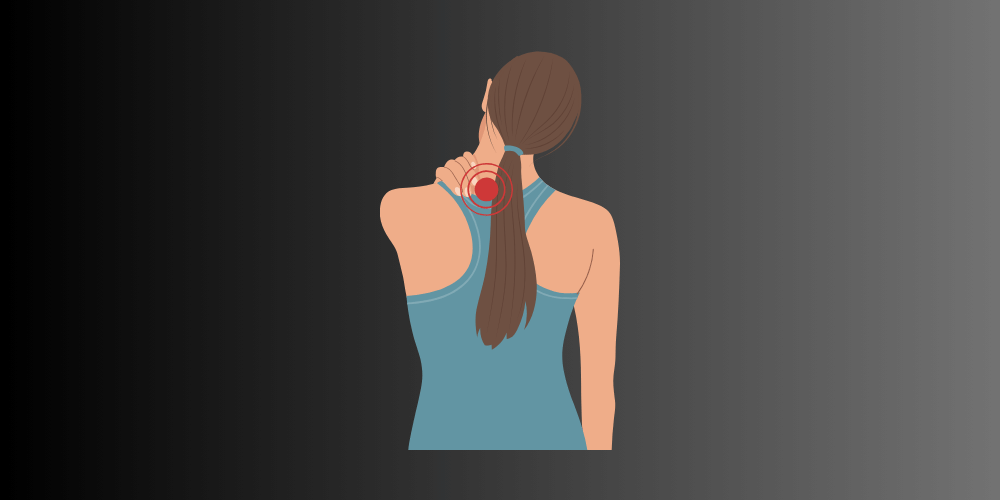
Cervical spondylosis (cervical osteoarthritis) is age-related degeneration of the cervical spine (neck) — involving disc dehydration, osteophyte formation, facet joint wear and possible nerve root or spinal cord compression. Symptoms commonly include neck pain, stiffness, reduced neck mobility, neck-related headaches, shoulder/arm pain, numbness, tingling or weakness in upper limbs.
Key clinical features
- Chronic neck pain and stiffness, limited range of motion.
- Radicular pain — pain radiating into shoulders/arms; numbness/tingling.
- Headaches originating from the neck (cervicogenic headache).
- Occasional dizziness or imbalance when cervical proprioception is affected.
Ayurvedic perspective
In Ayurveda, cervical spondylosis is seen as Vata aggravation in the spine with stiffness, loss of lubrication and degeneration of Asthi/Sandhi (bone and joint tissues). The approach is to pacify Vata, nourish and lubricate the cervical tissues, reduce nerve compression, and restore mobility.
Ayurvedic Strategy for Cervical Spondylosis
Our in-clinic plan aims at immediate symptom relief, reducing nerve irritation, restoring mobility and long-term tissue support:
- Local therapies to reduce stiffness and nourish cervical joints (Greeva Vasti, Nadi Swedan, Lepam, Potli therapies).
- Nervous system support with Nasyam and Shirodhara to relieve nerve irritation, headaches and improve autonomic balance.
- Systemic Vata pacification with Abhyanga and selected Basti courses when indicated.
- Rehabilitation — physiotherapy, posture correction, ergonomic advice and targeted exercises to maintain gains.
Therapies We Provide — Useful for Cervical Spondylosis (with photos)
Below are the primary clinic therapies we use for cervical spondylosis. Each entry includes a reference photo and clear details on benefits, indications and practical use.
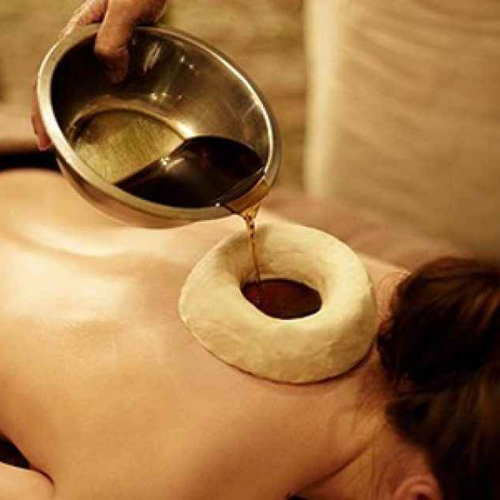
Greeva Vasti (Cervical Oil Retention)
What it is: A dough ring is placed around the neck region and warm medicated oil is retained for a prescribed time to deeply nourish cervical joints and muscles.
- Directly soothes cervical muscles, reduces stiffness and local inflammation.
- Improves lubrication of facet joints and periarticular tissues — relieves neck pain and improves range of motion.
- Often performed as a series (several sessions) for chronic cases; excellent for discogenic neck pain and early nerve irritation.
- Precautions: avoid if skin infection, open wounds, or acute systemic illness. Temperature and duration tailored to tolerance.
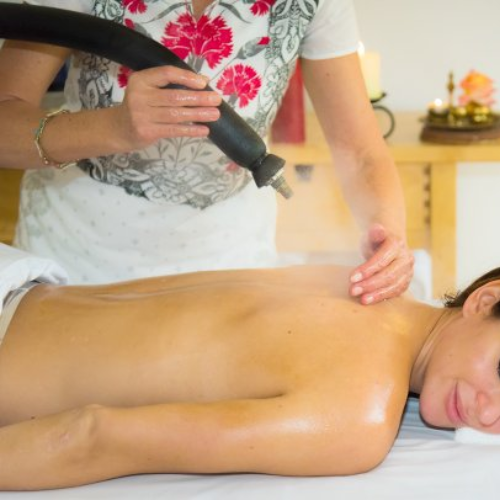
Nadi Swedan (Localized Steam) >
What it is: Concentrated steam applied via a small tube (nadi) to the cervical region or specific painful spots.
- Relaxes tight muscles, reduces spasm, eases stiffness and increases local circulation.
- Prepares tissues for oil therapies and enhances penetration of topical medicaments.
- Useful for acute exacerbations with muscle spasm and for chronic stiffness prior to potli or lepam application.
- Contraindications: febrile conditions or severe inflammatory redness; care with Pitta-dominant inflammatory stages.
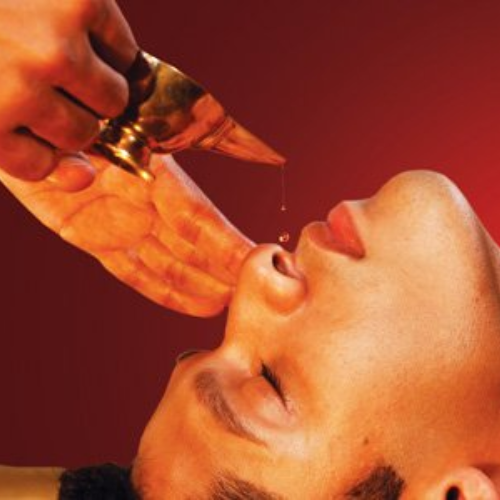
Nasyam (Nasal Administration of Oils/Decoctions)
What it is: Therapeutic oils or herbal drops administered through the nostrils to clear head-region channels and nourish nervous tissues.
- Reduces cervical radicular symptoms, headaches, neck stiffness and improves nerve nutrition for the head & neck region.
- Helps reduce referred pain to shoulders/arms and improves sensory symptoms (tingling, numbness) in mild nerve irritation.
- Performed under physician guidance; several sessions often needed for sustained benefit.
- Not for acute infection of nasal passages or active sinusitis without treatment.
Herbal & Oral Support
Oral medicines are tailored to pacify Vata, reduce inflammation and support nerve health. Typical examples (individualized):
- Dashamoola formulations: Vata-pacifying, anti-inflammatory for musculoskeletal pain.
- Guggulu blends: Support joint tissues and reduce chronic inflammation.
- Ashwagandha: Nervine tonic that supports muscles and nerves.
- Rasayanas: Rejuvenation formulas to rebuild tissue strength.
- Topical medicated oils: Applied at home per physician instructions between clinic visits.
All internal medicines are prescribed after clinical assessment and considering any existing medications — we coordinate care with other treating providers when needed.
Rehabilitation, Exercise & Ergonomics
- Neck strengthening & mobility: Supervised physiotherapy to strengthen deep neck flexors, shoulder stabilizers, and restore range.
- Posture correction: Ergonomic advice for desk/mobile usage to reduce forward head posture — a common cause of worsening symptoms.
- Home care: Hot packs/oil massage (as prescribed), gentle stretching and avoidance of heavy overhead loads.
- Balance & proprioception: For patients with dizziness or proprioceptive deficits.
Typical Clinic Plans for Cervical Spondylosis
Acute Relief (3–7 days)- Targeted Nadi Swedan + Lepam on painful spots
- Gentle Abhyanga focusing on neck/shoulders
- Nasyam sessions for headache/nerve symptoms
Structured Therapy Cycle (2–4 weeks)- Preparatory Abhyanga → Greeva Vasti (series) → Potli therapies as needed
- Shirodhara for sleep/stress plus oral Vata-pacifying herbs
- Physiotherapy & posture program from week 1–2
Maintenance & Prevention- Periodic Greeva Vasti / Abhyanga
- Home topical oil regimen and exercise plan
- Ergonomic reassessment and follow-up
Plans are individualized according to imaging, nerve compression severity and clinical response. Severe progressive neurological signs (rapid weakness, bowel/bladder disturbance) require urgent neurological assessment and possible surgical referral.
Quick Reference — Therapies & Roles
| Therapy | Primary role | Best for |
|---|
| Greeva Vasti | Local nourishment, reduce stiffness | Chronic neck pain, limited ROM |
| Nadi Swedan | Relieves muscle spasm, warms tissues | Acute muscle spasm, preparatory |
| Nasyam | Head/neck nerve support | Radicular symptoms, cervicogenic headache |
| Shirodhara | Stress, sleep improvement | Headaches, tension |
| Potli / Lepam | Break adhesions, topical anti-inflammatory | Peri-articular fibrosis, localized pain |
Safety, Red Flags & Integration
- If you experience progressive limb weakness, loss of hand function, difficulty walking, or bowel/bladder changes — seek urgent neurological/surgical evaluation; these are red flags for serious cord compression.
- Panchakarma procedures and Nasyam must be performed after assessment; not all patients are candidates for every therapy.
- We coordinate with orthopedics/neurology and physiotherapy when imaging or neurological signs require multidisciplinary care.
Ready to ease neck pain and restore mobility?
Book a consultation — we'll assess your cervical condition, review imaging if available, and design a safe, individualized Ayurvedic plan integrating therapies, herbs and rehabilitation.
Book ConsultationAll procedures are provided under qualified Ayurvedic physicians. Urgent neurological symptoms require immediate referral.