What is Osteomalacia?
Osteomalacia is the softening of bones in adults usually caused by deficiency of vitamin D, calcium, or phosphate — leading to bone pain, muscle weakness, fractures and difficulty walking. It differs from osteoporosis (which is loss of bone mass); osteomalacia is primarily a mineralization defect.
Typical symptoms
- Diffuse bone pain (hips, lower back, ribs) and tenderness.
- Proximal muscle weakness (difficulty rising from a chair, climbing stairs).
- Increased risk of fractures and bending deformities in severe cases.
- Lab features: low vitamin D, low/normal calcium, low phosphate, raised alkaline phosphatase (clinical testing required).
Ayurvedic view
Ayurveda sees osteomalacia as a severe form of Asthi (bone) dhatu depletion and Vata imbalance combined with poor nutrition and low Agni (digestive fire). Treatment aims to correct nutrition, strengthen Asthi, restore mineral balance and rebuild muscle strength.
How Ayurveda Supports Osteomalacia
The Ayurvedic care pathway at our clinic includes:
- Medical assessment & coordination: We recommend biochemical testing (vitamin D, calcium, phosphate, ALP) and DEXA when indicated, and coordinate with your physician. Ayurveda supports mineralization but does not replace medical replacement therapy when required.
- Dietary & lifestyle correction: Focus on nutrient-dense, easily digestible foods that promote calcium & vitamin D absorption (sun exposure guidance, dietary calcium, healthy fats).
- Oral herbal & nutritional support: Rasayanas and herbs that strengthen Asthi (e.g., Ashwagandha, Shatavari, bone-nourishing formulations) — given individualized and monitored.
- Targeted in-clinic therapies: Therapies that nourish tissues, improve circulation to bone, reduce muscle spasm and stimulate repair (see list below).
- Rehabilitation: Physiotherapy and progressive strengthening to restore function and reduce fall/fracture risk.
Clinic Therapies Useful in Osteomalacia (with reference photos)
The following therapies are selected for their ability to nourish bone & muscle tissue, improve circulation, reduce pain and support rehabilitation. Each entry includes a therapy photo for reference.
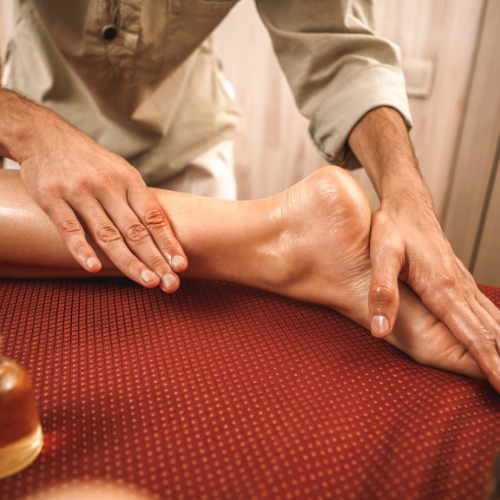
Abhyanga
What it is: Full-body warm herbal oil massage tailored to constitution and condition.
- Nourishes soft tissues, improves peripheral circulation to bones and muscles.
- Reduces muscle stiffness and pain that commonly accompanies osteomalacia.
- Stimulates lymphatic drainage and prepares body for deeper therapies.
- How used: daily or alternate-day during intensive therapy, then maintenance 1–2× weekly.
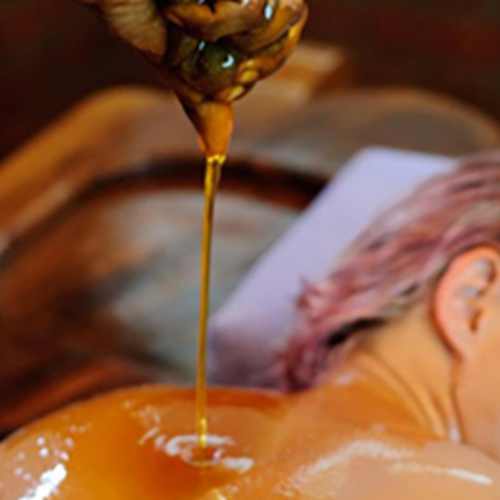
Oil Bath
What it is: Full-body application or immersion in warm medicated oil followed by rest.
- Deeply nourishes tissues and softens tight muscles, improving comfort and mobility.
- Helps counteract dryness and supports tissue repair when combined with oral rasayanas.
- Ideal as part of a rejuvenation cycle; used 1–2 times during a course depending on tolerance.
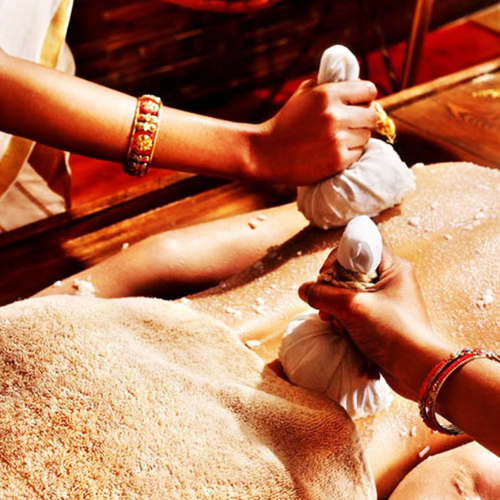
Njavara Kizhi
What it is: Warm boluses of Njavara rice cooked in herbal decoction applied over body/joints.
- Potent tissue-nourishing therapy that supports muscle and bone surrounding tissues.
- Improves local circulation, reduces deep-seated stiffness and gives gentle thermic nourishment aiding tissue repair.
- Often used in repeated sessions across a treatment cycle to rebuild tissues.
Basti (Medicated Enema) — Selected Use
What it is: Medicated oil or decoction administered rectally as a therapeutic measure to pacify Vata and nourish tissues.
- Helps correct Vata imbalance which contributes to tissue degeneration and impaired nourishment of Asthi (bone).
- Supports systemic rejuvenation when used in a carefully supervised course — often combined with oral Rasayanas.
- Requires clinical evaluation and is prescribed only when indicated.
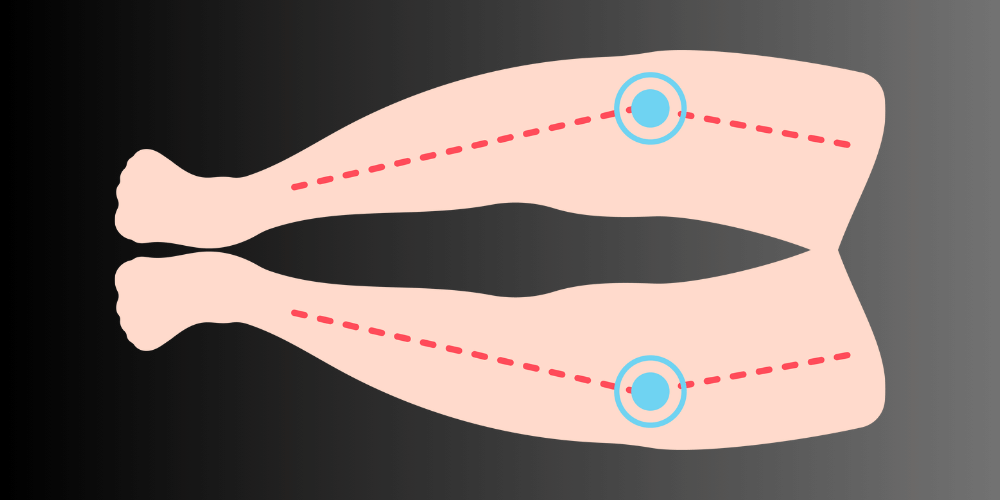
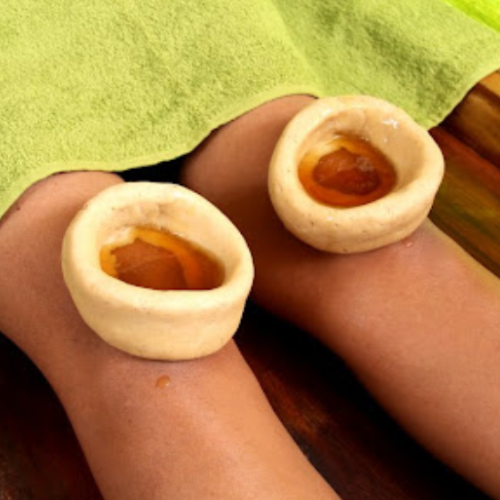
Janu Vasti (Targeted joint nourishment)
What it is: Medicated oil retained on the knee (or joint) in a dough ring for focused nourishment.
- Useful when osteomalacia causes prominent knee pain and impaired mobility; provides deep local nourishment.
- Reduces pain, improves local circulation and supports soft tissue recovery around the joint.
Lepam (Topical Herbal Paste)
What it is: Medicinal paste applied to painful bones/muscles after cleansing and oiling.
- Soothes localized pain and supports healing of periosteal and muscular tissues.
- Often used after Abhyanga or Njavara Kizhi to consolidate effects and reduce tenderness.
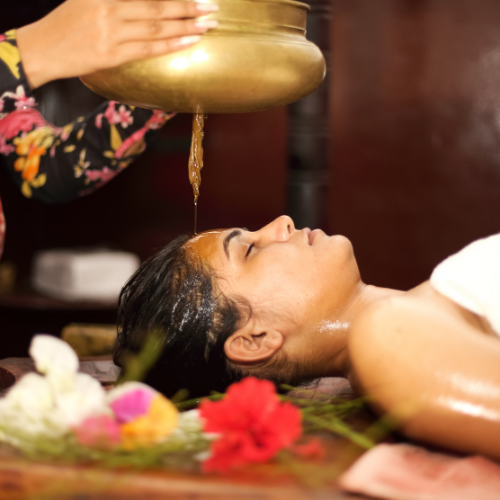
Shirodhara (Adjunct)
What it is: Continuous, slow pouring of warm oil over the forehead.
- Promotes deep relaxation and improves sleep and recovery which are critical for tissue repair.
- Helpful in patients with pain-related insomnia, anxiety or poor recovery response.
Oil Bath (Rejuvenation)
What it is: Immersion or full-body application of warm medicated oil followed by rest.
- Used strategically as a restorative therapy to deeply nourish tissues and support systemic repair.
Herbal, Nutritional & Lifestyle Support
Nutritional priorities
- Vitamin D & Calcium: Medical assessment needed — if deficiency present, physician-guided supplementation is essential (Ayurveda supports absorption).
- Diet: Nutrient-dense warm foods — milk (if tolerated), ghee, soups, stews, leafy greens, sesame, almonds, figs, and small fish (if non-vegetarian) to provide calcium and supportive nutrients.
- Sun exposure: Short, safe sun exposure (10–20 minutes) helps natural vitamin D synthesis — individual advice by clinician.
Herbs & Rasayanas (examples)
- Ashwagandha: Strengthens musculoskeletal tissues and improves resilience.
- Shatavari: Nutritive rasayana supporting general tissue nourishment.
- Dashmoola & bone-tonics: Vata-balancing formulations to support Asthi dhatu.
- Topical medicated oils: Customized oils to enhance local penetration and nourishment.
Herbal prescriptions and doses are individualized, and we always review conventional supplements and medications to avoid interactions. If blood tests show marked deficiency, conventional supplementation may be required alongside Ayurvedic support.
Rehabilitation — Strength & Function
A structured rehabilitation program is an essential part of osteomalacia recovery.
- Progressive strengthening: Focus on proximal muscle groups (quadriceps, hip extensors) to restore mobility and reduce fall risk.
- Low-impact conditioning: Walking, stationary cycling and aquatic therapy if available.
- Balance training: To reduce fractures and falls as bone strength improves.
- Physiotherapist coordination: We work with physiotherapy to integrate Ayurvedic therapy timing and exercise safely.
Sample Clinic Treatment Plans (examples)
Supportive Rebuild — Short (2–3 weeks)- Abhyanga + targeted Njavara Kizhi (3–4 sessions)
- Lepam & localized Janu Vasti for symptomatic joints
- Individualized oral rasayanas + nutritional counseling
Deep Rejuvenation (4–6 weeks)- Sequence: preparatory Abhyanga → Njavara Kizhi cycles → selective Basti (if indicated)
- Physio-guided strengthening from week 2 onward
- Ongoing oral herbs + monitored sun exposure & dietary plan
Maintenance & Prevention- Monthly Abhyanga / oil-bath session + home topical oil routine
- Periodic rasayana courses and exercise program
Treatment is tailored after clinical assessment. If fractures or marked biochemical deficiencies exist, we coordinate with medical care and may prioritize medical supplementation while supporting with Ayurveda.
Quick Reference — Therapies & Purpose
| Therapy | Main Benefit for Osteomalacia | Use |
|---|
| Abhyanga | Improves circulation & nourishes soft tissues | Supportive & preparatory |
| Njavara Kizhi | Deep tissue nourishment & repair | Rejuvenation cycles |
| Janu Vasti | Local joint nourishment | Targeted knee/hip support |
| Basti | Vata pacification, systemic nourishment | Selected systemic support |
| Oil Bath | Deep tissue hydration & rejuvenation | Rejuvenation/maintenance |
| Lepam | Topical pain relief & healing | Local symptom control |
Safety, Testing & Medical Coordination
- Osteomalacia requires blood testing (vitamin D, Ca, PO4, ALP) and imaging when needed — we recommend baseline tests before intensive therapy.
- If vitamin D / calcium deficiency is confirmed, medical supplementation may be necessary — Ayurveda complements and supports recovery but does not replace indicated medical replacement therapy.
- All Panchakarma and internal herbal formulas are prescribed after assessment; some procedures (Basti) require clinical supervision and may not be suitable in acute fracture settings.
Want a personalized plan to rebuild bone strength?
Book a consultation we will review your tests, design individualized nutrition, herb and therapy plan, and coordinate with your medical team for safe recovery.
Book ConsultationAll therapies are performed by qualified Ayurvedic physicians. Clinical evaluation and monitoring are required for safe, effective outcomes.