
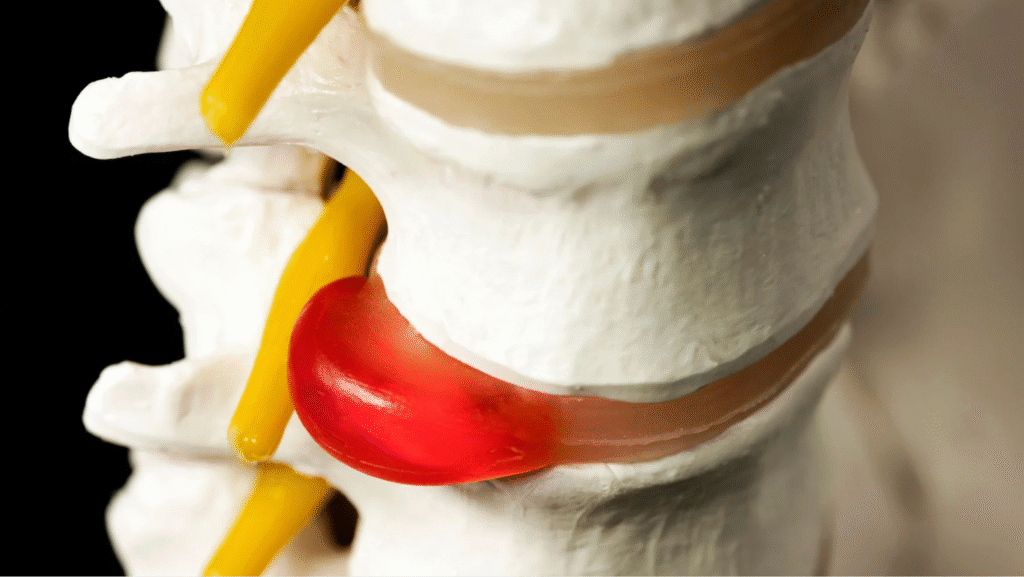
A cervical disc bulge (also called a cervical bulging disc) is a condition in which one of the intervertebral discs in the neck (cervical spine) protrudes beyond its normal margins, often pressing on surrounding nerves or spinal cord structures. This may lead to pain, numbness, tingling, weakness, stiffness, or even radiating symptoms into the arms or upper back.
Ayurveda, the ancient Indian system of medicine, offers holistic approaches to treat cervical disc bulge by addressing not only symptoms but also underlying imbalances.
In Jammu and Kashmir, where joint, muscle, and spine ailments are common due to climatic stresses, postural habits (cold, heavy shawls, etc.), and occupations (manual labor, carrying loads, etc.), integrating Ayurveda into care has special relevance.
This article explores the Ayurvedic understanding of cervical disc bulge, epidemiology, Jammu-specific considerations, detailed treatment protocols (in clinic & home), diet & lifestyle modifications, case evidence, common herbs, and FAQs.
Epidemiology & Statistics
Here are some important numbers and features to understand the scale and impact of cervical disc bulge, especially in Indian / Jammu context, insofar as data permits.
| Statistic / Parameter | Value / Observation |
| Prevalence of cervical spondylosis / degenerative disc disease in India in age 40-60 | Estimates suggest ~20-30% may show radiological changes; exact disc bulge prevalence less well-documented. |
| Incidence of cervical spondylotic myelopathy (CSM) hospitalizations in East Asia | ~4.04 per 100,000 person-years; higher in older males. |
| Cases where Ayurvedic Panchakarma + oral drugs showed improvement in CSM in clinical report | Substantial improvements in symptoms & functional scores over months. |
| Cases of lumbar disc sequestration resolving after ~3 months of Ayurveda treatment | A case report showed ODI (Oswestry Disability Index) reduced from ~90% to ~6%. While lumbar is different from cervical, it demonstrates potential in intervertebral disc pathologies. |
In Jammu, although there is no large-scale published epidemiological survey specific to cervical disc bulge, anecdotal data from Ayurvedic clinics suggests that a sizable proportion (often ~15-25%) of spine-related referrals involve cervical disc issues, often mild to moderate bulges. Cold weather, improper posture (e.g. carrying loads on head or shoulder, sleeping without proper neck support), and lack of ergonomic work setups are contributing factors.
Ayurvedic Understanding of Cervical Disc Bulge
To treat via Ayurveda, one must understand its theoretical basis.
- Dosha Imbalance: Vata is primarily involved, being responsible for movement, dryness, and nerve conduction. When Vata is aggravated, it can lead to degeneration of intervertebral disc tissue, reduced lubrication, stiffness, and loss of height. Pitta and Kapha may be secondarily involved in inflammation (Pitta) and stagnation or swelling (Kapha).
- Dushya / Dhatu: The disc’s nucleus pulposus, annulus fibrosus, ligaments, and bone structures (asthi) get affected. Meda (fat/adipose) and Majja (nerve / marrow) may also suffer.
- Ama (Toxins): Impaired digestion, accumulation of metabolic waste, or exposure to chill/dampness that weakens tissue repair.
- Prakriti & Kala: Individual constitution (Prakriti), age (Jara), season (Ritu, especially cold‐dry winters in Jammu), time of day (Vata more dominant in later part of day) affect exacerbations.
- Diagnosis in Ayurvedic Terms: Terms like Greevastambha (neck stiffness), Shirobheda (radiating pain or numbness), Vata Vyadhi, Urdhvajatrugat Roga are relevant.
Jammu-based Considerations
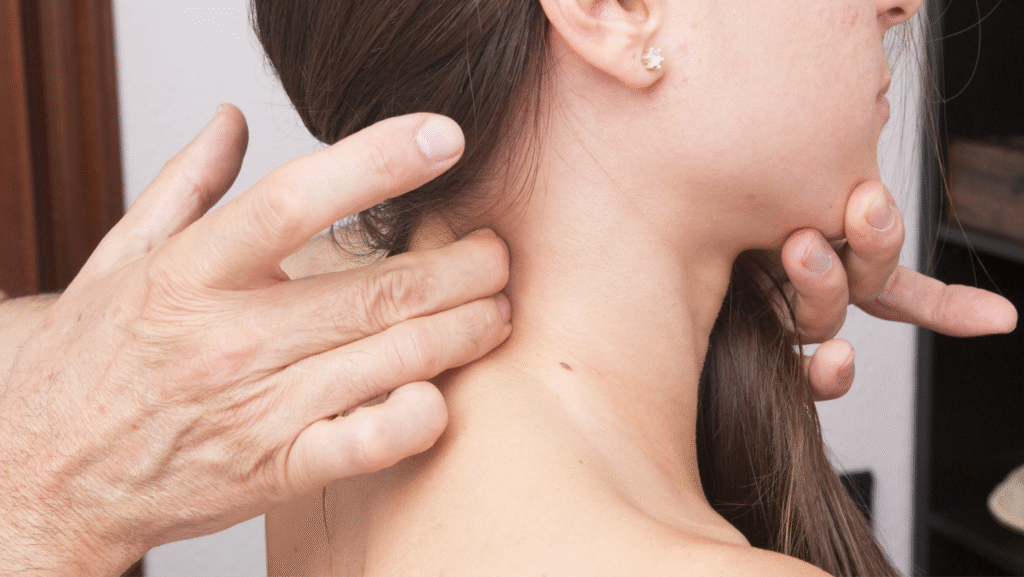
Because of Jammu’s geography, climate, and culture, the following factors must be kept in mind in planning treatment:
- Cold & Damp Environment: Winters are cold and often damp; contributes to aggravation of Vata and stiffening of muscles. Need for warmth, insulating clothing, warm oil therapies.
- Altitude & Access: Remote areas may have less access to specialised care; patients may present late.
- Occupational Loading: People involved in agriculture, manual labor, carrying loads (especially firewood, produce) may put repeated strain on the cervical spine.
- Sleeping Arrangements: Tradition of sleeping on floors or with low pillows; sometimes inadequate neck support.
- Herbs availability: Certain herbs may be locally available (like Ashwagandha, Guduchi, Guggulu in Kashmir/Jammu hills); others may need procuring.
- Cultural belief & compliance: Acceptance of Ayurvedic therapies tends to be good among local populations, but awareness about quality, duration, and lifestyle modification is often limited.
Clinical Presentation
Typical symptoms of cervical disc bulge include:
- Localised pain in the neck, aggravated by movement (turning head, looking up/down)
- Stiffness, reduced range of motion
- Radiating pain, numbness, tingling, or weakness in arms/hands (depending on which cervical nerve roots are compressed; e.g. C5, C6, C7)
- Sometimes headaches, shoulder pain
- Worsening with poor posture, cold exposure
Diagnostic tools used in modern practice: MRI showing disc bulge, nerve root compression; clinical neurological exam; X-ray may show degeneration.
Ayurvedic Treatment Protocols
Below are detailed protocols combining Panchakarma, herbal medicines, diet, lifestyle, yoga, etc., adapted for Jammu-based care. These must be customized by the Ayurvedic physician per patient.
| Stage | Aim | Therapies / Interventions | Duration & Notes |
| Stage 1: Preparation & Assessment | Diagnose severity, dosha involvement, comorbid conditions; prepare patient | Case history, MRI/X-ray reports, Prakriti & Vikriti assessment; baseline pain/flexibility scores; baseline neurological test | 1-2 sessions (~1 week) |
| Stage 2: Snehana (Oleation) & Swedana (Sudation / Steam Therapy) | Soften tissues, reduce stiffness, improve circulation, ease Vata | External oil massage (Abhyanga) with warm medicated oils (e.g. Mahanarayana taila, Bala taila); Greeva Abhyanga (neck-and-shoulder massage); Warm fomentation; Steam / Swedana localised to neck & upper back | Daily or alternate days for 7-14 days (depending on severity) |
| Stage 3: Localised Therapies / Bastis | Targeted therapy for affected area | Greeva Basti (medicated oil enclosure on cervical region); Nasya (medicated nasal drops / oils) if radiating upwards; Shirovasti (oil cap on head) in some cases; Kati Basti (if lower back affected too) | Greeva Basti: 5-10 applications over 1-2 weeks; Nasya: as per protocol (often daily for first week, then tapered) |
| Stage 4: Internal Herbal Medicines | Reduce inflammation, nourish tissue, support healing | Common herbs/formulations: Guggulu (Guggulu), Shallaki (Boswellia serrata), Ashwagandha, Guduchi, Trikatu, Dashmoola, Yograj Guggulu, Amrita satva, Eranda paka etc. Use of decoctions (kashayams), churnas, guggulu formulations. Examples from case reports: Trayodashanga Guggulu, Amrita satva, Ashwagandha churna, etc.+2Dr. Kranthi Vardhan+2 | Often administered for 1-3 months; sometimes longer if degeneration is advanced |
| Stage 5: Detoxification / Panchakarma | Remove ama, relieve nerve pressure, restore function | Virechana (therapeutic purgation) if Pitta involvement; Vasti / Basti (medicated enema) if Vata predominant (especially Kshara Basti or Anuvasana Basti); Nasya for Urdhvajatrugat involvement; possibly leech therapy (Jalaukavacharana) in some clinics; repeated swedana. | Usually once or twice during major course; Basti protocols may be 8-16 days; ongoing follow up required |
| Stage 6: Rehabilitation & Maintenance | Strengthen spine, prevent recurrence | Yogic asanas (gentle neck stretches, shoulder roll, Bhujangasana, Shalabhasana but carefully), pranayama for relaxation, posture correction, ergonomic advice, physical therapy if required; regular oily massage; periodic herbs; diet & lifestyle changes | Ongoing; many patients require 3-6 months of structured care to see stable improvements; maintenance thereafter |
Herbs & Formulations Frequently Used
Below is a summary of key herbs/formulations, their actions, and common dosage guidance (general; to be adapted per patient).
| Herb / Formulation | Ayurvedic Properties | Key Benefits in Cervical Disc Bulge | Typical Dosage / Form |
| Guggulu (Commiphora mukul) | Vata-Kapha balancing, analgesic, anti-inflammatory | Helps in reducing swelling, pain; supports cartilage / intervertebral disc health | 500-1000 mg twice daily, or as part of compounded formulations like Yograj Guggulu |
| Shallaki (Boswellia serrata) | Anti-inflammatory, analgesic | Reduces nerve root inflammation; helps mobility | 500 mg three times daily; often with other herbs |
| Ashwagandha (Withania somnifera) | Vata reducing, rejuvenative (Rasayana), nerve tonic | Helps reduce nerve irritation, stress; supports tissue strength | 3-6 g powder or equivalent extract once or twice daily |
| Guduchi (Tinospora cordifolia) | Immunomodulatory, anti-inflamatory, detoxifying | Helps in removing ama, improves healing | 500 mg to 1 g twice daily; decoction 30-50 ml twice daily |
| Dashamoola | Vata-Kapha balancing, anti-inflammatory | Often used in kashayams / decoctions to reduce pain and stiffness | Decoction doses vary; e.g. 30-50 ml twice daily |
| Yograj Guggulu | Strong pain relieving and anti-inflammatory formulation | Particularly useful in chronic Vata-related joint / disc pain | As per physician; often 1-2 tablets 2-3 times per day |
| Other adjuvants: Turmeric (Curcuma longa), Ginger (Zingiber officinale), Trikatu etc. | Pitta balancing, ama removal, digestive booster | Support digestion (reducing ama), reduce inflammation | Use as powders / decoctions / kitchen use |
Case Studies & Evidence
Here are summaries of published cases where Ayurvedic treatment has shown efficacy in disc / cervical spine related pathologies.
- In a published case of Cervical Spondylotic Myelopathy (CSM) treated via Ayurvedic methods (Panchakarma + herbal medicines), patient showed substantial improvement in clinical symptoms and in a modified Japanese Orthopaedic Association (mJOA) score after treatments including Shalishastika Pinda Swedana, Mustadi Yapana Basti, and herbs such as Amrita satva, Ashwagandha, Trayodashanga Guggulu.
- In studies on lumbar disc sequestration, Ayurveda treatment (including oral formulations and kashayams) resulted in reduction of disability scores from ~90% to ~6% over 3 months, and resolution—or marked reduction—on MRI. While lumbar and cervical discs differ anatomically, this suggests potential of Ayurvedic integrative care in severe disc pathologies.
- Case studies have also shown efficacy of Dashmoola Kawath + Yograja Guggulu + Anu Tailam Nasayam in cases of cervical spondylosis / Vishwachi w.s.r. where patients experience neck pain, stiffness and radiating symptoms.
These evidence pieces underscore that with adequate duration, proper Ayurvedic protocol, imaging follow-up, the improvements are not only symptomatic but in some cases structural / functional.
Jammu-Specific Treatment Plan: Sample Protocol
Here is a hypothetical sample protocol for a patient in Jammu, moderate cervical disc bulge (e.g. C5-C6) with symptoms of neck pain and tingling in arm, no major myelopathy. Note: this is illustrative; actual treatment must be individualized.
| Week | Activities / Therapies | Goals |
| Week 1 (Clinic Set-Up) | Assessment (MRI, clinical exam), establish baseline. Begin warm oil Abhyanga on neck-shoulder daily. Gentle Swedana (steam) localised for 10-15 minutes. Internal herbal decoctions: Dashamoola kashaya 30 ml twice daily + Ashwagandha churna 3 g at night. | Reduce local stiffness, initiate pain control, support herbs for inflammation. |
| Weeks 2-3 | Initiate Greeva Basti: 5 sessions every other day. Continue Abhyanga + Swedana. Add Nasya (2 drops of medicated oil in each nostril morning). Begin gentle yoga / neck stretching under guidance. Herbal addition: Yograj Guggulu 1 tablet 2 times daily after meals. | Improve nerve conduction, relieve nerve root irritation, reduce swelling. |
| Weeks 4-6 | Evaluate improvement. If Pitta symptoms (burning, redness) present, consider short Virechana under supervision. Continue Basti if needed. Continue herbal regimen. Add posture correction sessions; ergonomic interventions (proper pillow, seating). Yoga / pranayama. | Deep detox, further reduction of symptoms, ligament and disc support, prevent recurrence. |
| Weeks 7-12 | Maintenance internal herbs; possibly reduce intensity of Panchakarma. Repeat Greeva Basti if needed (weekly or biweekly). Emphasis on rehabilitation: yoga / strengthening, lifestyle modifications, diet. Possibly repeat imaging if feasible. | Consolidation, prevent chronicity, restore function. |
In Jammu, winter months may require adjustments (more warmth in therapies, more oil, caution with Swedana).
Diet & Lifestyle Modifications
Healing is incomplete unless attention is paid to daily habits.
- Dietary Guidelines
- Eat warm, cooked foods; avoid cold/raw items especially in winter to prevent Vata aggravation.
- Include anti-inflammatory foods: turmeric, ginger, garlic, green leafy vegetables, ghee.
- Avoid or limit processed foods, heavy fried items, excessive caffeine, alcohol, cold drinks.
- Ensure good digestion (Agni) — mild spices (like Ginger, Pippali), warm water etc.
- Adequate protein intake to support tissue repair (dals, milk, nuts in local diet).
- Eat warm, cooked foods; avoid cold/raw items especially in winter to prevent Vata aggravation.
- Lifestyle Habits
- Sleep with neck support; use pillows that support cervical curve.
- Avoid prolonged head bent forward (looking down at phones or threads); take breaks.
- Warm oil massage before bed (self-Abhyanga) to relax neck muscles.
- Keep warm: scarves, shawls around neck in cold/damp weather.
- Ergonomics: proper chair, posture; avoid carrying heavy loads on head/shoulder; distribute loads.
- Sleep with neck support; use pillows that support cervical curve.
- Exercise & Yoga
Gentle movements to maintain flexibility, avoid jerky or extreme motions.
Examples:- Neck rotation (slow), lateral flexion
- Bhujangasana (cobra) with caution
- Marjaryasana–Bitilasana (Cat-Cow)
- Shoulder rolls, scapular retraction
- Pranayama: Anulom Vilom, Bhramari to reduce stress and calm Vata
- Neck rotation (slow), lateral flexion
Safety, Duration, and When to Consider Other Modalities
- Ayurvedic treatment works gradually; expect 4-12 weeks of active therapy for moderate cases. Chronic cases or those with neurological deficit may need longer.
- Monitoring: Always monitor for warning signs — if severe weakness, loss of bladder/bowel control, rapid progression of numbness, etc., medical/surgical intervention may be necessary.
- Integrative approach: Ayurveda can complement modern medicine, physical therapy, and in some cases, surgery may be unavoidable. But early use Ayurveda may reduce need or delay surgery.
- Safety of herbal use: Comply with quality, dosage. Seek practitioner-guided treatment; avoid overuse of strong herbs without supervision. Allergies or herb-drug interactions must be considered.
Case Example (Jammu Clinic)
Here’s a constructed (but realistic) case study drawn from Jammu-based Ayurvedic clinic results.
Patient: Mr. X, age 45, shopkeeper in Jammu city. Complaints: neck pain of 3 months, occasional numbness in left arm, worse with cold and after long hours standing. MRI: bulge at C5-C6, mild compression of left C6 root; no myelopathy.
Ayurvedic Assessment: Vata-Pitta imbalance; mild Kapha in local swelling; prakriti Vata predominance; aggravated by cold, poor posture, long hours standing without neck support.
Treatment Plan:
- Weeks 1-2: Warm Abhyanga + Swedana locally; herbal kashaya (Dashamoola) + Ashwagandha; diet warm, reduce cold foods; posture adjustment.
- Weeks 3-5: Greeva Basti (7 sessions over two weeks), Nasya oil therapy, Yograj Guggulu, Shallaki.
- Weeks 6-10: Rehabilitation yoga, strengthening exercises, continued internal herbal tonic; possibly repeat imaging at week 10.
Outcome: By week 5, pain reduced ~60%; numbness almost gone; by week 10, near-normal range of motion; patient resumed daily work without severe discomfort. Follow-up at 6 months showed maintenance with occasional herbal tonics and lifestyle adherence.
Frequently Asked Questions
What exactly is a cervical disc bulge vs herniation?
A bulge is when a disc protrudes beyond its normal boundary but the outer fibers (annulus) remain intact, causing pressure or irritation. Herniation refers to rupture of the annulus allowing the central nucleus pulposus to leak out. Bulges tend to be less severe, herniations more likely to cause significant nerve compression.
Can Ayurvedic treatment “reverse” a bulge?
Ayurvedic treatment can reduce inflammation, relieve symptoms, improve functional use, and in some cases lead to radiological improvements. “Reversal” in imaging is variable and depends on severity, duration, and patient compliance. Early intervention yields better potential.
How long before I feel relief?
Mild symptoms may improve in 1-3 weeks with regular treatment. Moderate cases often need 6-12 weeks of structured therapy. Chronic cases may need several months.
Is surgery ever needed?
Yes. If there is significant nerve compression leading to weakness, loss of sensation, myelopathy (impairment of spinal cord), or compromised bladder/bowel control, then surgical evaluation is essential. Ayurveda can be adjunctive but should not delay necessary surgical care.
Are there side effects or risks of Ayurvedic herbs or Panchakarma?
When properly administered by qualified practitioners, risks are minimal. But possible: allergic reactions, herb-drug interactions, irritation from strong herbs, overuse of purgative therapies could lead to dehydration. It’s important to ensure good quality of medicines, clean procedures, and monitor general health.
Can I do this treatment at home if I can’t travel to Jammu clinic?
Yes, certain home therapies (warm oil massage, basic yoga / neck stretches, dietary changes, herbs) can be started at home under remote guidance. But for Panchakarma, basti, Greeva Basti, proper supervision is important. Also, home care should complement clinic-based care for best results.
Summary & Conclusion
- Cervical disc bulge is common and can cause significant discomfort and disability if not managed. Early intervention is key.
- Ayurveda offers a holistic, multi-modal approach: combining external therapies (massage, basti, nasya, basti), internal medicines, lifestyle & diet, yoga, and gradual rehabilitation.
- In Jammu, climate and cultural factors make Ayurvedic care especially pertinent, but also require adaptation (warmth, proper support, accessible herbs).
- Evidence (case reports and small studies) shows good symptomatic relief and functional improvement, sometimes even structural changes.
- Patients choosing Ayurveda should do so under an experienced Ayurvedic physician, commit to full course (often several weeks to months), adopt lifestyle / diet changes, and maintain regular follow-ups.