
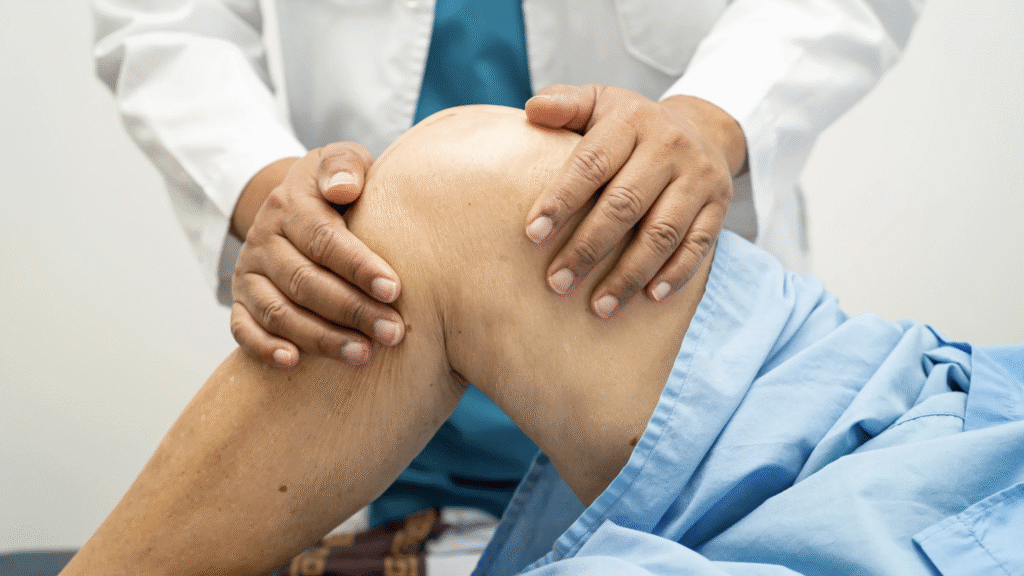
Rheumatoid Arthritis (RA) affects millions of people worldwide, creating a complex web of chronic pain, inflammation, and progressive joint damage that can fundamentally alter the quality of life. Unlike simple wear-and-tear conditions, RA is an autoimmune disorder where the body’s immune system mistakenly attacks healthy joint tissues, leading to systemic inflammation that extends far beyond the joints themselves.
This autoimmune nature makes RA particularly challenging to treat, often progressing to severe joint destruction that conventional medicine frequently addresses through surgical interventions like knee replacement.
The conventional medical approach typically recommends knee replacement surgery when RA has caused significant joint damage, chronic pain becomes unmanageable, and mobility is severely compromised.
While these surgical interventions can restore function, they come with inherent risks, recovery challenges, and the reality that artificial joints have limited lifespans requiring eventual revision surgeries.
However, there’s growing interest in ancient healing systems like Ayurveda, which offers a fundamentally different approach to managing RA. Rather than focusing solely on symptom suppression or surgical replacement, Ayurveda addresses the root causes of disease through holistic treatment modalities, emphasizing fewer side effects and significant preventive potential.
This comprehensive system of medicine, refined over thousands of years, views RA not as an isolated joint problem but as a manifestation of deeper systemic imbalances.
The purpose of this exploration is to examine whether Ayurveda can effectively cure or substantially manage rheumatoid arthritis to the extent that knee replacement might be avoided or significantly delayed, and if so, how this ancient science accomplishes such remarkable healing.
Understanding Rheumatoid Arthritis vs Osteoarthritis — Key Differences
| Aspect | Rheumatoid Arthritis (RA) | Osteoarthritis (OA) | Treatment Implications in Ayurveda |
| Nature of Condition | Autoimmune disease – immune system attacks synovial membranes | Degenerative disease – wear and tear of cartilage over time | RA: Focus on immune modulation and systemic balance; OA: Focus on strengthening joints and managing degeneration |
| Pathophysiology | Driven by cytokines and inflammatory mediators → chronic inflammation, cartilage destruction, bone erosion | Mechanical stress leads to gradual breakdown of cartilage and bone changes | RA: Reduce inflammation, detoxify, correct immune imbalance; OA: Nourish tissues, improve lubrication, strengthen joints |
| Pattern of Joint Involvement | Symmetrical (e.g., if one knee is affected, the other follows) | Asymmetrical, usually limited to weight-bearing joints | RA: Holistic and systemic approach; OA: Localized joint therapies and strengthening |
| Systemic Involvement | Multisystem (can affect heart, lungs, eyes, etc.) | Generally confined to joints only | RA: Full-body management with diet, detox, rasayana (rejuvenation); OA: Local therapies (Abhyanga, Janu Basti, etc.) |
| Progression | Aggressive, leading to deformities and disability if untreated | Slower, mainly pain and stiffness with functional limitation | RA: Early and consistent intervention critical; OA: Symptom relief and mobility maintenance |
| Complexity | High – due to autoimmune nature and systemic effects | Comparatively lower – localized and mechanical | RA: Requires Panchakarma, immune regulation, lifestyle modification; OA: Primarily external therapies and supportive rasayanas |
Ayurvedic Principles Relevant to RA & Knee Health
- Dosha Imbalance
- Vata Dosha
- Governs movement and nerve function.
- Aggravation leads to pain, stiffness, and reduced mobility.
- Causes erratic circulation, nerve disturbances, and lack of coordination.
- Governs movement and nerve function.
- Pitta Dosha
- Governs heat and metabolism.
- Aggravation manifests as inflammation, swelling, and heat in joints.
- Responsible for RA flares, while Vata causes chronic stiffness and pain.
- Governs heat and metabolism.
- Vata Dosha
- Ama (Toxin) Accumulation
- Results from impaired digestion (weak Agni).
- Creates toxic byproducts that circulate and settle in joints.
- Leads to inflammation, immune disturbances, and poor nutrient delivery to cartilage and bone.
- Perpetuates the inflammatory cycle in RA.
- Results from impaired digestion (weak Agni).
- Sandhigata Vata
- Ayurvedic term describing Vata imbalance in joints.
- Parallels with RA and osteoarthritis symptoms.
- Causes pain, stiffness, crackling sounds, and functional decline.
- Provides therapeutic targets for joint-specific treatment.
- Ayurvedic term describing Vata imbalance in joints.
- Individual Constitution (Prakriti)
- Treatment is personalized based on dosha predominance and current imbalances.
- Factors influencing response include digestion, stress, lifestyle, and immunity.
- No two patients with RA have the same treatment plan.
- A tailored approach ensures better effectiveness and avoids counterproductive therapies.
- Treatment is personalized based on dosha predominance and current imbalances.
Ayurvedic Treatment Modalities for RA
Ayurveda employs a multi-dimensional approach to treating rheumatoid arthritis, addressing the condition through various therapeutic modalities that work synergistically to restore balance and promote healing. Each component plays a specific role in the overall treatment strategy.
Diet & Nutrition
Dietary intervention forms the foundation of Ayurvedic RA treatment, recognizing that proper nutrition directly impacts inflammation levels, immune function, and tissue health. The Ayurvedic approach to diet in RA focuses on foods that pacify aggravated doshas while supporting digestive health and reducing Ama formation.
Foods recommended for RA include warm, freshly cooked vegetables that are easy to digest and don’t burden the digestive system. Light grains like quinoa, rice, and millet provide necessary energy without creating digestive stress. Specific spices play crucial therapeutic roles – turmeric contains curcumin, a powerful anti-inflammatory compound that helps reduce joint swelling and pain.
Ginger stimulates digestive fire while providing anti-inflammatory benefits. Other beneficial spices include coriander, fennel, and cumin, which support digestion and help prevent Ama formation.
Foods and behaviors to avoid are equally important. Cold, raw foods are particularly problematic as they increase Vata and impair digestive fire, leading to increased Ama production.
Processed foods, heavy oils, and difficult-to-digest items place additional burden on an already compromised digestive system. Cold drinks, ice cream, and refrigerated foods directly aggravate Vata dosha and can worsen joint stiffness and pain.
The role of digestion and gut health cannot be overstated in RA treatment. Ayurveda recognizes that compromised digestion is often the root cause of Ama accumulation and subsequent inflammatory responses.
By strengthening digestive fire through appropriate food choices, eating habits, and digestive support herbs, the formation of new Ama is prevented while existing toxins are gradually eliminated.
Herbal Remedies & Internal Medicines
Ayurvedic pharmacology offers numerous herbs and formulations specifically beneficial for rheumatoid arthritis. Each herb has specific properties that address different aspects of the disease process.
Guggulu, derived from the resin of Commiphora mukul, is renowned for its anti-inflammatory and detoxifying properties. It specifically helps reduce swelling, pain, and stiffness while supporting healthy circulation and toxin elimination. Guggulu also has immunomodulatory effects that may help balance autoimmune responses.
Shallaki (Boswellia serrata) contains boswellic acids that directly inhibit inflammatory pathways involved in RA. This herb is particularly effective for reducing joint pain and swelling while supporting cartilage health and preventing further joint damage.
Ashwagandha serves as a powerful adaptogen that helps the body manage stress while reducing inflammation. Its immunomodulatory properties may help balance autoimmune responses, while its strengthening effects support overall tissue health and energy levels.
Nirgundi (Vitex negundo) is specifically indicated for joint pain and inflammation. It can be used both internally and externally to provide relief from RA symptoms while supporting the healing process.
Rasna (Pluchea lanceolata) is traditionally used for Vata-related disorders, particularly those affecting joints and muscles. It helps reduce pain and stiffness while supporting healthy joint function.
Classical formulations like Rasnasaptakam combine multiple herbs in precise proportions to create synergistic effects that are often more powerful than individual herbs used alone. These time-tested formulations represent centuries of clinical experience and refinement.
External Therapies
External therapies play a crucial role in Ayurvedic RA treatment, providing direct relief to affected joints while supporting the overall healing process.
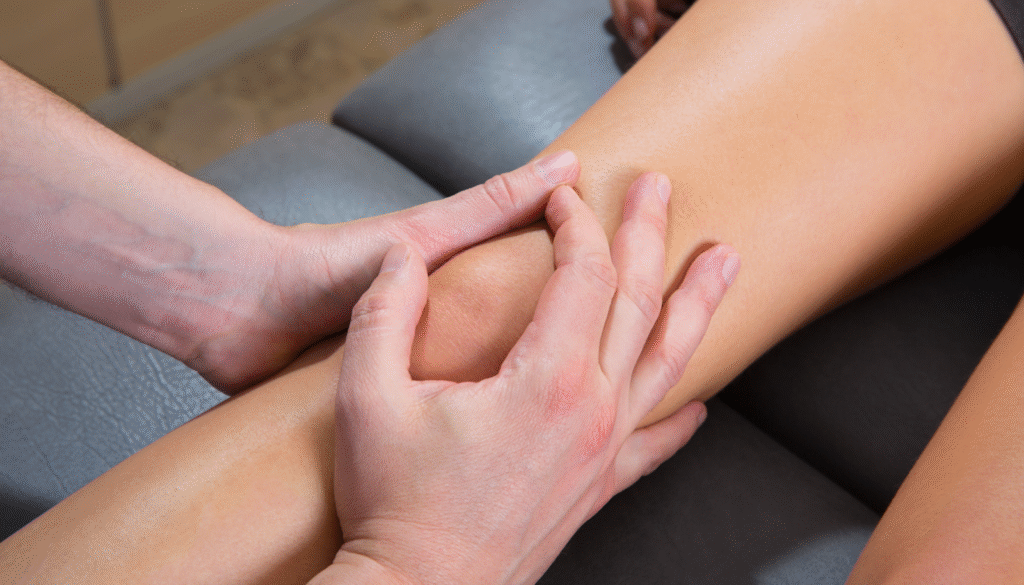
Abhyanga, or warm herbal oil massage, improves circulation to affected joints, reduces stiffness, and provides nourishment to tissues. The mechanical action of massage helps break up Ama deposits while the medicated oils provide therapeutic compounds directly to affected areas. Regular abhyanga also helps pacify Vata dosha and improve overall circulation.
Janu Basti is a specialized therapy where warm medicated oil is pooled around the knee joint using a dough dam. This allows for prolonged contact between therapeutic oils and the affected joint, providing deep penetration of healing compounds. Janu Basti is particularly effective for knee-related RA symptoms and can significantly improve mobility and reduce pain.
Swedana encompasses various forms of herbal steam therapy that help open tissue channels, promote sweating, and facilitate toxin elimination. The heat and moisture help reduce stiffness while the herbal vapors provide additional therapeutic benefits. Fomentation with herbal poultices applies similar principles, using warm, moist herbal preparations to provide localized relief.
Detoxification & Panchakarma
For many RA patients, deeper detoxification through Panchakarma therapies may be necessary to address accumulated toxins and restore proper physiological function.
Virechana, or therapeutic purgation, uses specific herbs to promote elimination of toxins through the digestive tract. This therapy is particularly effective for reducing Pitta-related inflammation and clearing Ama from the system. Virechana is typically performed after proper preparation and under expert supervision.
Basti, or medicated enema therapy, is considered the most important treatment for Vata-related conditions. Using various medicated oils, decoctions, or combination preparations, Basti directly addresses Vata imbalance while promoting deep detoxification. For RA, Basti can be particularly effective in reducing joint pain and stiffness while improving overall mobility.
These intensive therapies require proper assessment, preparation, and supervision by qualified practitioners, but they can produce profound improvements in RA symptoms and overall health when appropriately applied.
Lifestyle & Supportive Measures
Beyond specific treatments, lifestyle modifications form an integral part of Ayurvedic RA management. These changes support the treatment process while helping prevent further progression of the condition.
Gentle movement is essential for maintaining joint function without exacerbating inflammation. Yoga offers ideal exercise for RA patients, providing gentle stretching, strengthening, and improved circulation without high-impact stress on joints.
Walking in pleasant environments supports circulation and mood while avoiding excessive joint stress. High-impact activities should be avoided as they can aggravate Vata and potentially worsen joint damage.
Sleep hygiene plays a crucial role in RA management, as poor sleep can increase inflammation and pain sensitivity. Ayurveda recommends regular sleep schedules, avoiding late nights, and creating peaceful sleep environments that support deep, restorative rest.
Stress reduction through practices like meditation and pranayama (breathing exercises) directly impacts RA symptoms. Chronic stress increases inflammatory responses and can trigger RA flares, making stress management an essential component of treatment. Regular meditation practice has been shown to reduce inflammatory markers and improve pain management.
Maintaining warmth in affected joints is particularly important for RA patients. Cold exposure can increase Vata and worsen joint stiffness and pain. This includes avoiding cold foods and drinks, dressing warmly in cold weather, and using warm applications on stiff joints.
Evidence: What Research Says About Ayurveda & RA
While Ayurveda represents thousands of years of clinical experience, modern scientific research is beginning to validate many of its approaches to rheumatoid arthritis treatment.
Recent studies have shown promising results for Ayurvedic interventions in RA management. Research has demonstrated that comprehensive Ayurvedic treatment protocols can significantly reduce disease activity markers, decrease the number of swollen and tender joints, and improve overall functional capacity in RA patients. Some studies have shown reductions in inflammatory markers like C-reactive protein and ESR (erythrocyte sedimentation rate) following Ayurvedic treatment.
Individual herbs used in Ayurvedic RA treatment have also been scientifically validated. Turmeric’s active compound curcumin has extensive research supporting its anti-inflammatory and immunomodulatory effects.
Boswellia serrata has been shown to inhibit inflammatory pathways specifically involved in RA. Ashwagandha demonstrates significant anti-inflammatory and immunomodulatory properties in clinical trials.
However, it’s important to acknowledge the limitations of current research. Many studies have relatively small sample sizes, short-term follow-up periods, and varying methodological quality.
Large-scale, long-term randomized controlled trials comparing Ayurvedic treatments to conventional RA therapies are still limited, though this is beginning to change as interest in integrative approaches grows.
The evidence is stronger for osteoarthritis and general joint pain management, where several high-quality studies have demonstrated significant benefits from Ayurvedic interventions. Since some treatment principles overlap between different types of arthritis, this research provides additional support for Ayurvedic approaches to joint health.
Can Ayurveda Cure RA Without Knee Replacement?
This central question requires careful consideration of what “cure” means in the context of rheumatoid arthritis and what Ayurveda can realistically accomplish.
Defining “cure” in RA context involves several possibilities: complete symptom remission where the disease becomes inactive, halting or slowing disease progression to prevent further joint damage, or actual reversal of existing joint damage with structural repair. Each of these represents different levels of therapeutic success.
Based on available evidence and clinical experience, Ayurveda appears capable of achieving significant therapeutic benefits in RA management. These include substantial reduction in pain, swelling, and stiffness that can dramatically improve quality of life. Many patients experience significant improvement in mobility and joint function.
There’s evidence that Ayurvedic treatment can slow or potentially halt disease progression, preventing further joint damage. The comprehensive approach often leads to improved overall health, energy levels, and wellbeing beyond just joint symptoms.
However, Ayurveda has not been reliably shown to fully reverse severe joint damage, particularly in advanced RA where significant cartilage loss and bone erosion have occurred. While some tissue repair may occur, regeneration of heavily degraded cartilage and bone remains challenging with any treatment modality, including conventional medicine.
The success of Ayurvedic treatment in avoiding knee replacement depends on several critical factors. Early diagnosis and prompt initiation of comprehensive Ayurvedic care provide the best outcomes.
The severity and stage of RA at treatment initiation significantly impacts potential for improvement – mild to moderate RA typically responds much better than advanced cases with extensive joint damage.
Consistency of treatment is absolutely crucial. Ayurvedic management requires sustained commitment to dietary changes, lifestyle modifications, herbal treatments, and therapeutic procedures. Sporadic or half-hearted approaches rarely produce significant results.
Individual constitutional factors play a major role in treatment response. Some people have inherent resilience and respond dramatically to Ayurvedic interventions, while others may have more limited responses based on their unique physiology and disease patterns.
Combining Ayurvedic care with appropriate medical oversight often provides the best outcomes. This doesn’t mean relying solely on conventional medications, but rather maintaining monitoring and being open to integrative approaches that combine the best of both systems.
When Knee Replacement Might Still Be Necessary
Despite Ayurveda’s potential, there are situations where surgical intervention may still be necessary or advisable.
Advanced cartilage destruction with significant bone erosion may be beyond the repair capacity of any conservative treatment. When joint damage is so severe that basic mechanical function is compromised, surgical intervention may be the only option for restoring mobility.
Severe, unmanageable pain that doesn’t respond adequately to comprehensive Ayurvedic or conventional pain management may necessitate surgical consideration. If pain significantly impacts sleep, daily function, and quality of life despite thorough treatment attempts, joint replacement might provide necessary relief.
Functional limitations that severely affect daily living activities may require surgical intervention when conservative approaches have been thoroughly attempted without sufficient improvement. The ability to walk, climb stairs, or perform basic daily activities is fundamental to quality of life.
However, even in these situations, Ayurveda plays valuable roles. Pre-surgical Ayurvedic treatment can optimize overall health, reduce inflammation, and potentially improve surgical outcomes. Post-surgical Ayurvedic care can support healing, prevent complications, and optimize long-term joint function.
In many cases, thorough Ayurvedic treatment can significantly delay the need for joint replacement, allowing patients to maintain natural joint function for years or even decades longer than would otherwise be possible.
This delay is valuable as it allows patients to remain active with their natural joints during their most active years, potentially postponing surgery until they’re older and less active.
Integrative Approach: Combining Ayurveda & Modern Medicine
The most effective approach to RA management often involves integration rather than choosing exclusively between Ayurveda and conventional medicine. This integrative model recognizes that each system has unique strengths that can complement the other.
Modern medicine excels at acute management, precise monitoring of disease progression through laboratory tests and imaging, and surgical interventions when necessary. Disease-modifying antirheumatic drugs (DMARDs) can effectively slow joint damage progression in many patients. Advanced imaging techniques allow for precise monitoring of treatment response and disease progression.
Ayurveda offers comprehensive lifestyle and dietary approaches, natural anti-inflammatory interventions with fewer side effects, personalized treatment based on individual constitution, and focus on addressing root causes rather than just symptom suppression. The holistic approach often improves overall health and wellbeing beyond just joint symptoms.
Innovative combinations might include using gentle conventional medications during acute flares while building long-term health through Ayurvedic approaches. Some patients successfully reduce conventional medication requirements as Ayurvedic treatments take effect, though this should always be done under medical supervision.
Working with qualified practitioners from both systems ensures comprehensive care while maintaining safety. This requires finding healthcare providers who are open to integrative approaches and can communicate effectively with practitioners from other disciplines.
Practical Implementation Guide
For individuals considering Ayurvedic management of RA to avoid knee replacement, a systematic approach is essential.
Begin with comprehensive assessment by both qualified Ayurvedic practitioners and rheumatologists to establish baseline disease activity, current joint damage, and individual treatment priorities. This dual assessment ensures that treatment decisions are made with complete information about disease status and individual constitution.
A sample comprehensive Ayurvedic treatment plan might include specific dietary modifications based on individual constitution and current imbalances, customized herbal formulations addressing inflammation, pain, and immune balance, regular external therapies like abhyanga and specialized joint treatments, appropriate lifestyle modifications including exercise, sleep, and stress management, and periodic intensive treatments like Panchakarma based on individual needs and response.
Duration and expectations should be realistic. Initial improvements in pain and stiffness may occur within weeks to a few months. Significant changes in joint function and mobility typically require several months to a year of consistent treatment. Long-term management is often necessary to maintain improvements and prevent disease progression.
Monitoring progress involves tracking subjective measures like pain levels, morning stiffness duration, and functional capacity alongside objective measures like joint swelling, range of motion, and periodic laboratory monitoring of inflammatory markers. Regular imaging studies can assess whether joint damage progression is being slowed or halted.
Safety Considerations & Precautions
While Ayurvedic treatments are generally safe when properly administered, certain precautions are important.
Herbal medicines can interact with conventional medications, particularly blood thinners, immunosuppressants, and diabetes medications. Always inform all healthcare providers about all treatments being used to avoid potentially dangerous interactions.
Quality of herbal products varies significantly. Choose products from reputable manufacturers with proper quality control and standardization. Avoid products with uncertain ingredients or contamination risks.
Practitioner qualifications are crucial for safe and effective treatment. Seek practitioners with proper Ayurvedic education and clinical experience, particularly in treating RA and autoimmune conditions.
Certain therapies like Panchakarma require careful assessment and preparation. These intensive treatments should only be performed by experienced practitioners in appropriate clinical settings.
Be cautious about stopping conventional medications without proper medical supervision. Some RA medications require gradual tapering to avoid rebound symptoms or other complications.
Conclusion
Ayurveda offers significant potential for managing rheumatoid arthritis in ways that can reduce symptoms, improve joint function, and in many cases delay or avoid the need for knee replacement surgery. The comprehensive approach addresses root causes of disease while providing practical tools for daily management and long-term health optimization.
However, success depends heavily on several factors: early intervention before extensive joint damage occurs, consistent application of comprehensive treatment protocols, individualized treatment based on personal constitution and current health status, integration with appropriate conventional medical monitoring, and realistic expectations about outcomes and timeframes.
The question of whether Ayurveda can “cure” RA without knee replacement is complex. For many people, especially those who begin treatment early in the disease process and maintain consistent therapeutic protocols, Ayurveda can provide such significant improvement that knee replacement becomes unnecessary or can be delayed for many years. For others with more advanced disease, Ayurvedic treatment can still provide substantial benefits even if surgical intervention eventually becomes necessary.
The key is approaching RA management as a comprehensive lifestyle commitment rather than seeking quick fixes. Ayurveda’s strength lies in its ability to address the whole person, not just the diseased joints, creating conditions for healing that extend far beyond symptom relief.
For those considering this path, the recommendation is clear: begin early, work with qualified practitioners, maintain consistency in treatment application, and remain open to integrative approaches that combine the best of ancient wisdom with modern medical monitoring. With this approach, many people with RA can maintain active, fulfilling lives with their natural joints for years or decades longer than conventional approaches might predict.
The journey requires commitment and patience, but for many, the reward of maintaining natural joint function while achieving overall health optimization makes this ancient path a compelling alternative to accepting surgical intervention as inevitable.